
You have three quotations in front of you, they differ by 40%, and every supplier says the machine will run your bottle at the promised speed. These are the nine questions that separate the quotations you can compare from the ones you cannot: what will be tested, who signs the conformity document, which components are branded, what the cycle time is at your diameter, what changeover costs in minutes, what the acceptance test protocol contains, when the balance is due, which parts the warranty excludes, and who answers the phone in year two. Ask all nine in writing before you pay a deposit. A supplier who answers seven fluently and dodges two is telling you where the risk sits.
1. What exactly will you test the machine on?
The answer should be a specific container and a specific label, not “a sample bottle”. Send the drawing or a physical bottle, plus the label roll you intend to buy, and ask for the test to run at production speed for long enough to expose a jam. A machine tuned on a supplier’s perfect glass sample can behave differently on a bottle that is two tenths of a millimetre oval.
HiPaks runs every machine on the customer’s own bottles before crating and sends the video back, including the rejects. That is not generosity, it is the cheapest way for both sides to find a problem while the machine is still on our floor.
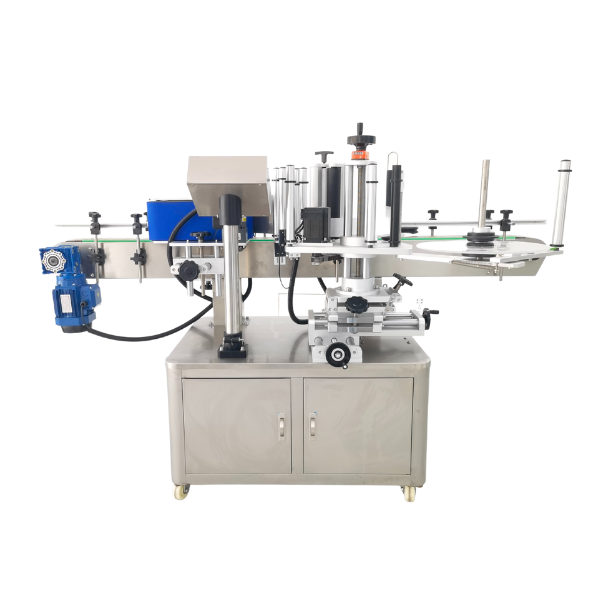
2. Who signs the declaration of conformity, and under which legal entity?
A declaration of conformity is a legal document, and the entity that signs it accepts responsibility for the machine. Ask for the company name that will appear on the document and compare it with the name on the proforma invoice and the business license. When those three names differ, you are dealing with a chain of intermediaries, and the party at the end of the chain may not be able to issue the document at all.
The European Commission is explicit that the manufacturer carries out the conformity assessment, sets up the technical file, issues the declaration, and affixes the mark. You can read that division of responsibility on the CE marking guidance for manufacturers. If your supplier describes CE as a certificate it buys, the answer to this question is already no. Our own status is stated the same way on every quotation: CE and ISO 9001 are in progress rather than claimed as held.
3. Which components are branded, and which are substituted?
Two machines can look identical and differ by $4,000 because of what is inside the control cabinet. Ask for brand and origin on four items: the label sensor, the PLC, the power supply, and the stepper or servo drive. Then search those part numbers in your own country, because a sensor you can buy locally in two days is worth more than a sensor that arrives with the next container.
- Label sensor: SICK (Germany), Datasensor (Italy), or an unbranded photoelectric cell
- PLC: Panasonic (Japan) or a generic controller with undocumented I/O
- Power supply: Mean Well or an unmarked switching supply
- Motion: LeadShine stepper or an unnamed driver
Motion is where substitutions hide, because a stepper that loses steps shows up as drifting label placement after an hour of running, not in the first minute of a demo.
4. What is the real cycle time at my bottle diameter?
Published speed ranges are honest but broad: semi-automatic machines usually run 15 to 30 pcs/min, fully automatic machines 40 to 300 pcs/min, and the number depends on label length, bottle diameter, and how steadily an operator feeds the line. Ask for the cycle time at your diameter, with your label length, and ask whether the figure assumes one operator or two.
Accuracy belongs in the same answer. Semi-automatic machines are typically plus or minus 0.5mm, the MT-807 reaches up to plus or minus 0.2mm on flat surfaces, and automatic machines are around plus or minus 1mm, all measured without container or label error. A supplier who quotes 0.1mm on an automatic line without explaining the measurement method is quoting a wish.
5. What happens at changeover, and how long does it take?
Changeover is where small factories lose their day. Ask how many adjustments are needed to move from one bottle size to another, whether they are tool-free, and whether the settings are recorded on a scale or in a recipe. A machine that needs a spanner and 40 minutes for a size change is fine for one product and painful for six.
The honest answer often includes a jig change, which is why the next question is about who owns the drawing. Custom fixtures for tapered, square, or soft containers are quoted as a line item, and a factory that archives the drawing can repeat the part without re-engineering it. Ask whether that archive is available to you if you order a second machine.
6. What is in the acceptance test protocol?
“We test every machine” is not a protocol. Ask for the list: how many bottles, at what speed, for how long, which defects are counted, and what the pass threshold is. A ten-point test that includes speed, placement accuracy, label wrinkle, air bubbles, sensor repeatability, emergency stop, and a full-shift run tells you more than a video of one perfect bottle.
| What to ask for | Weak answer | Strong answer |
|---|---|---|
| Run length | A few bottles for the camera | Continuous run at production speed, defect count recorded |
| Container | Supplier’s sample | Your bottles, shipped or drawn to spec |
| Result format | Photos of good output | Video plus a one-page report with numbers |
| Failure handling | Fixed after the video | Held before crating, re-tested, re-recorded |
Our factory acceptance test page lists the ten checks in the order they run, so you can compare it with whatever your other suppliers send.
7. What is the payment schedule, and when does the machine actually leave?
Standard terms in this industry are 30% deposit with 70% before shipment, and some models run 50/50. Both are normal; what matters is the trigger for the balance. Paying 70% against a photograph of a crated machine is different from paying against a bill of lading. Ask for the dispatch window in working days, not weeks, and ask what happens if the machine misses it.
Standard figures: semi-automatic machines usually dispatch in 7 to 10 days, automatic machines in 7 to 25 days depending on configuration, and custom projects from 25 days. Terms are FOB Shenzhen, and MOQ is one machine, which matters if you are testing a market before committing.
8. What does the one-year warranty exclude?
Every supplier offers a year. The useful question is what counts as a wear part. Belts, rollers, suction cups, blades, and heater cartridges wear out by design, and a warranty that excludes them is normal, but the list should be in writing before you order rather than discovered in month seven.
Ask two follow-ups: what is the price of a spare-parts kit, and how fast can a part ship. A machine that stops for three weeks because a $40 sensor is on a slow boat has a much higher cost than its invoice suggests. Our own terms are one year on the whole machine with lifetime technical support, wear parts excluded, and spares dispatched from stock within 48 hours.
9. Who supports me after arrival, in which language and time zone?
The last question decides the first year of ownership. Ask who will answer, through which channel, in which language, and within what response time. Then ask for the person’s name and title. A supplier who answers with a general inbox is not necessarily bad, but a supplier who names an engineer is a different kind of partner.
Practical setup matters too: an English manual, a video of your own machine running, and a remote session during installation remove most of the first-week risk. If the plan is “we will send an engineer”, ask for the cost, the visa lead time, and what the engineer can actually fix on site.
How to score the nine answers
Score each answer 0, 1, or 2: zero for a brochure sentence, one for a specific answer without evidence, two for a specific answer with a document, photo, or video attached. Eighteen is a supplier you can work with. Twelve to seventeen is workable if the missing points are not about conformity or payment. Below twelve, the price is not the problem.
Then compare the totals against price, not instead of price. A supplier who scores 16 at $9,000 is usually cheaper over three years than one who scores 9 at $7,000, because the difference tends to reappear as downtime, rework, and a second jig. If you want the questions applied to your own case, send the bottle and label details through the quote form and we will answer all nine in writing before you commit.
FAQ
How many questions should I ask a labeling machine supplier?
Nine is enough to separate a factory from a reseller and to compare quotations on the same basis. More than that and the list stops being used. Ask them in writing so the answers can be attached to the purchase order.
Should I ask for a test run before paying a deposit?
Yes. A test on your own bottles is the cheapest risk check available, and most factories will run it before the deposit or during the acceptance test. Ask for uncut video at production speed so you can see how the machine behaves after the first few bottles.
What is a normal payment term for a labeling machine from China?
Thirty percent deposit with seventy percent before shipment is standard, and some models are quoted at fifty fifty. Terms are usually FOB Shenzhen. The important detail is what triggers the balance payment, so tie it to a document rather than to a photograph.
Is a one-year warranty normal?
Yes, one year on the whole machine is the common offer, with wear parts excluded and technical support continuing after the warranty ends. Ask for the exclusion list in writing and price a spare-parts kit at the same time.
What if the answers differ between the salesperson and the engineer?
Trust the engineer, and put the engineer’s answer in the contract. Sales replies are written to close a deal; engineering replies are written by the person who will have to make the machine work. A supplier who will not let you speak to an engineer before the deposit is telling you something useful.
Next step: if you want the nine answers demonstrated rather than described, request a free test-run video on your own container, or read the labeling machine FAQ for the technical questions that come after these nine.
