
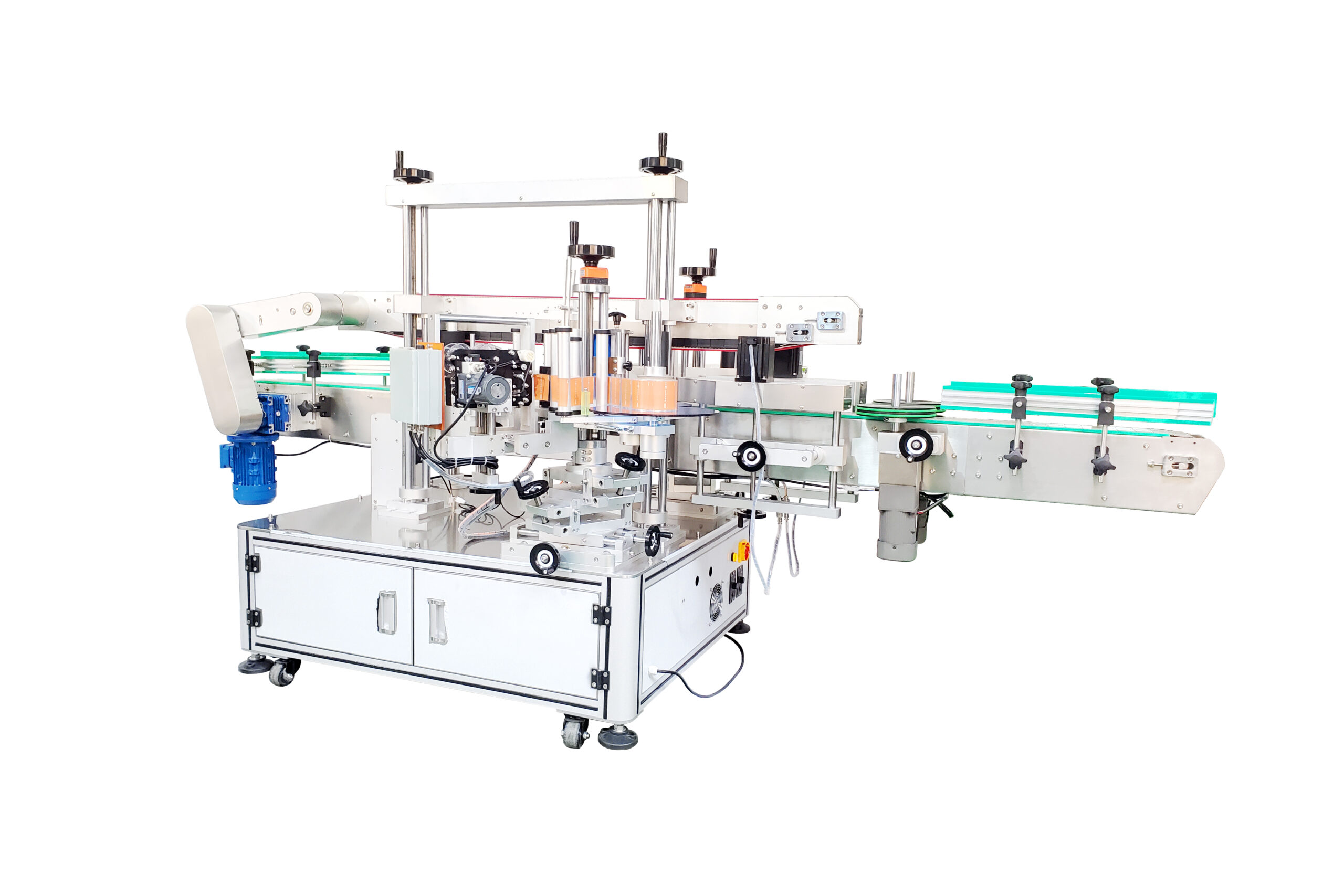
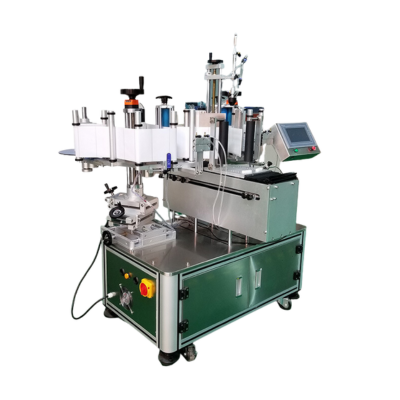
T962 · Automatic Double Side
The reference machine: front & back in one pass for square, flat and rectangular bottles at line speed.
Front & back labeling for square, flat and rectangular bottles at 60–120 pcs/min, ±1mm.
The defects start where the geometry changes, and on a square bottle, that is every corner.
A square bottle presents two flat faces joined by corners. When a label wraps past a corner, its path lengthens: the label must either stretch (it won’t) or lift off the surface (it will). The wrinkle then runs diagonally across the panel, trapping air, and the label that looked perfect at the applicator looks crooked at retail.
The fix is three-sided. First, fixture centering: the bottle is held square to the label head so both faces meet the label at the same angle: no yaw, no rocking. Second, press order: synchronized belts contact the faces in a sequence that pushes air out toward the edges rather than trapping it in the panel center. Third, label design: keeping the label inside the straight-wall zone and away from the corner radius removes the path-length change entirely. Sometimes the cheapest fix is 3mm shorter artwork.
Watch the before/after: the same bottle, same label, before and after jig centering. The diagonal wrinkle is a mechanical story, and the video tells it in ten seconds.
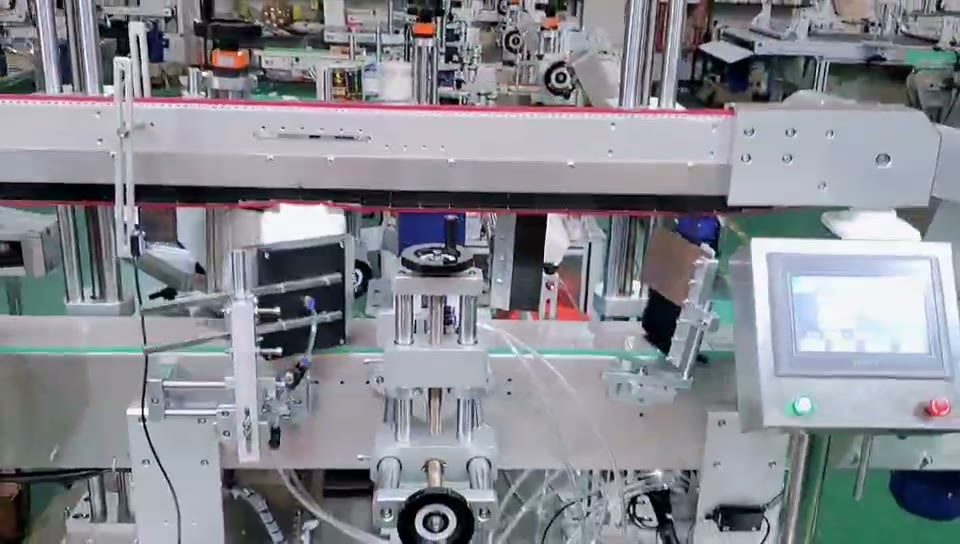
Wrinkled corner application versus jig-centered, belt-pressed result, filmed on customer shampoo bottles.
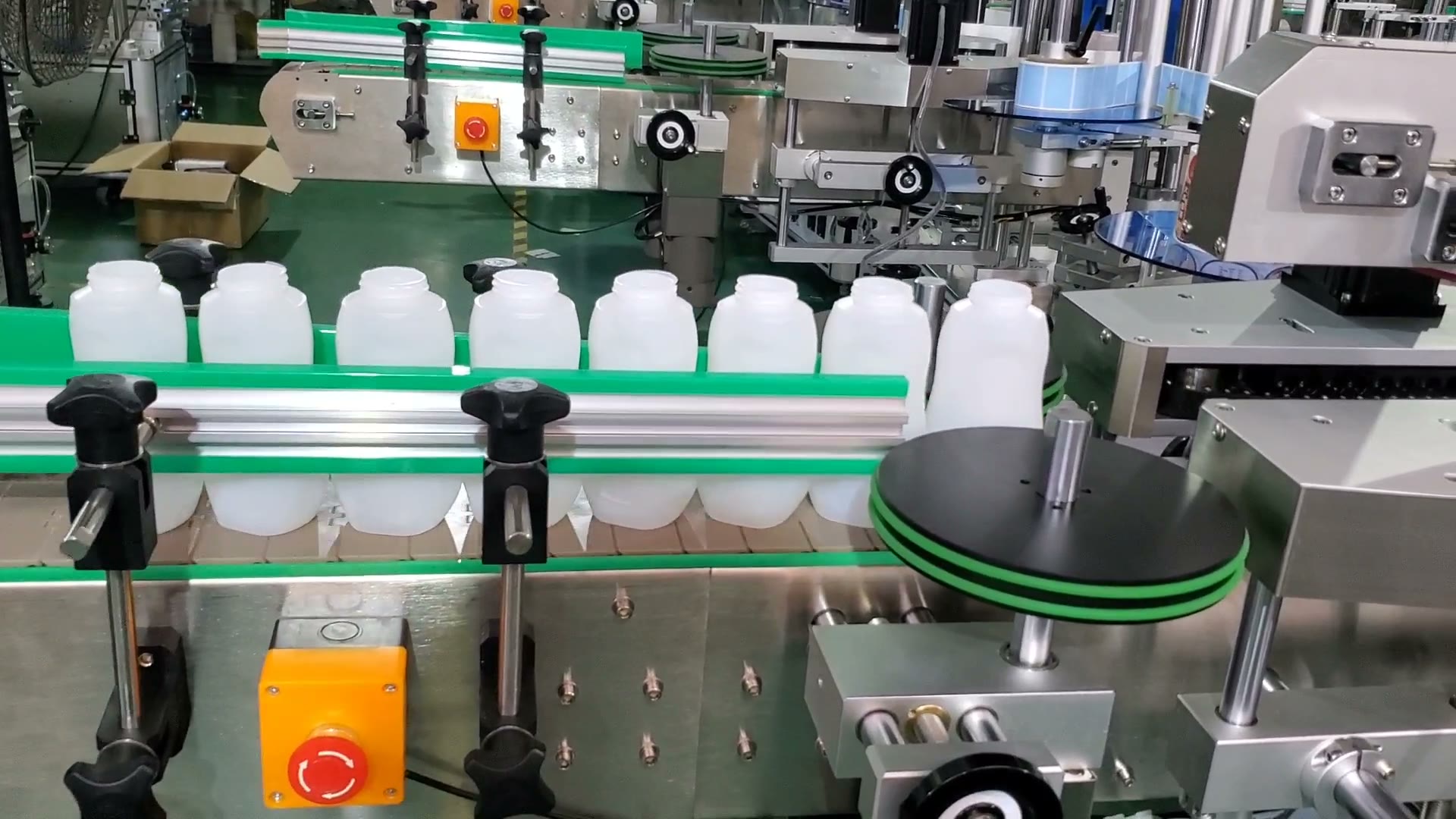
Upstream of the label heads, a dividing screw (feed screw) takes the random queue of bottles and meters them into evenly spaced, single file. Spacing is what makes timing possible: each head fires into a known window instead of reacting to whatever arrives.
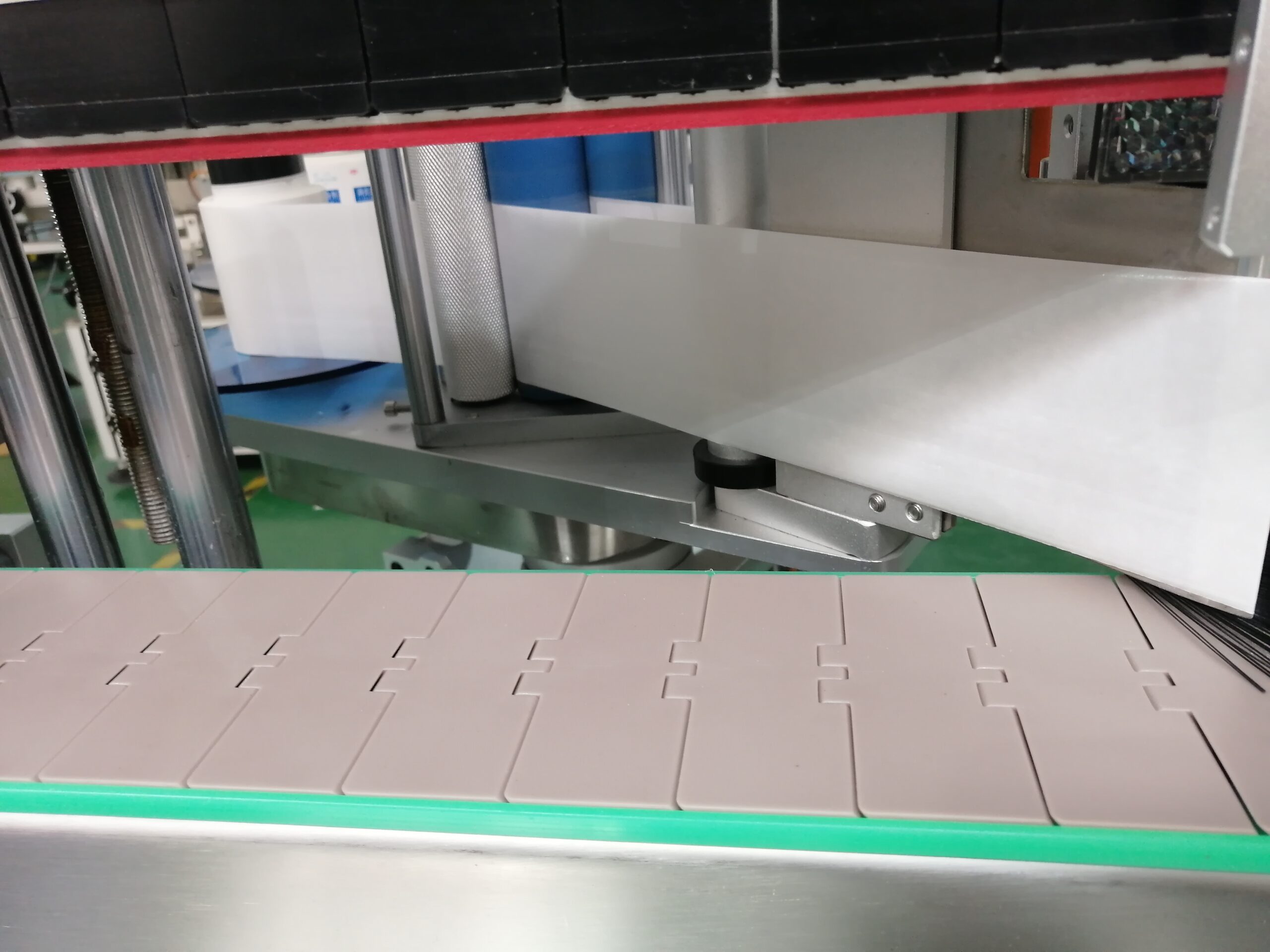
Between the heads, synchronized pressure belts hold each bottle by both faces: clamp, carry, release. The belts keep the bottle from yawing between the two label applications, so the back label lands exactly opposite the front one.
Changeover follows the same logic: adjusting the screw pitch sets the new bottle’s spacing, adjusting belt distance sets its width: minutes with scales, not hours with shims. We film the adjustment against the clock.
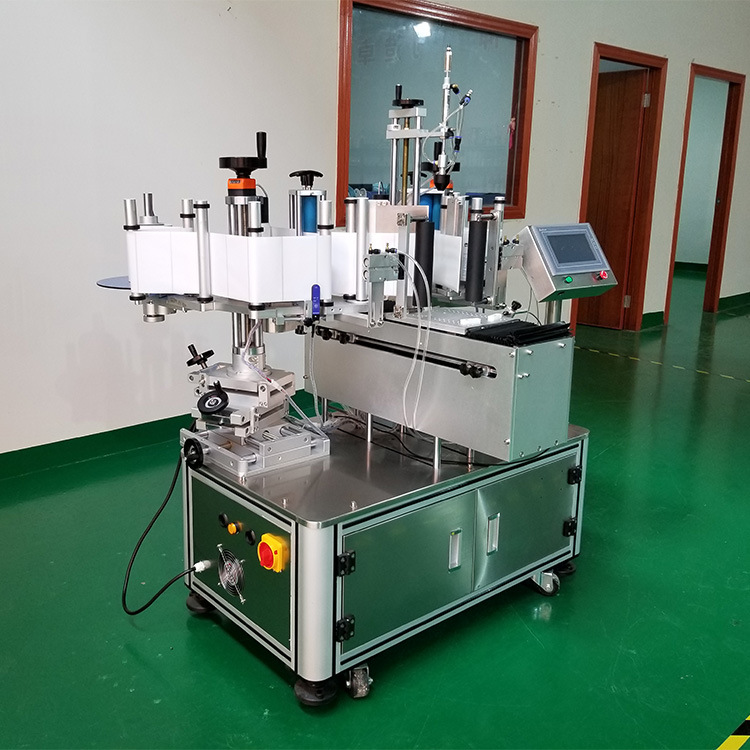
Feed screw sets spacing; belts hold square; heads apply in one pass. Changeover is a scaled adjustment.
The reference machine: front & back in one pass for square, flat and rectangular bottles at line speed.
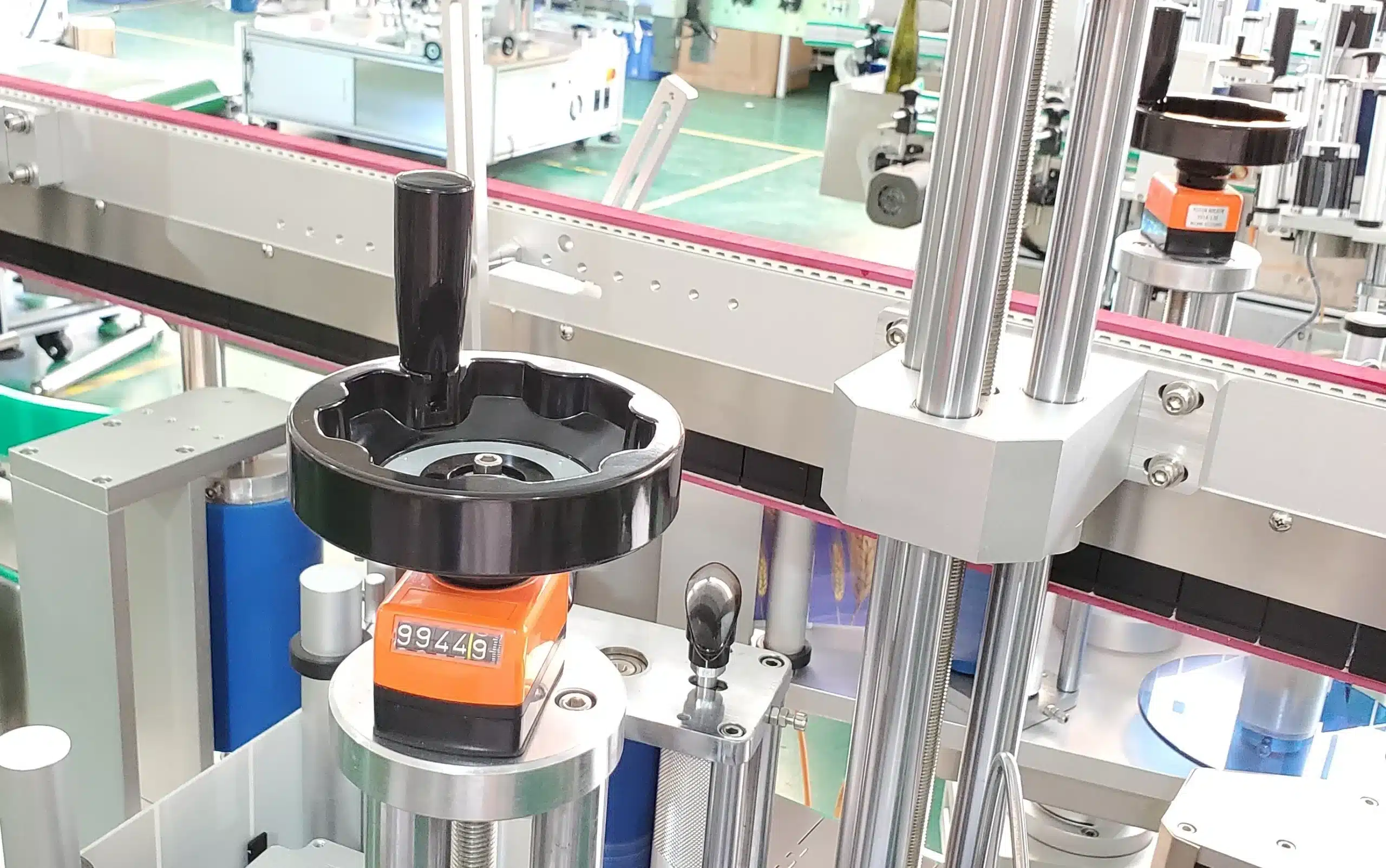
Mixed-SKU halls: the same platform wraps round bottles and double-sides flat ones: one machine for both duties.
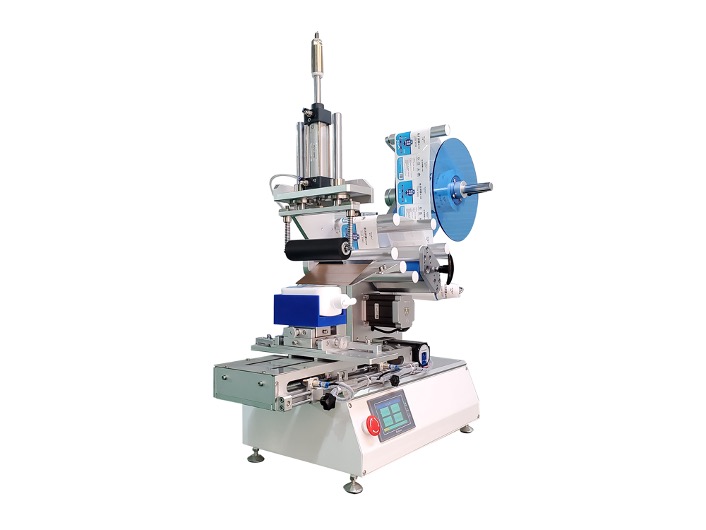
Both side labels without a conveyor: operator loads, machine applies front and back: the entry into two-sided work.
Benchtop two-sided labeling for small items: cosmetics miniatures, cartons, small flat packs.
| Model | Class | Accuracy | Speed | Container range (mm) | Label L × W (mm) | Footprint (mm) | Power / weight | Price |
|---|---|---|---|---|---|---|---|---|
| T962 | Automatic double side | ±1mm | 60–120 pcs/min | L 20–300 × W 30–100 × H 60–360 | L 20–300 × W 20–175 | 3070×1410×1565 | AC220V 2400W / ≈520 kg | From ~$9,000 |
| T963 | Automatic combo (double side + round) | ±1mm | 60–120 pcs/min | L 20–250 × W 30–90 × H 60–280 | L 20–300 × W 20–175 | 3070×1410×1565 | 220V 1500W / ≈520 kg | From ~$9,000 |
| MT-860 | Semi-automatic double side | [TBC] | [TBC] | Flat & square bottles | [TBC] | [TBC] | [TBC] | Quote on request |
| MT-301 | Desktop double side | [TBC] | [TBC] | Small items | [TBC] | [TBC] | [TBC] | Quote on request |
Square, flat or rectangular → double-side; perfectly round → wrap-around on the T921; oval → usually double-side.
Two different designs (front brand + back panel) → double-side; one continuous wrap design → a shorter machine.
60–120 pcs/min → T962; slower → semi-automatic MT-860; faster round-bottle wrap → automatic wrap platforms.
Shampoo, conditioner and skincare bottles. Flat geometry is the native habitat of the double-side platform. Cosmetics →
Sauce bottles and dairy cartons with front brand and back regulatory panel. Food & beverage →
Detergents and cleaners: two-sided hazard and usage panels on flat bottles. Chemical & industrial →
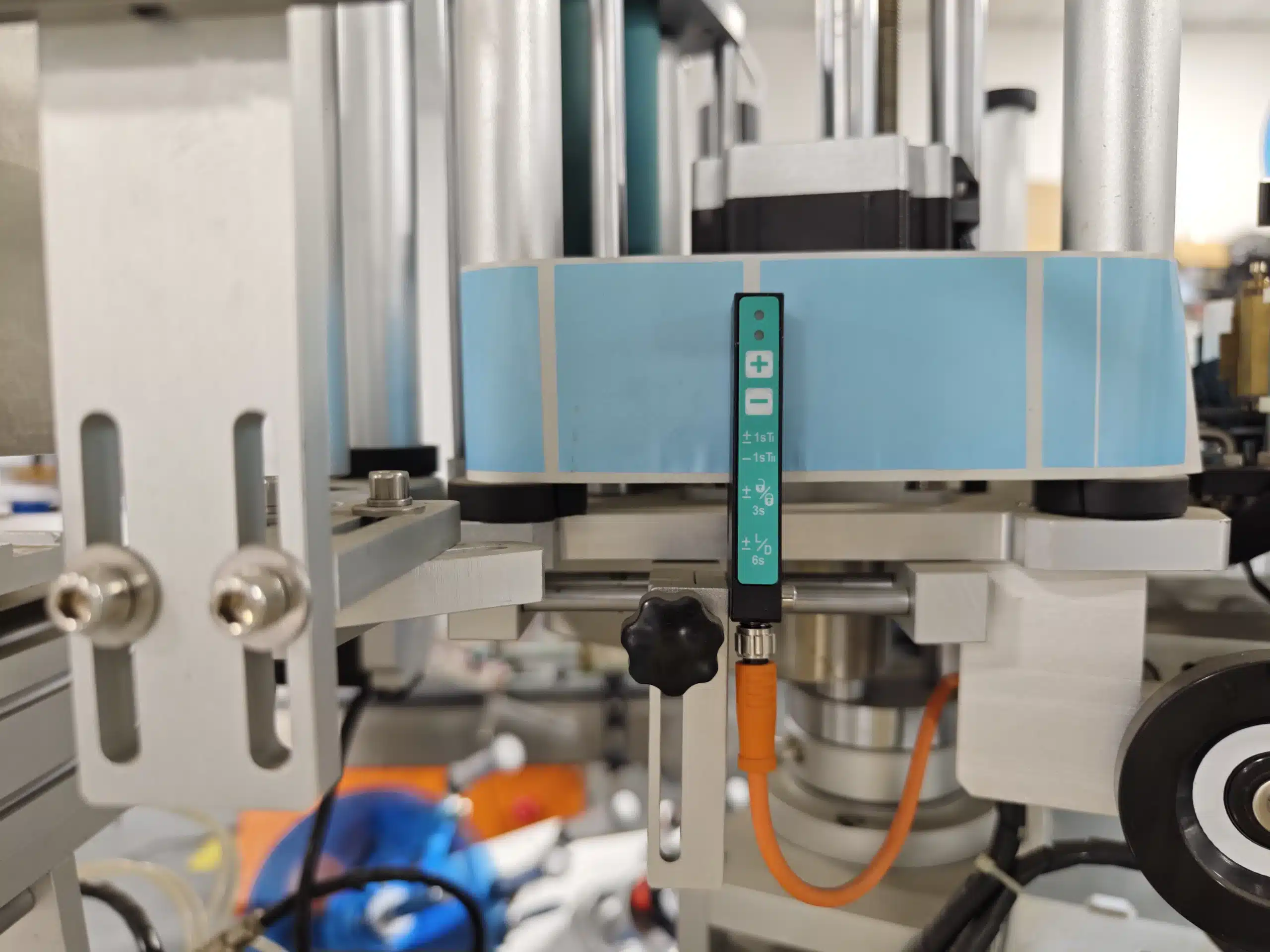
The FAT run for a double-side machine is unforgiving by design: your bottles, your labels, target speed, and the corners filmed close-up. Only after the run does the balance fall due. Core components (SICK label sensing, Panasonic PLC) are the validated brands your team can service anywhere.
FAT footage includes the close-up corner pass, where double-side defects live.
Automatic double-side machines of the T962 class start from around $9,000 depending on configuration and conveyor length; semi-automatic options (MT-860, MT-301) are quoted on request. Your bottle and label set the final number.
Yes, that is the definition of the platform. The T962 carries two label heads, one per side, with the dividing screw and synchronized belts holding each bottle square so both labels land in one pass at 60–120 pcs/min, ±1mm.
Three levers: jig centering so the bottle meets the label square; press order from synchronized belts that push air to the edges; and label artwork kept inside the straight-wall zone, away from the corner radius. The mechanism and the fix are shown side by side in our before/after test footage.
The T963 is built exactly for that: double-side application for flat bottles plus wrap-around for round bottles on one frame, for halls where both geometries share a line. Round-only high-speed wrap remains the T921’s job.
Yes, the MT-860 applies both side labels for flat and square bottles at bench scale, and the MT-301 covers small items double-faced. Specifications are being finalized [TBC]; ask for the current sheet with your bottle dimensions.
The T962 accepts containers L 20–300 × W 30–100 × H 60–360mm with labels L 20–300 × W 20–175mm; the T963 combo narrows slightly to L 20–250 × W 30–90 × H 60–280mm. Map every SKU against the range before ordering. Changeover inside the range is a scaled adjustment.