
Lip balm tubes
Benchtop wrap platforms take slim tubes cleanly, a classic first-machine application.
Clear labels, curved faces, soft tubes: the shapes that make other machines fail, filmed before you own it.
Benchtop wrap platforms take slim tubes cleanly, a classic first-machine application.
Panel labels on the face, lid labels optional on the same line.
Slim glass with shoulders that eat labels: wrap kept inside the straight zone, or neck labels applied separately.
Flat and oval bottles in family lines: front & back in one pass, corners clean, batch after batch.
Soft laminates crush under brute pressure: controlled tamp and supportive fixtures keep the tube round and the label straight.
Small glass, curved faces, premium stock. The ±0.2mm benchtop tier exists for exactly this geometry.
Glossy, often transparent, always brand-critical. Clear-on-clear needs ultrasonic sensing (covered below).
Flat surfaces, tight tolerances, premium unboxing. High-precision flat placement keeps panels symmetric.
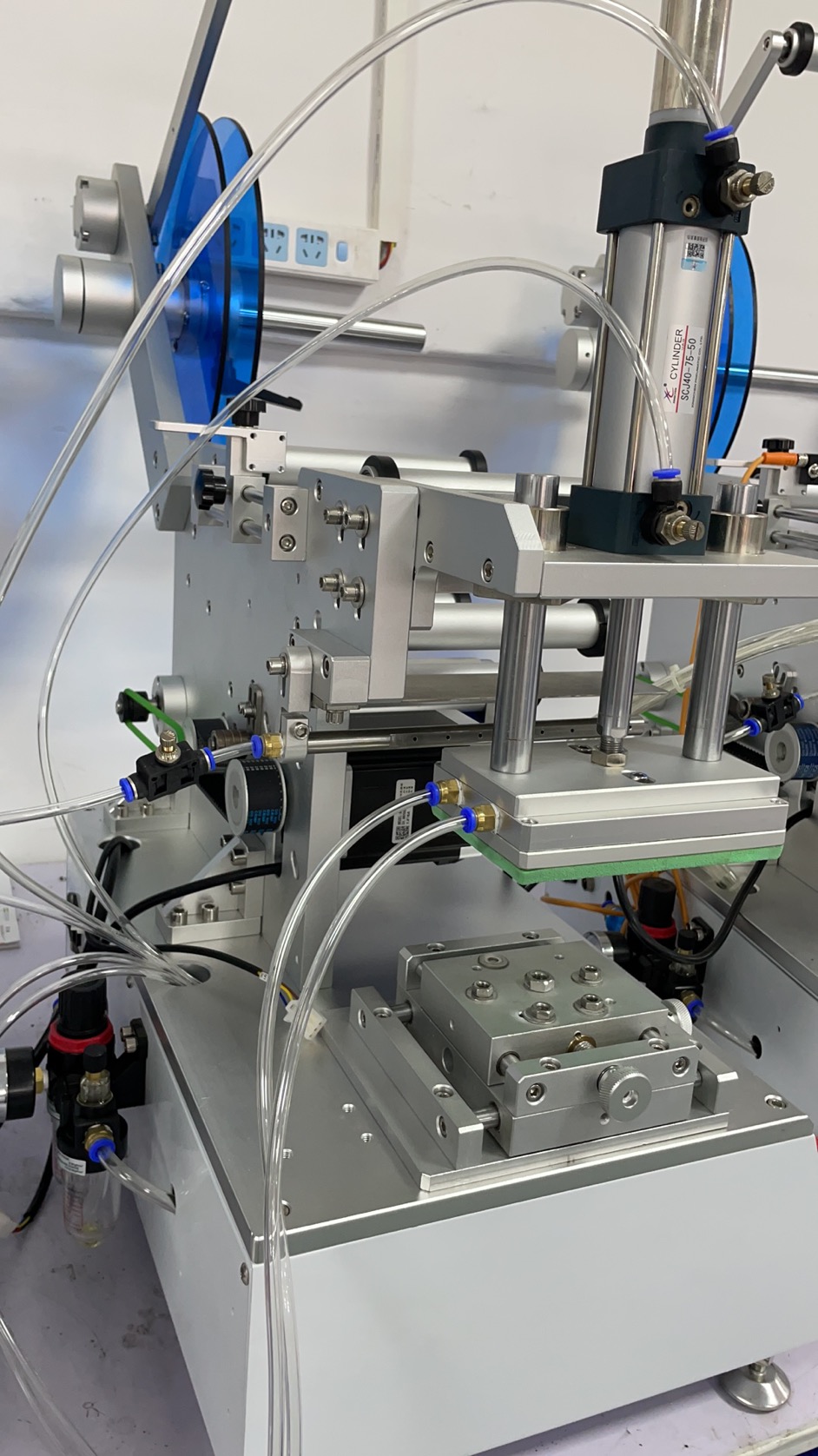
Here is why so many labelers fail on clear-on-clear. A photoelectric sensor detects the label by reading the interruption it creates as it passes the beam. A transparent label on a transparent liner creates no interruption: the beam passes through both. The sensor never “sees” a label, so the machine either feeds blind or double-feeds.
Ultrasonic sensing changes the physics: the sensor reads the label’s thickness against the liner instead of its optics. Clear film registers exactly like paper, every cycle, at speed. Where the label spec calls for it, we fit special SICK sensors on the relevant platforms; the T803 roller platform is specified for transparent-label detection.
Declare clear-on-clear at inquiry. Sensor class is a build-time decision: discovering it after delivery means a retrofit, not a setting. The test video proves it on your bottle first.
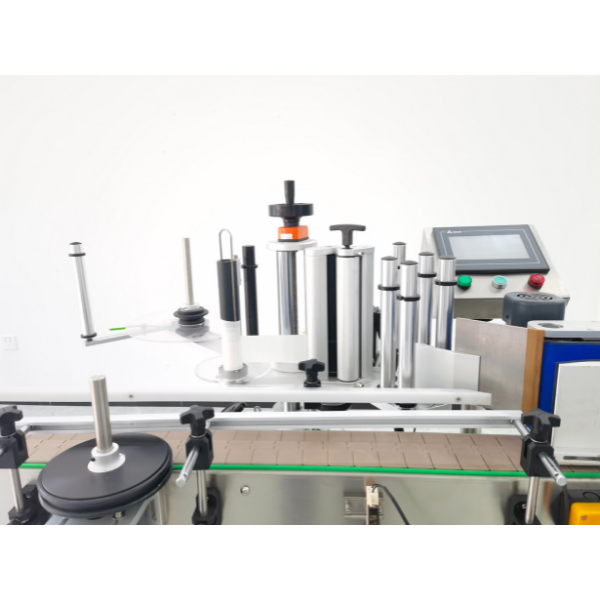
Photoelectric: reads light interruption, blind to transparent film.
Ultrasonic: reads physical thickness, clear labels detected every cycle.
Fitment: special SICK sensors, build-time on spec.
Glossy PET and glass give rollers nothing to grip, and too much pressure on slim bottles deforms the container instead of smoothing the label. The fix is mechanical calibration: roller pressure matched to container weight and wall stiffness, grip surfaces that bite without marking, and speed ramps that accelerate the bottle into the wrap instead of shocking it. This is set up, and filmed, during your test run.
Half of “machine wrinkles” are actually artwork problems: a label taller than the bottle’s straight wall, or a long label on a small diameter where the film bridges the curve. We review label dimensions against container geometry during engineering evaluation and flag conflicts before they cost you a print run, the same math explained on the bottle platform page.
Curved and tapered faces change circumference under the label. Without a fixture, each bottle presents slightly differently and the seam wanders. Engineered jigs present every bottle at the same angle, the fix behind most “impossible shape” videos in our archive. See custom labeling solutions.
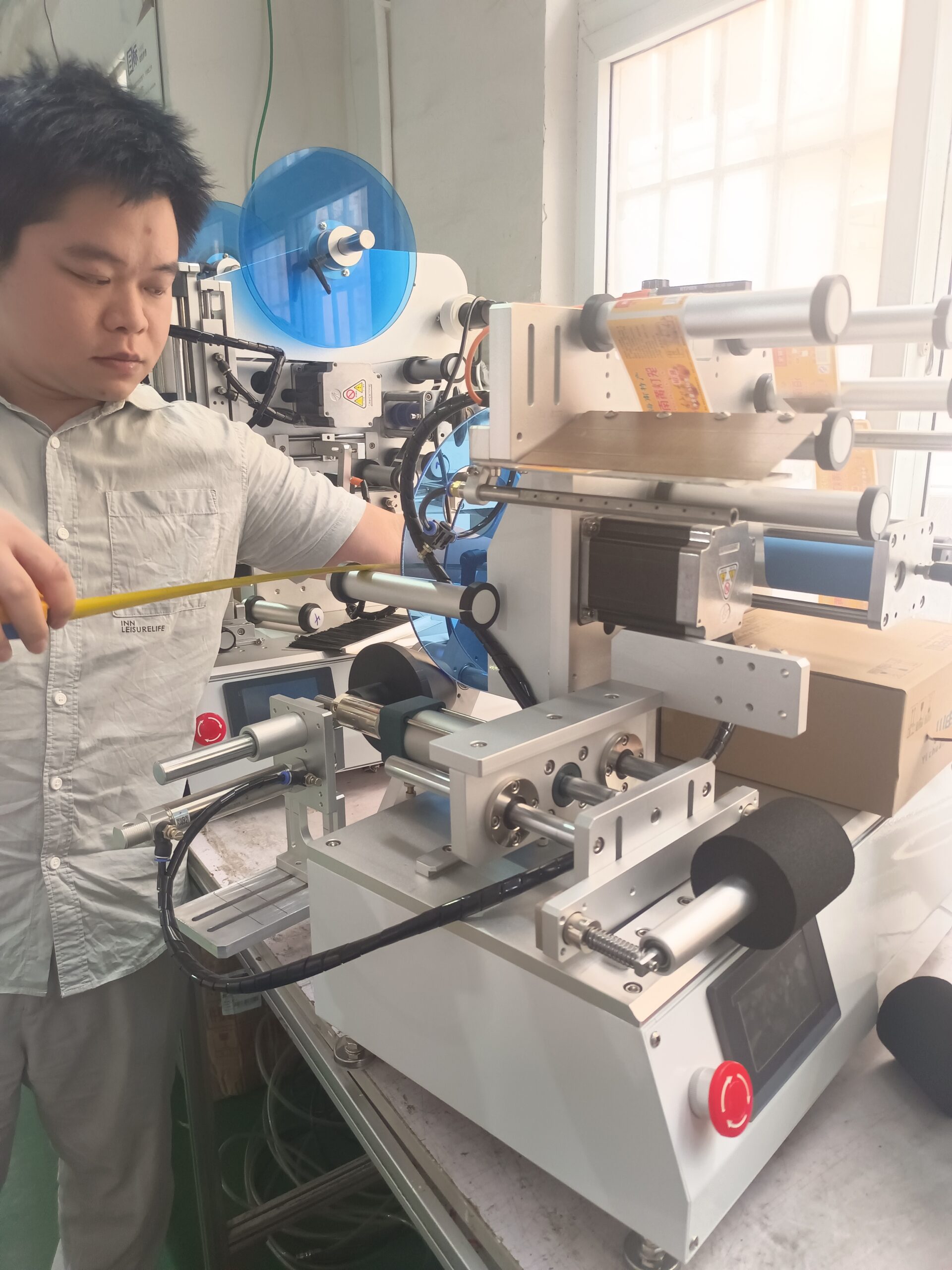
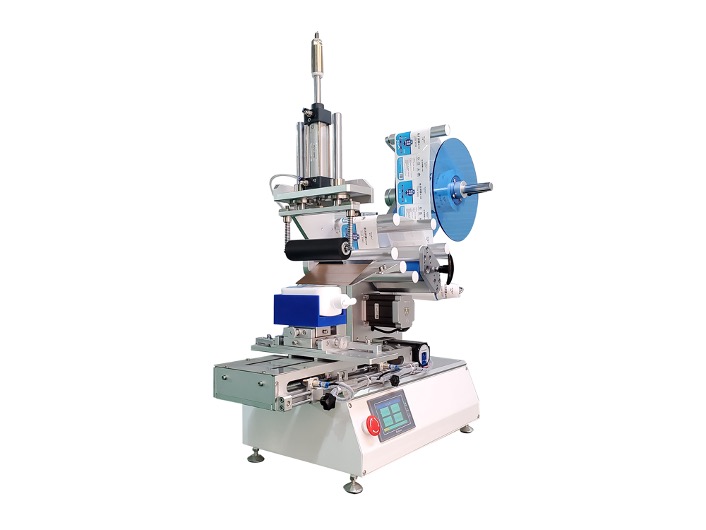
Oval and flat cosmetic bottles, front and back labels, with SICK transparent-label sensing built in, the beauty-industry benchtop favorite.
Get Price →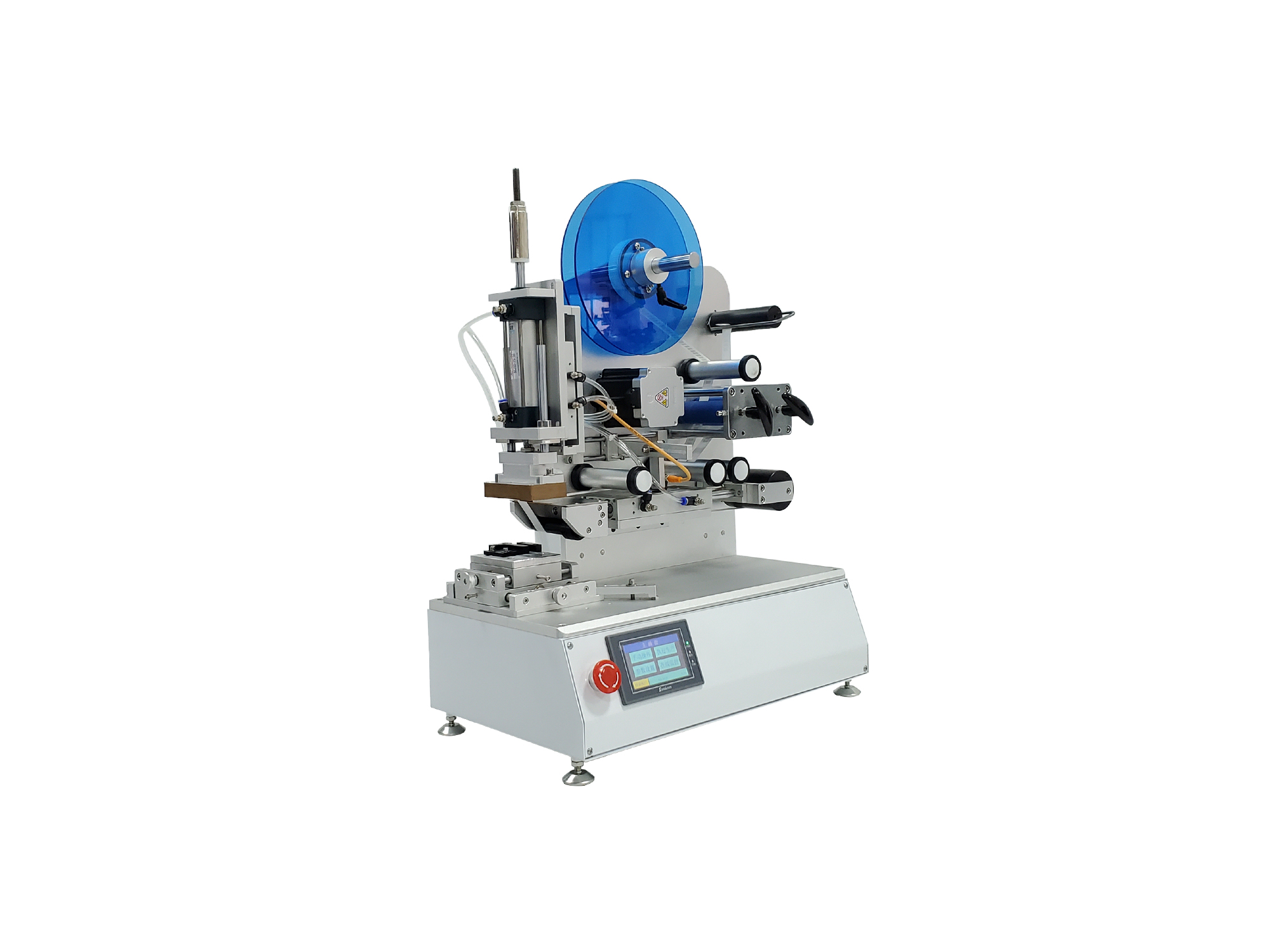
Boxes, compact cases, blotter cards and narrow cryo-style labels at ±0.2mm, the tightest published accuracy in the range.
Get Price →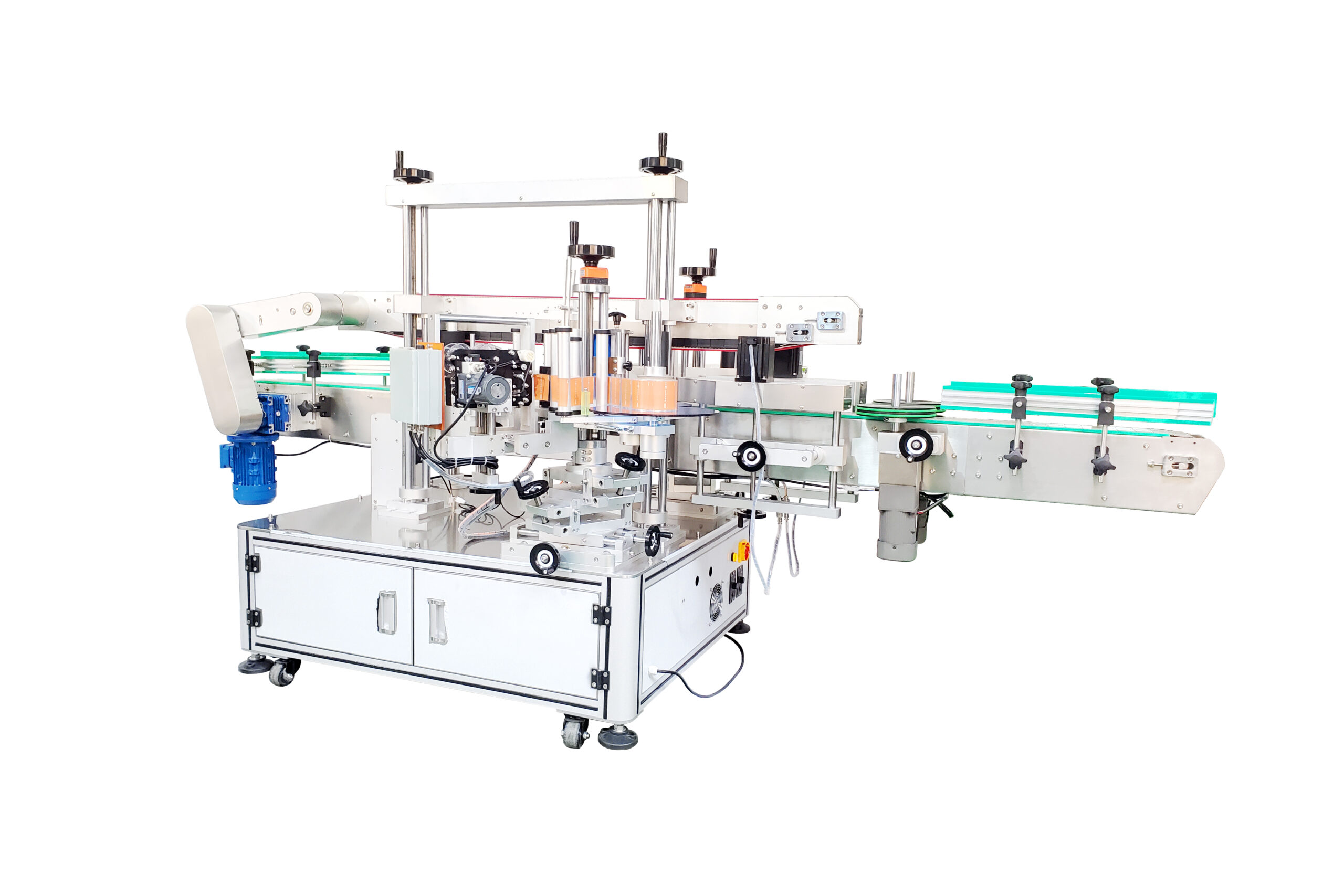
Family-size flat and oval bottles, front & back in one pass at 60–120 pcs/min. Bottle after bottle, corners clean.
Get Price →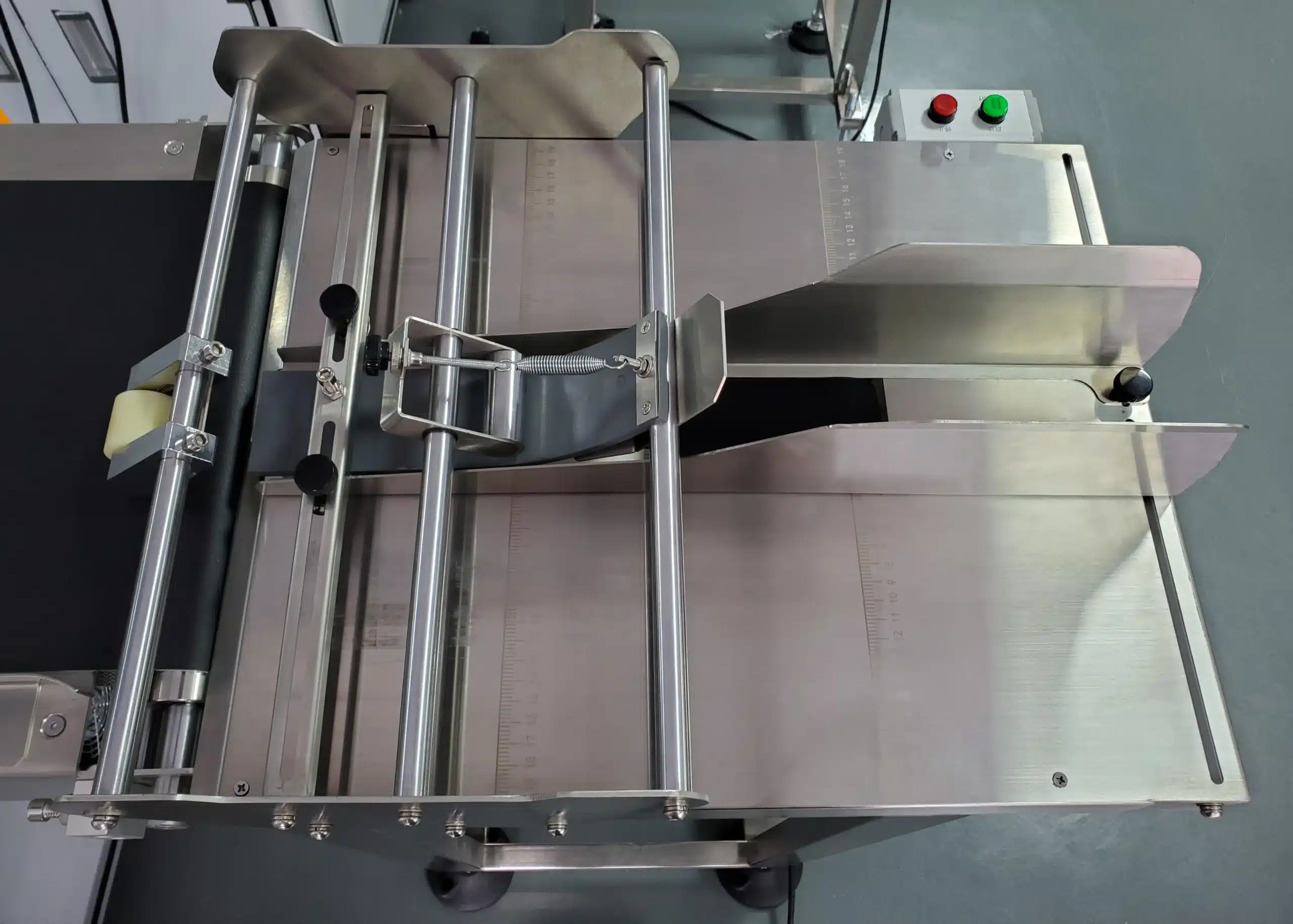
Face-mask pouches, sample sachets and cards fed flat and labeled at 40–120 pcs/min, the flexible-packaging companion.
Get Price →MoCRA listing and the responsible-person plus INCI ingredient panels are artwork and regulatory matters; the machine’s job is placement repeatability (±0.5mm benchtop, ±1mm inline, ±0.2mm on the T807 tier), so the required information lands where your approved artwork puts it, on every unit, demonstrated in the FAT video. Equipment capability, not legal advice; your label compliance sign-off remains with your regulatory team.
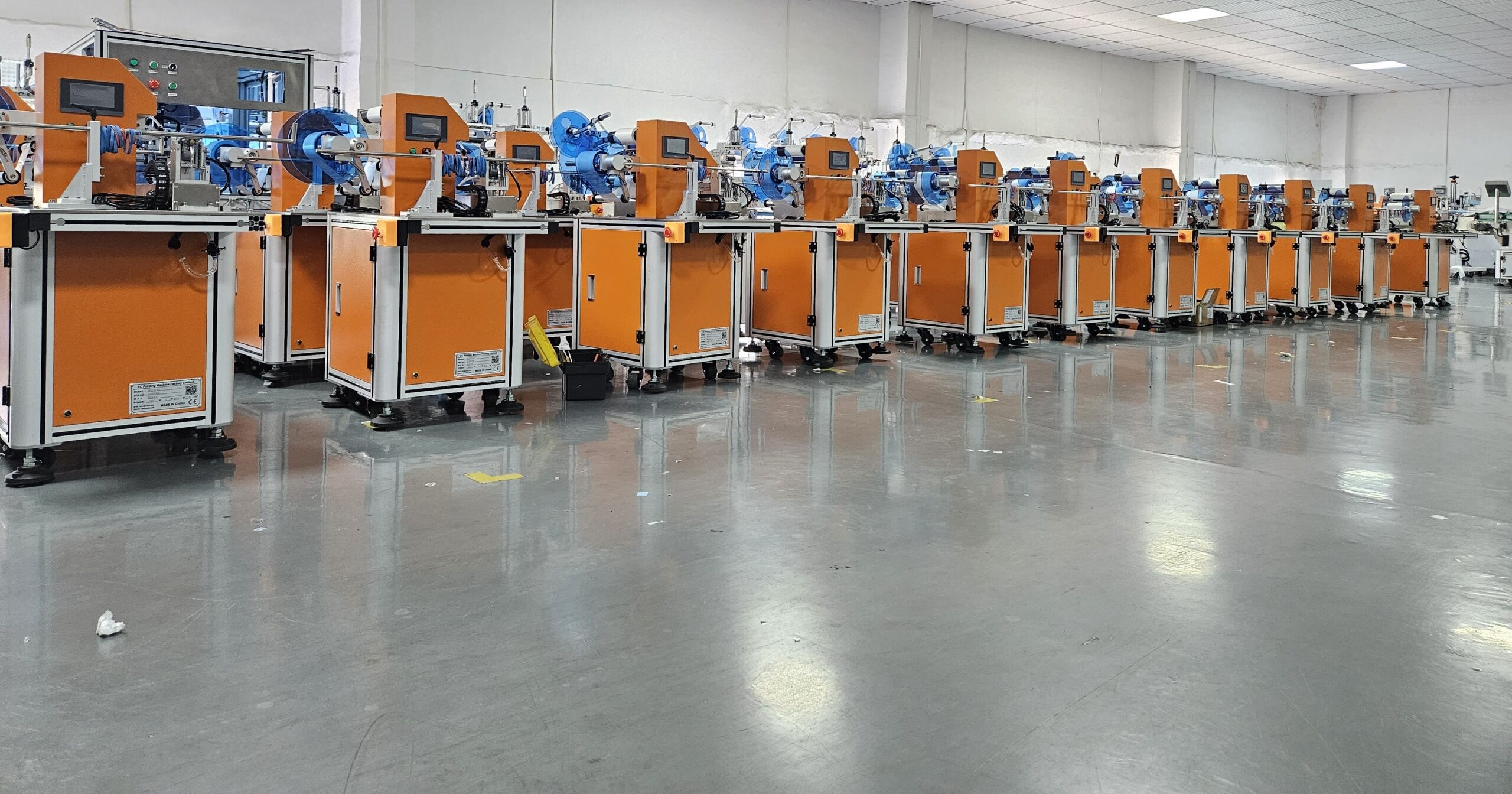
Beauty portfolios live on variety: seasonal limited editions, retailer exclusives, influencer drops. The machine that cannot change over quickly becomes the tax on every launch. Three habits keep changeover short: standardize the label roll spec (76mm core, consistent outer diameter, it is our standard web anyway), scale-based adjustments rather than shim-and-hex-key guesses, and archived recipes per SKU: jig positions and sensor settings reused, not rediscovered.
We film complete changeovers on the machines you are considering: start to first good bottle, clock running. Ask for the timed changeover video of your platform when you request the test run, or watch them in the FAT & quality section.
Full SKU switch on camera, stopwatch running: T801 / T921 / T962 / FT-600 [videos TBC].
Yes, with ultrasonic sensing, which detects the label’s thickness instead of relying on light, so clear-on-clear registers every cycle. Special SICK sensors are fitted at build time where the label spec calls for them; the T803 is specified for transparent-label detection. See the semi-automatic series.
Engineered fixtures: a jig presents every bottle at the same angle so the label lives on a constant-circumference zone. Combined with honest straight-wall label sizing and calibrated roller pressure, that removes the three wrinkle causes: geometry, artwork and pressure. Fixture engineering starts at custom solutions.
±0.2mm on the T807 high-precision flat platform (our tightest published tier) and ±0.5mm on the roller/wrap benchtops. Accuracy is quoted against your working condition and recorded during the FAT with your jars, not read off a brochure. Process: FAT & quality.
Yes, with pressure-profiled application: controlled tamp force and supportive fixtures keep soft laminates round while the label seats. The exact pressure profile depends on your tube material and crimp style [to be confirmed by engineering against your sample]. Send tubes filled and crimped as they ship; we test them as they are.
Fast enough that we film it: complete changeover videos with the clock running, per platform, plus archived per-SKU recipes so settings are recalled rather than rediscovered. Standardized 76mm roll cores keep label swaps mechanical. Watch the timed runs in the changeover section.
The machine’s contribution is placement repeatability (±0.2–1mm by tier), which keeps the responsible-person block and ingredient panel where your approved artwork requires them. INCI ordering and regulatory sign-off are artwork matters; placement is engineering, proven on video with your containers. For variable lot/expiry data, see print & apply.