
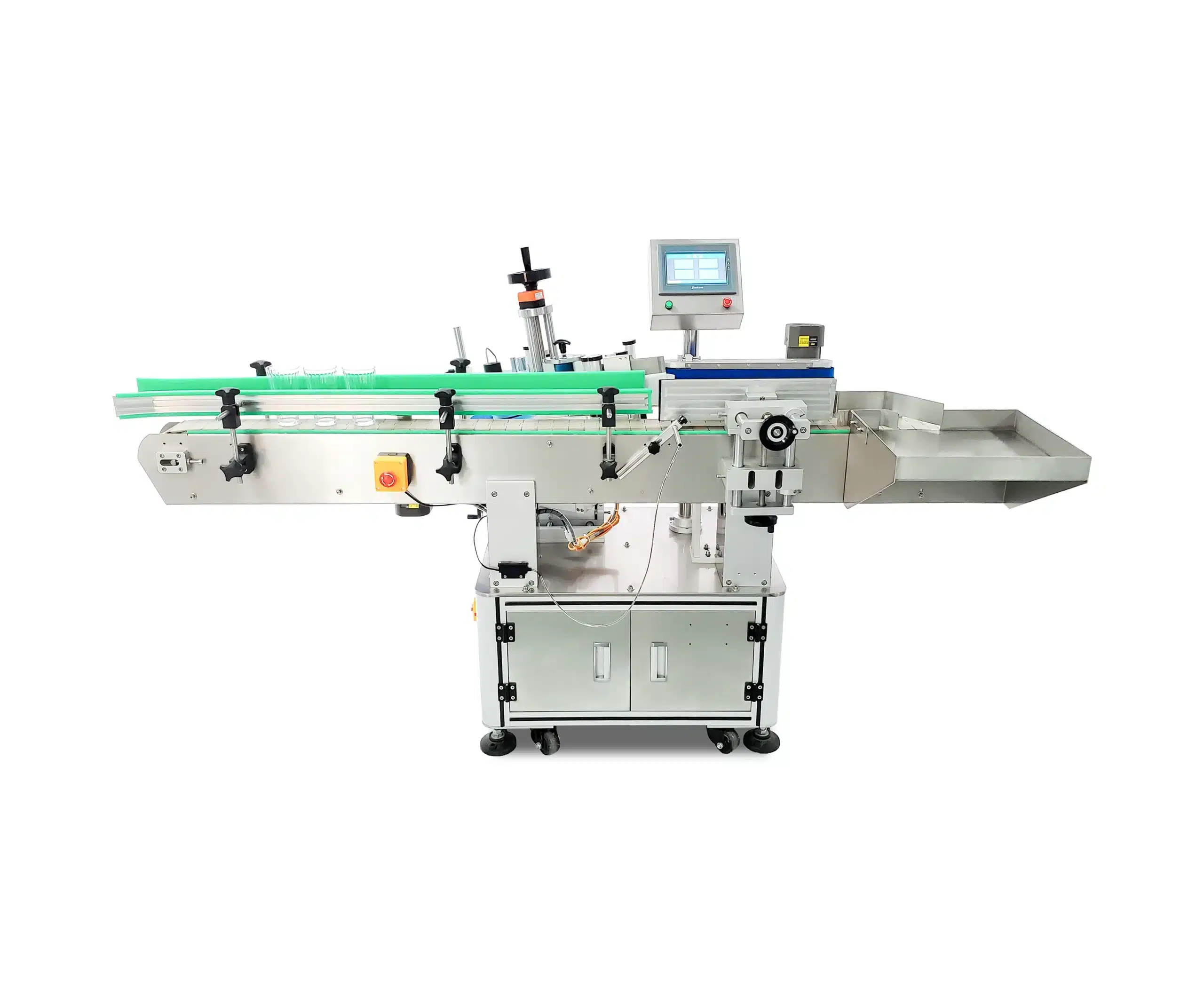
Round
Wrap-around on benchtop T801 (φ10–150mm) or automatic T921 (φ25–100mm, 40–120 pcs/min); positioning on T922/T922R for fixed-point alignment.
Round, square, oval, flat and tapered, matched to your bottle diameter, label size and line speed.
Pick your shape: each card routes to the platforms that hold that bottle.
Wrap-around on benchtop T801 (φ10–150mm) or automatic T921 (φ25–100mm, 40–120 pcs/min); positioning on T922/T922R for fixed-point alignment.
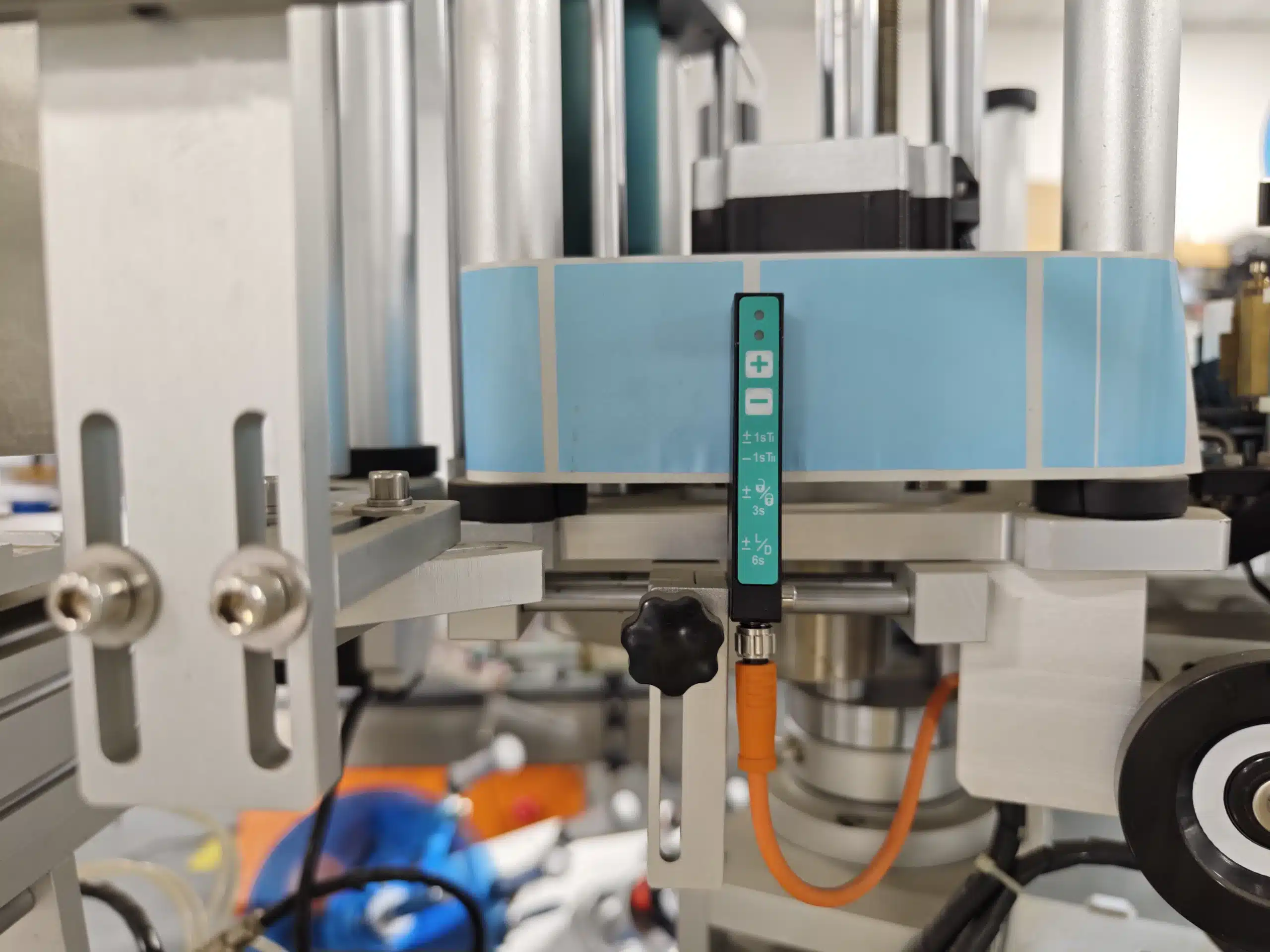
Front & back in one pass on the T962 (60–120 pcs/min), or full wrap-around on the semi-automatic T805.
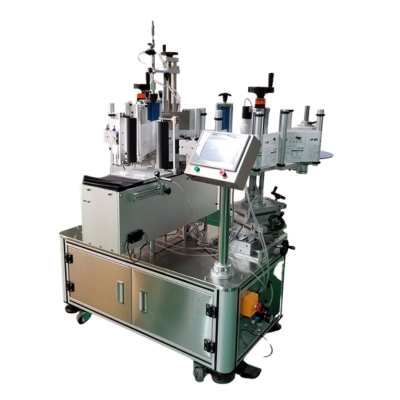
Flat-oval faces are front-and-back territory: T803 roller (semi-auto) or the T963 combo (automatic).
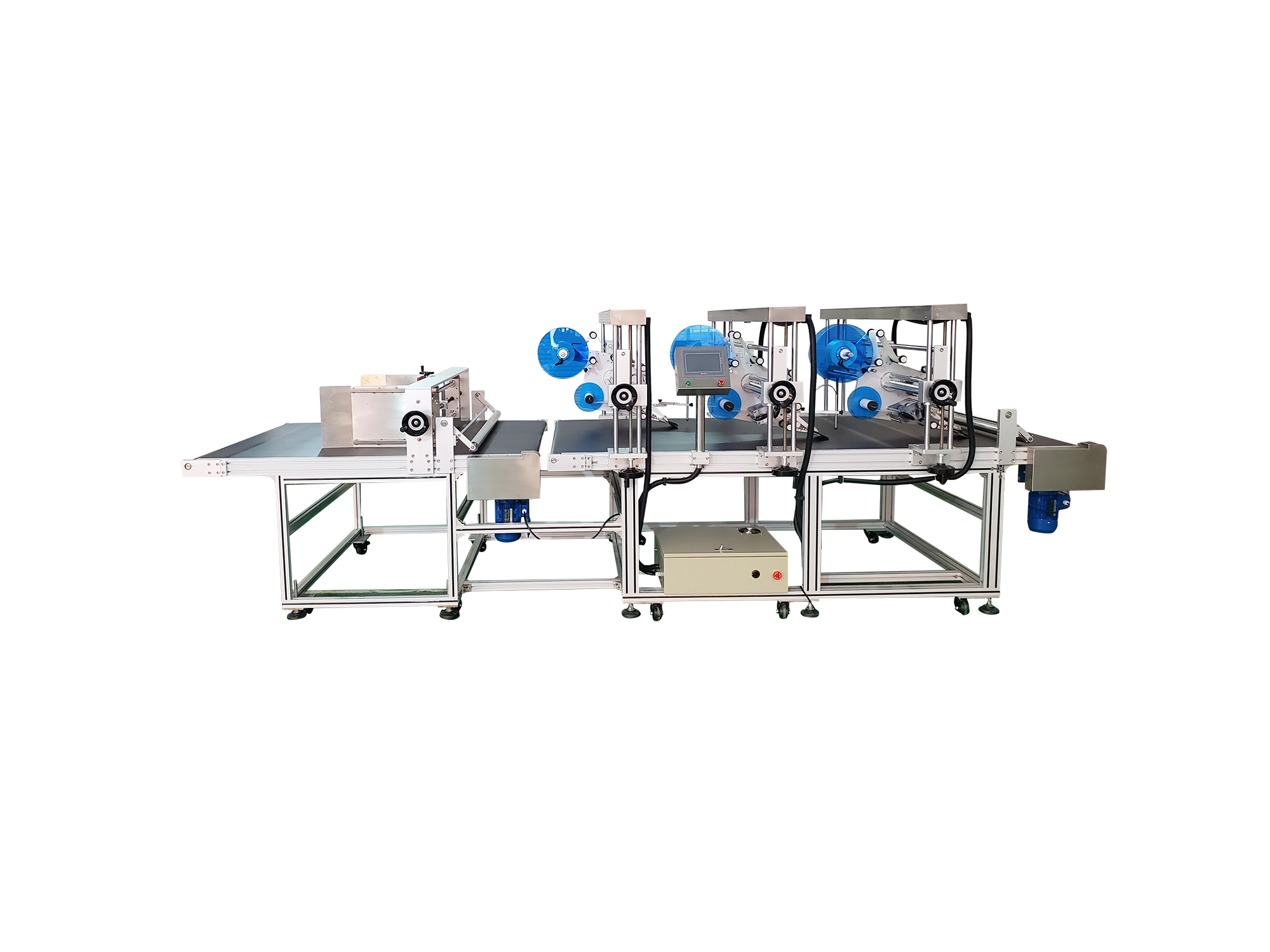
Taper means the label climbs or wrinkles, unless the bottle sits in an engineered jig we design and archive.
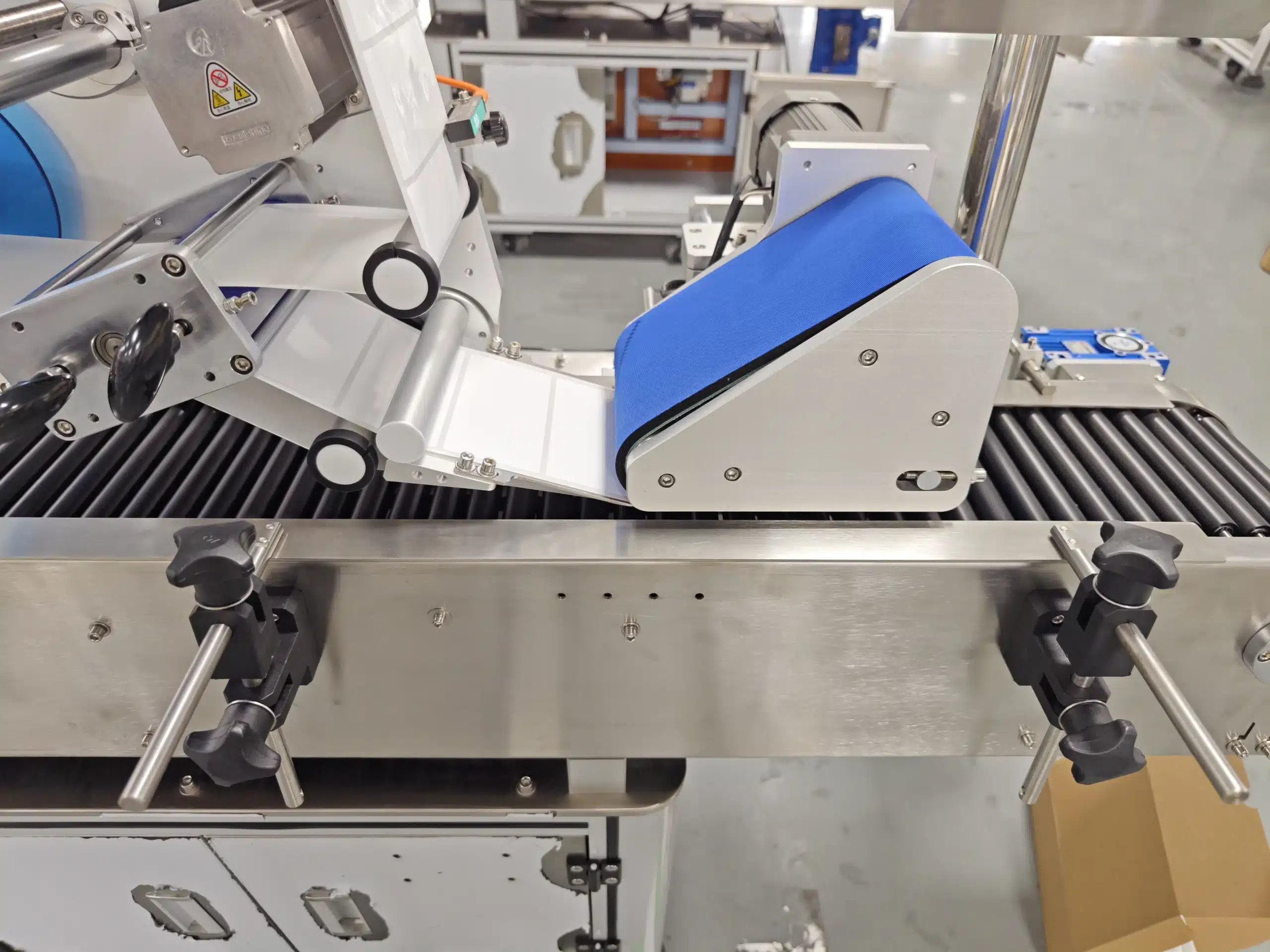
Too slim to stand at speed: the T923 horizontal platform lays them down and labels up to 300 pcs/min.
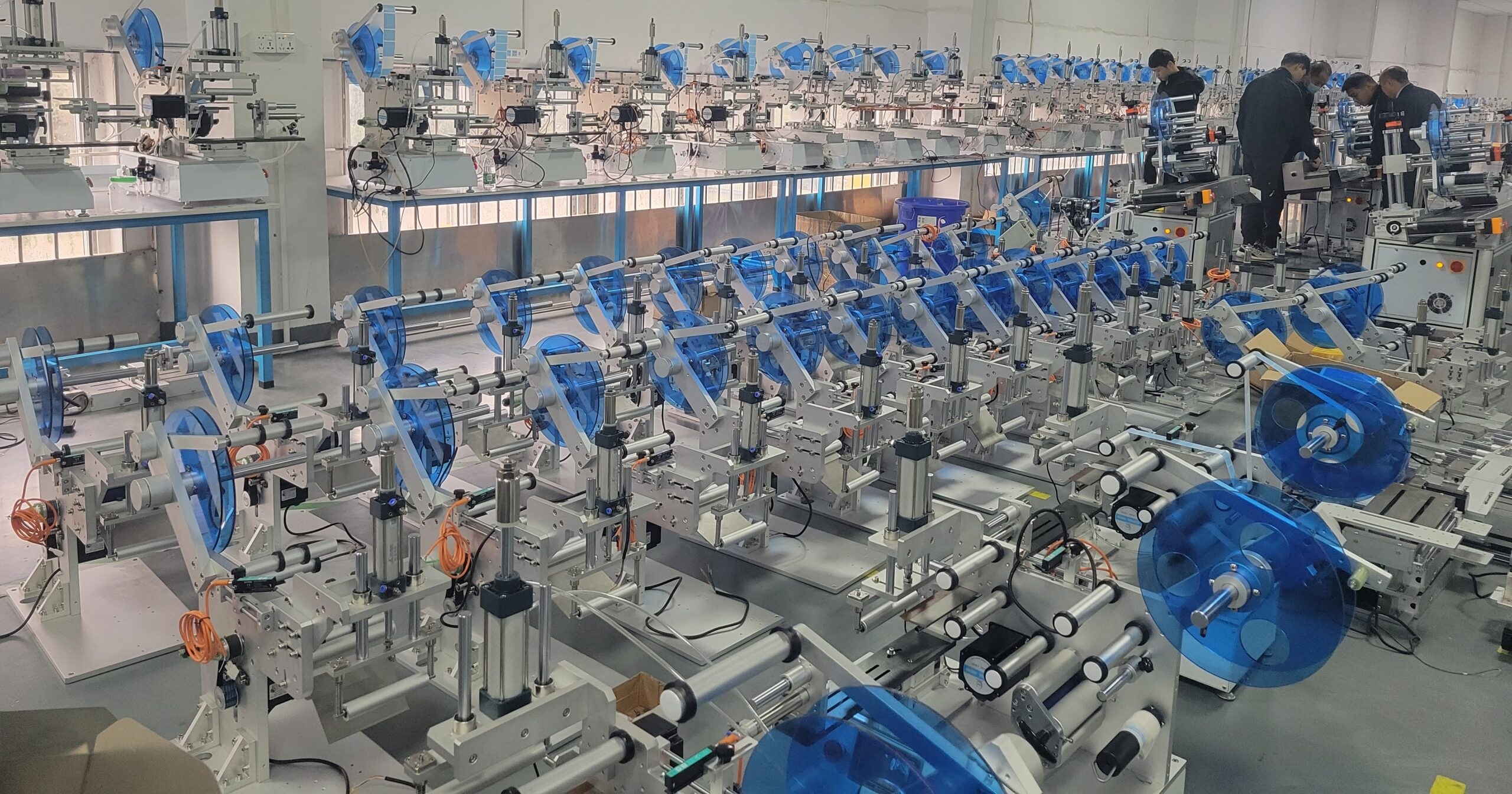
Send the bottle; the 48-hour test video answers shape questions faster than any spec sheet.
The most-specified bottle labelers across our semi-automatic and automatic lines, with real datasheet numbers.
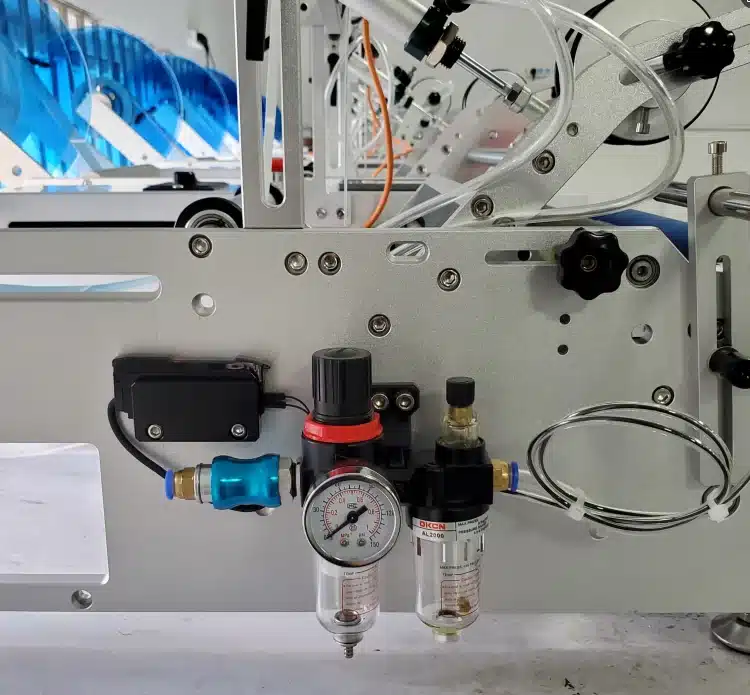
One bench covers vials to wide jars: φ10–150mm diameter, H 20–300mm, at ±0.5mm.
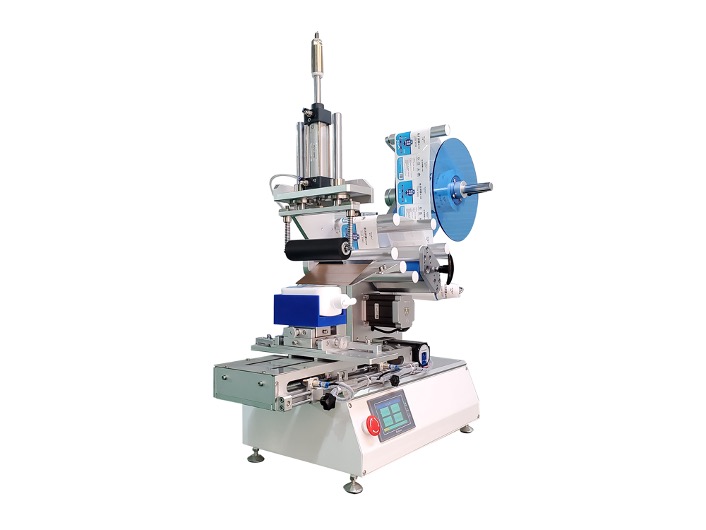
Front and back labels on oval and flat bottles, with SICK transparent-label sensing built in.
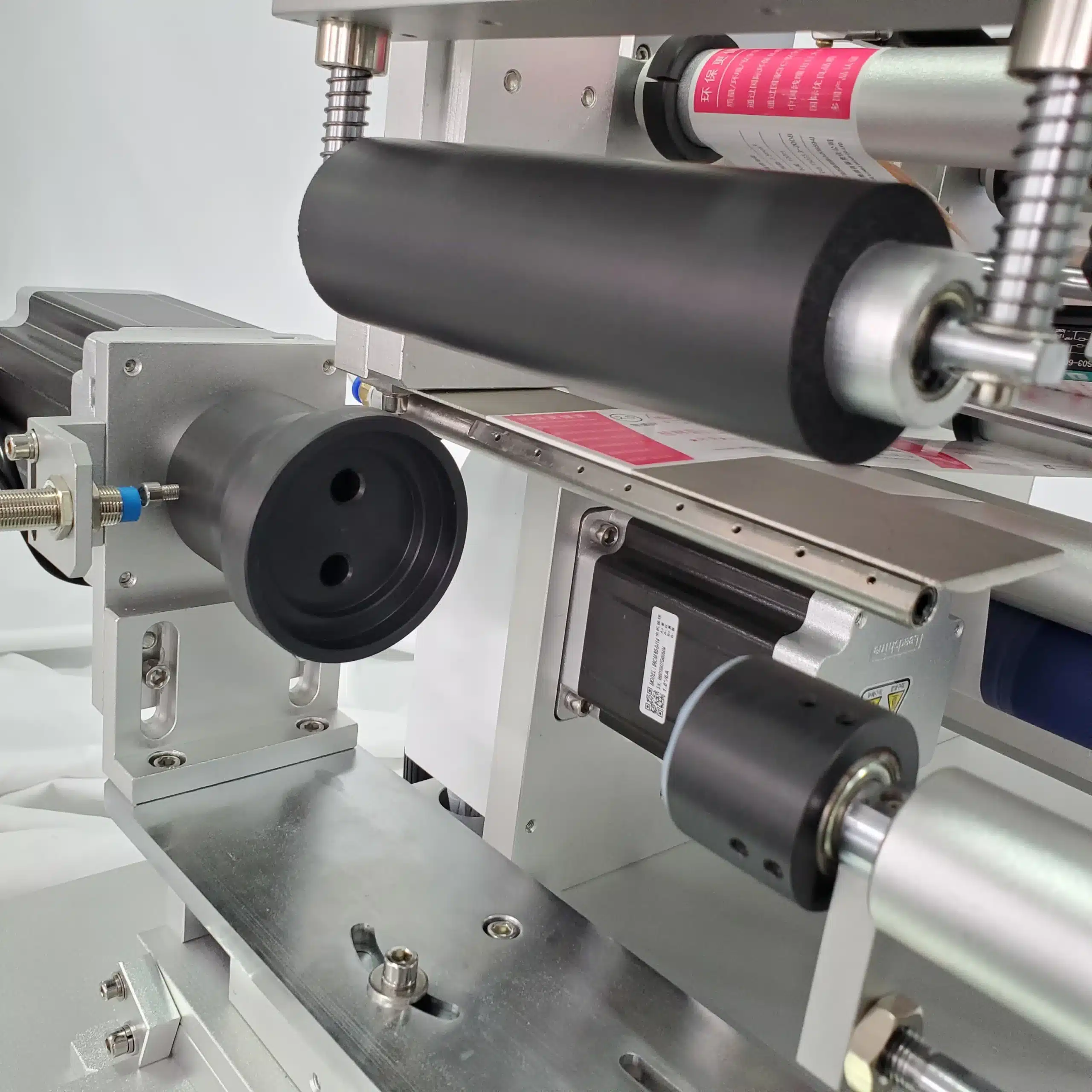
Wrap-around labeling that survives square corners: ±0.5mm at 15–30 pcs/min.
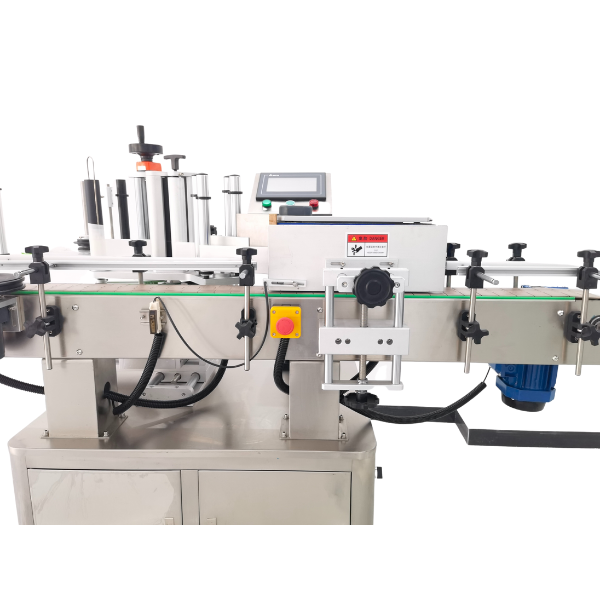
The line-speed workhorse: φ25–100mm round bottles at 40–120 pcs/min, ±1mm.
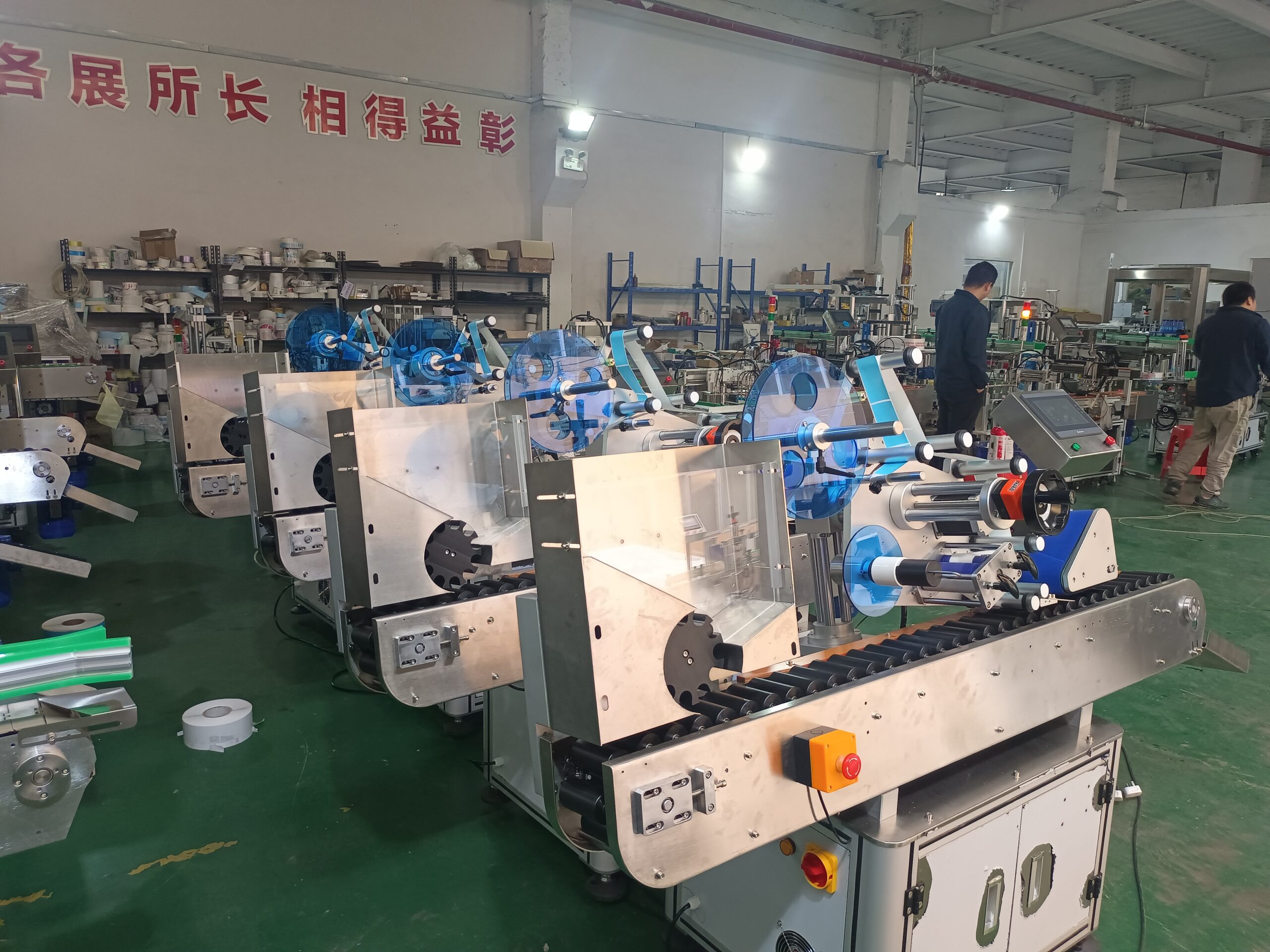
Vials and slim bottles φ10–30mm at up to 300 pcs/min, the fastest platform in the range.
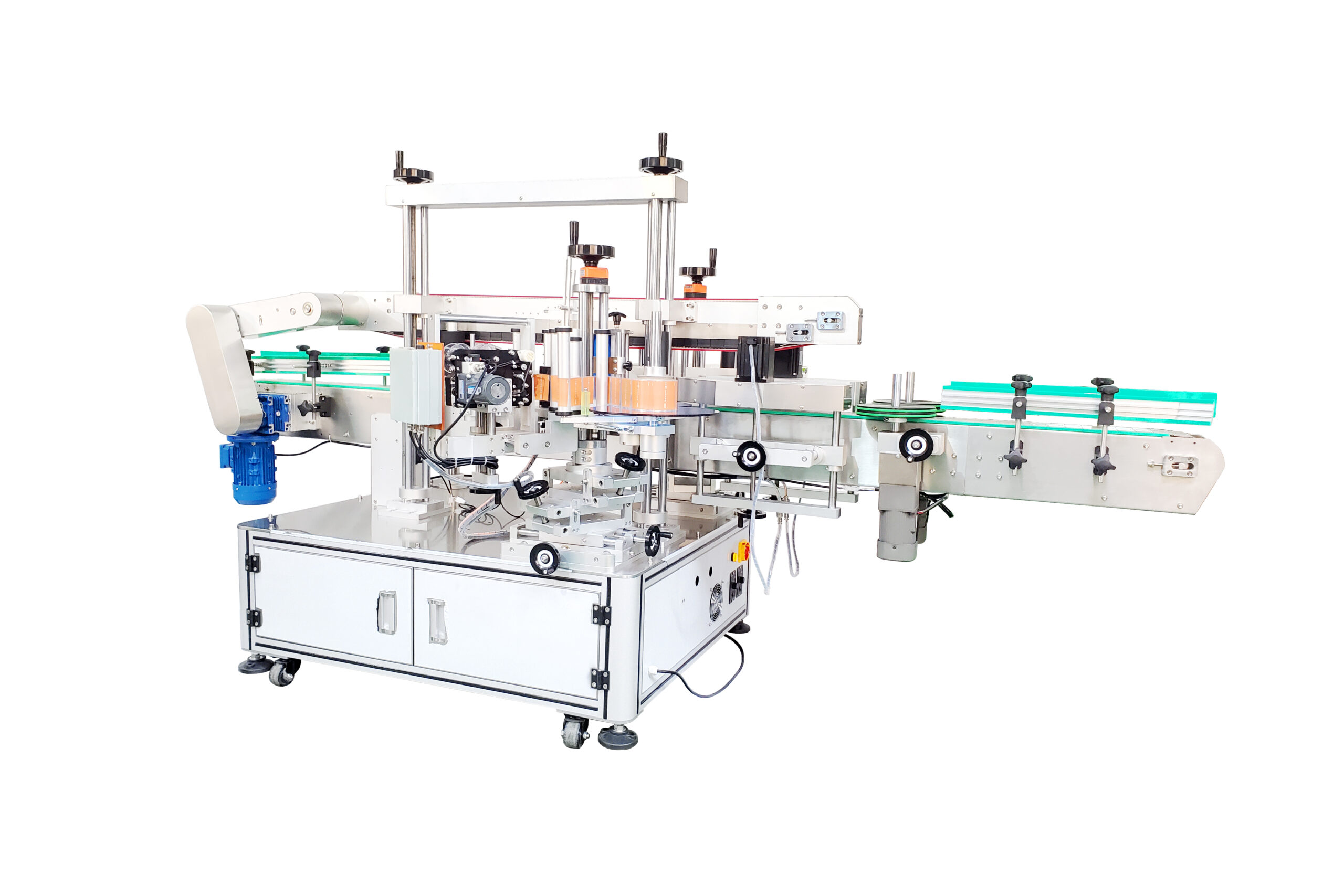
Front & back on square and flat bottles in a single pass.
Wrap-around labeling is geometry before it is machinery. A round bottle of diameter D offers a circumference of π × D; a 60mm bottle gives roughly 188mm of travel. Your label length decides how much of that circle the label covers, and the roller system decides how smoothly the bottle rotates through that arc while the label is pressed home.
Three practical consequences fall out of that arithmetic. First, label length that exceeds what the rollers can press through the wrap angle invites a trapped-air bubble: the tail lifts. Second, the label must start and end on a straight-wall zone; on shoulders and tapers the circumference changes under the label, which is why tapered bottles need jigs. Third, label height must fit inside the straight wall too: a 90mm-tall label on an 80mm straight wall will wrinkle at the shoulder every time.
You don’t need to do this math: send us the bottle and the label and the test video settles it. But knowing the formula tells you why a machine that handles φ10–150mm (T801) is specified by diameter range, not by “bottle type” alone.
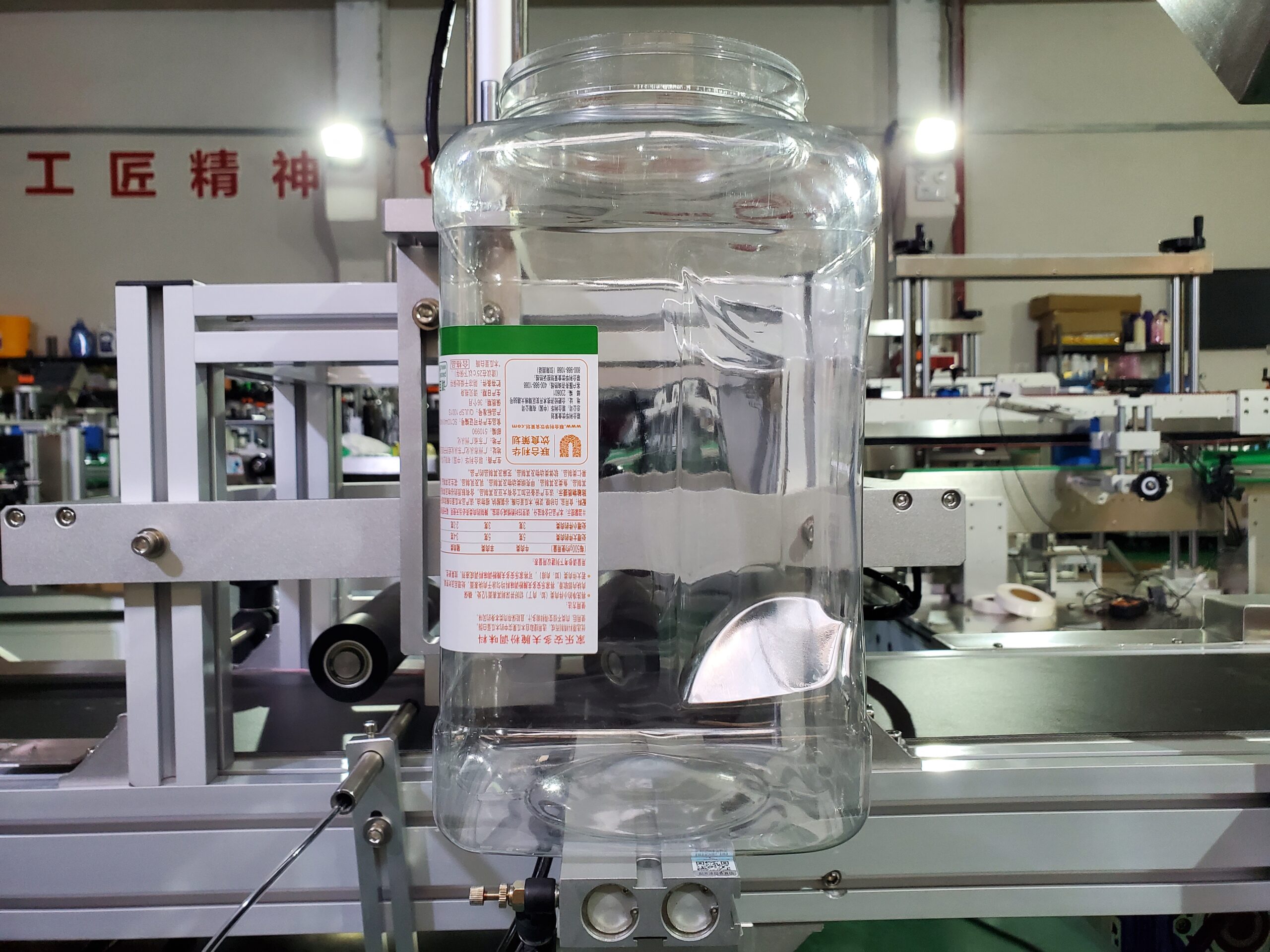
Glossy PET and glass give the roller nothing to grip: the bottle skids, the label lands short and the seam wanders. The countermeasures are mechanical, not software: roller pressure matched to container weight, grip surfaces that bite without marking, and speed ramps that accelerate the bottle into the wrap instead of shocking it. This is exactly what the FAT run on your bottles is for: slip shows up on video in the first minute.
On a φ20mm vial the label curves tightly: a long, stiff label bridges across the curve and wrinkles like a ruffled skirt. The fix is upstream of the machine: shorter labels, taller-thinner formats, or a horizontal platform like the T923 that rolls the vial through with controlled pressure. Label material stiffness matters as much as length; we match both during engineering evaluation.
A taper changes circumference from bottom to top, so any full wrap must either stretch (it won’t) or wrinkle (it will). The honest answers are a shorter front-face label inside the straight zone, or an engineered jig that presents each bottle at a controlled angle. We build both: start at custom labeling solutions and read the tapered bottle guide for the full decision tree.
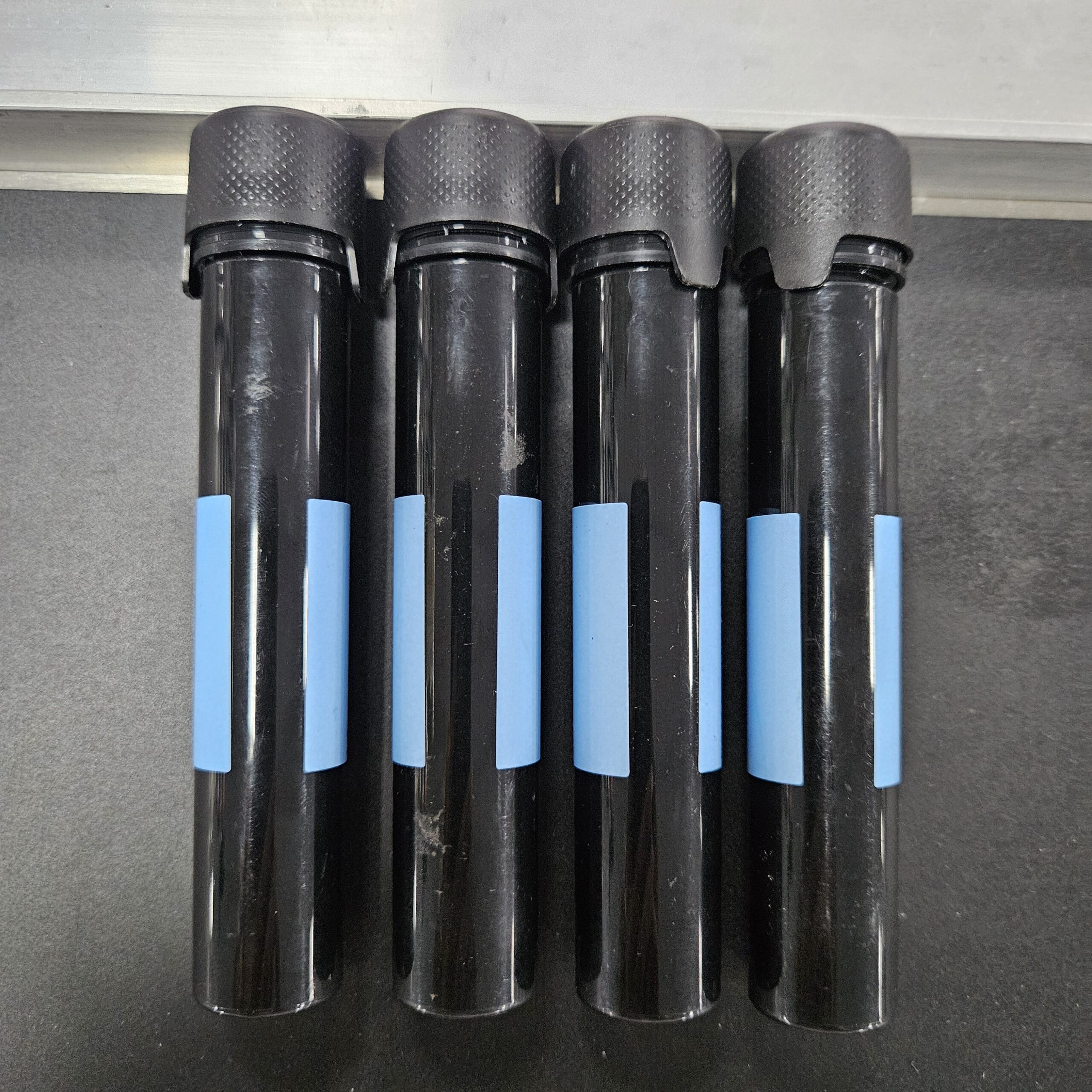
Before/after test footage for slip and wrinkle cases is archived per model.
| Model | Bottle type | Accuracy | Speed | Bottle range (mm) | Label L × W (mm) | Price |
|---|---|---|---|---|---|---|
| T801 · semi-auto benchtop | Round φ10–150 | ±0.5mm | 20–30 pcs/min | φ10–150 × H 20–300 | L 20–300 × W 20–230 | From $600 |
| T803 · semi-auto roller | Oval / flat, front & back | ±0.5mm | 20–30 pcs/min | L 20–120 × W 20–180 × H 0.2–75 | L 15–300 × W 15–130 | From $600 |
| T805 · semi-auto full wrap | Square / flat | ±0.5mm | 15–30 pcs/min | L 20–200 × W 20–150 × H 5–120 | L 15–200 × W 20–150 | From $600 |
| T921 · automatic wrap | Round φ25–100 | ±1mm | 40–120 pcs/min | φ25–100 × H 25–300 | L 20–300 × W 20–100 | From $6,000 |
| T923 · automatic horizontal | Round φ10–30 | ±1mm | 100–300 pcs/min | φ10–30 × H 15–110 | L 20–300 × W 20–120 | From $6,000 |
| T962 · automatic double side | Square / flat | ±1mm | 60–120 pcs/min | L 20–300 × W 30–100 × H 60–360 | L 20–300 × W 20–175 | From $6,000 |
Check today’s bottle and next year’s. The benchtop T801 spans φ10–150 × H 20–300mm; deliberately wide, because SKU creep is the rule, not the exception. Automatic platforms are narrower per model (T921: φ25–100; T923: φ10–30), so line-level buyers should map every current SKU against the range before choosing.
The label can only live where the wall is straight and the circumference is constant. Measure your straight-wall zone honestly (including how much is eaten by embossing, shrink marks and handle bosses) and keep label height inside it with margin.
Rated 15–300 pcs/min means little without the working condition. We quote accuracy at your target speed with your container (±0.5mm benchtop, ±1mm automatic) and prove it in the FAT video before you pay the balance.
Clear-on-clear labels need special sensing (SICK special sensors, fitted where the label spec calls for them). Declare transparent labels at inquiry: discovering it after delivery costs a sensor retrofit, not just a setting.
Ask what a size change physically involves: scaled adjustments and pin swaps (ours) versus shims and hex keys (some). A 20-minute changeover on a 5-SKU line is a part-time job nobody applied for.
For automatic units we need conveyor height, travel direction and footprint. No room for a full machine? The labeling heads mount onto the conveyor you already run, see the retrofit guide.
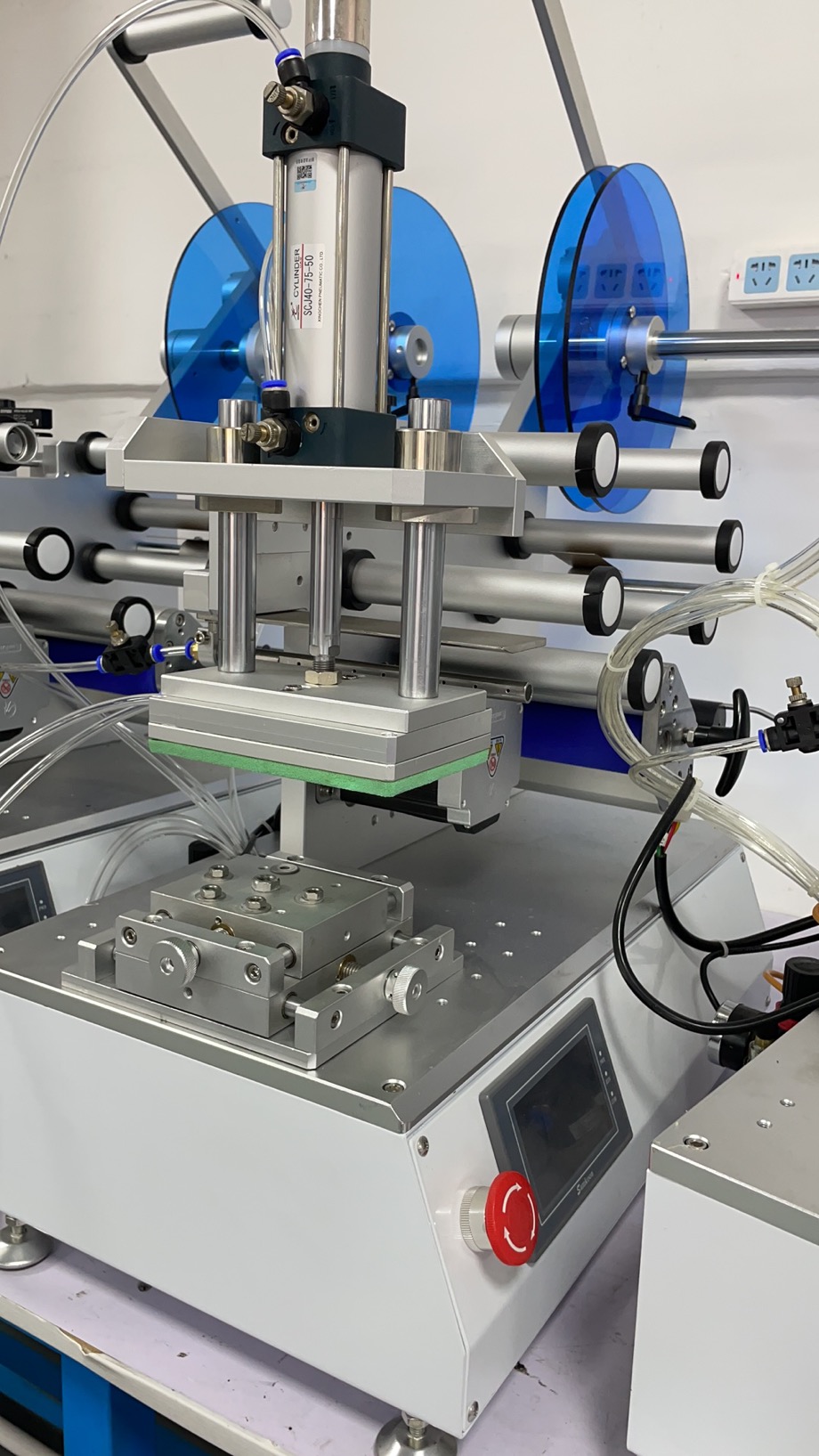
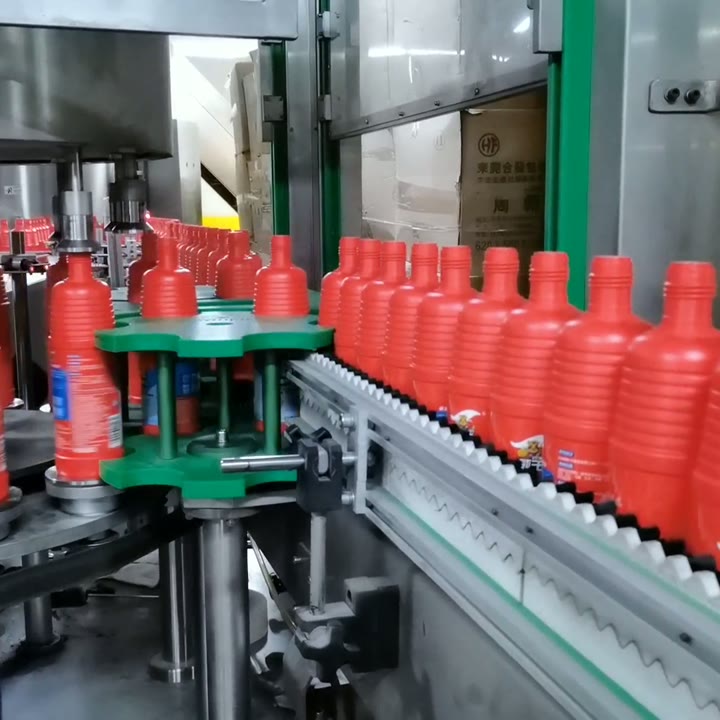
Front-and-back body labels plus neck labels on MT-190e platforms; high-speed wrap for beer and water. Beverage, wine & brewery →
Hot sauce, honey, condiments: round and tapered formats, net-content panel placement kept inspector-ready. Food & beverage →
Straight-wall cosmetic bottles, flat shampoo geometry, clear-on-clear labels. Cosmetics →
Semi-automatic bottle labelers start from $600; fully automatic models run to $15,000 depending on platform, speed and conveyor integration. The price center explains what drives each tier, and a firm quote follows the test run.
The benchtop T801 covers φ10–150mm diameter and 20–300mm height on one machine. Automatic platforms are model-specific: T921 handles φ25–100 × H 25–300mm; T923 horizontal covers φ10–30 × H 15–110mm; T962 takes containers up to L 300 × W 100 × H 360mm. Send all your SKUs’ dimensions and we map them before quoting.
Yes. The semi-automatic MT-860 and the automatic T962 apply both labels in a single pass. Square-bottle geometry has its own engineering challenges (corner wrinkles, diagonal label climb) covered in depth on the double-side labeling machine page.
Yes, with engineered jigs. A taper changes circumference along the label path, so we either shorten the label into the straight zone or build a fixture that presents the bottle at a controlled angle. The full approach is in the tapered bottle labeling guide, and the jigs are archived for reorders.
Yes, provided the sensor matches the label. Transparent labels are invisible to standard sensors, so we fit special SICK sensors on the relevant platforms; for example the T803 is specified for transparent-label detection. Declare clear-on-clear at inquiry and we prove it in the test video.
Specified accuracies are ±0.5mm on the semi-automatic range (±0.2mm on the T807 flat-surface model) and ±1mm on automatic platforms, quoted against your working condition: your container, label and target speed. We demonstrate accuracy at speed in the FAT video before shipment.
Yes: the MT-190e/190 applies front and back labels on round bottles including wine bottles at benchtop scale, and the T803 roller platform covers oval and flat formats. For higher volumes, the T962 double-side platform runs 60–120 pcs/min. See beverage, wine & brewery for line layouts.
That is our standard process, not a special favor: send bottles and labels, and you receive a test-run video within 48 hours of our engineering evaluation. The same footage becomes your FAT evidence before the 70% balance; details in FAT & quality.
30% deposit starts the build; the FAT video of your own bottles at your own speed releases the shipment. The 10-point checklist: FAT & quality process.