
MT-50 / MT-60 / MT-130 · Desktop Entry
The lowest-cost step out of hand labeling: compact tabletop units for small round bottles (MT-50/130) and small flat pieces (MT-60).
From $600 desktop units to ±0.2mm precision floor models; one operator, 15–30 bottles per minute.
Answer three questions and we will shortlist two or three models that fit your container and volume.
From $600 desktop starters to ±0.2mm precision floor models; one operator per machine, foot pedal or touch-screen control, 15–30 pcs/min.
The lowest-cost step out of hand labeling: compact tabletop units for small round bottles (MT-50/130) and small flat pieces (MT-60).
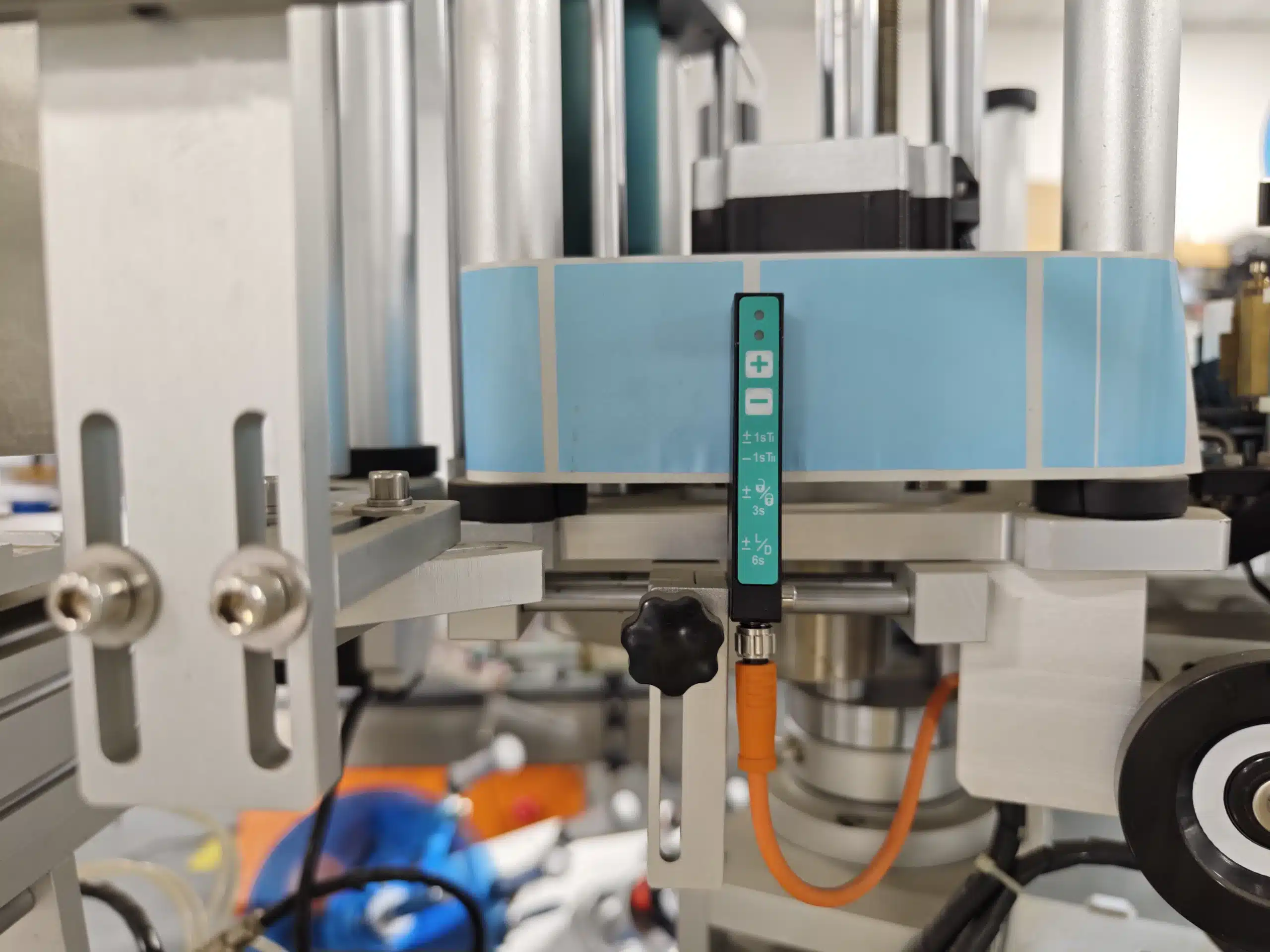
Front and back labeling on round bottles: wine, sauce and more; electric (190e) or pneumatic (190).
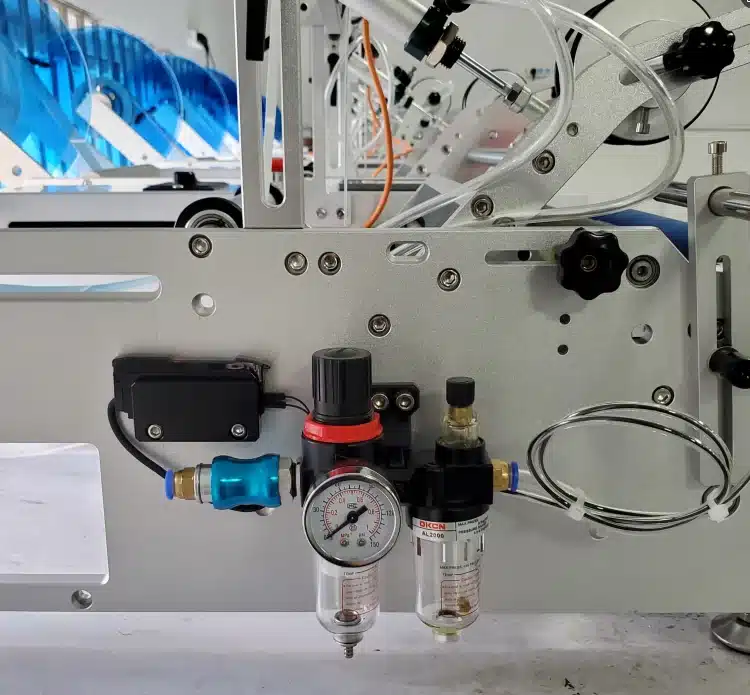
The flagship semi-automatic round bottle labeler: floor-standing, ±0.5mm, covering vials to wide jars on one bench.
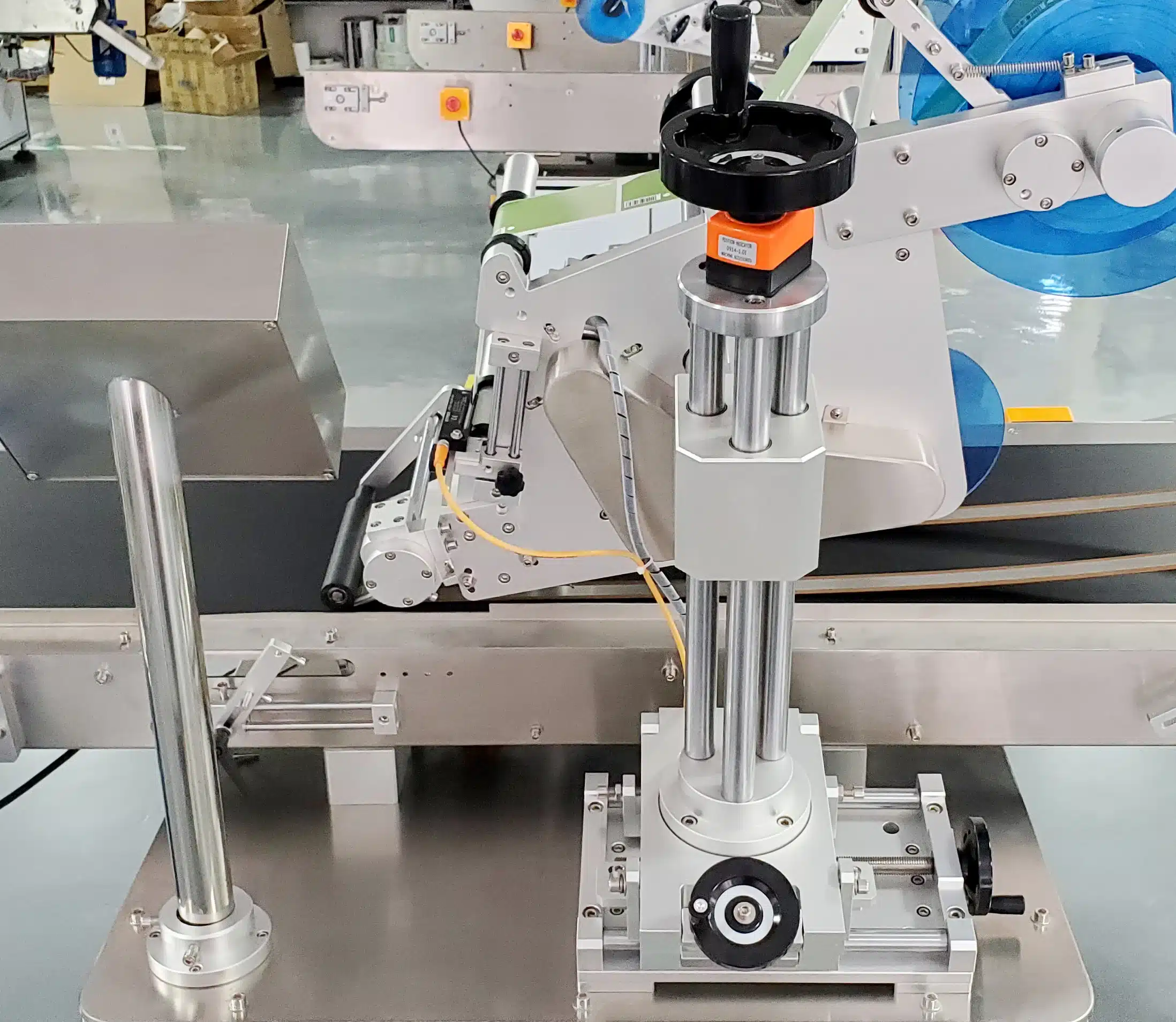
A suction head lifts each label and presses it onto flat surfaces: boxes, pouches, lids and cards from 0.2mm thin.
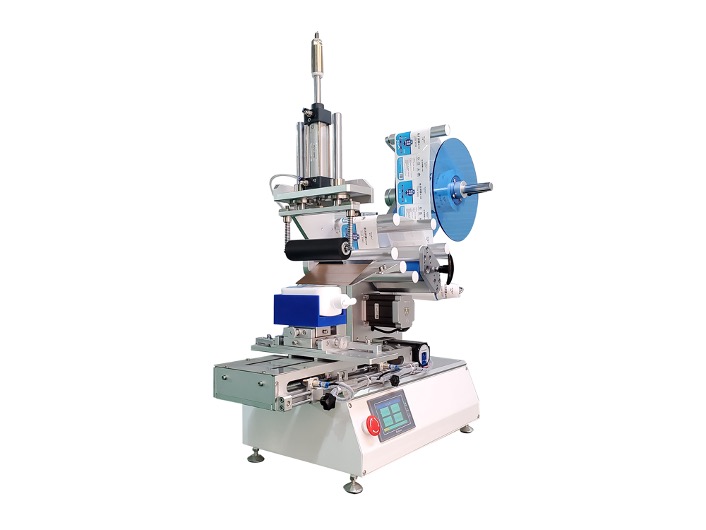
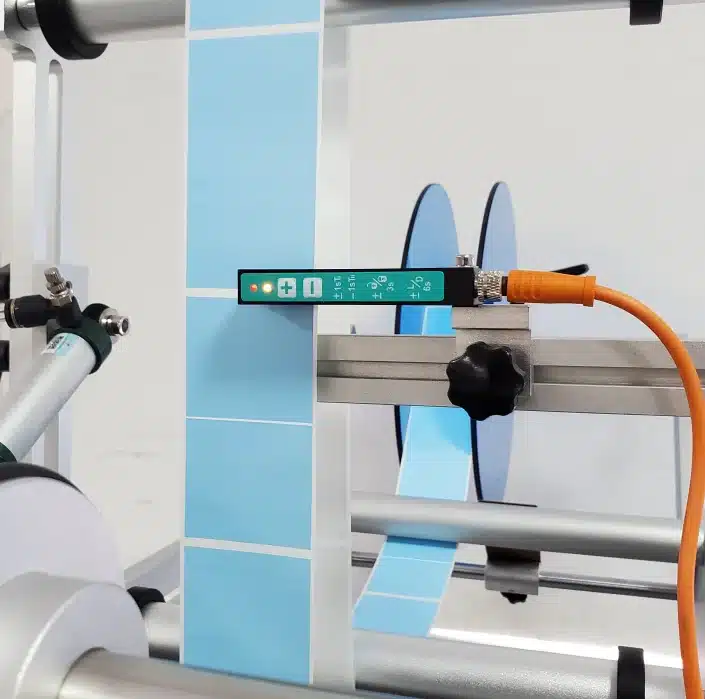
Roller-applied front and back labels for curved and flat bottles; its SICK sensor detects transparent labels too.
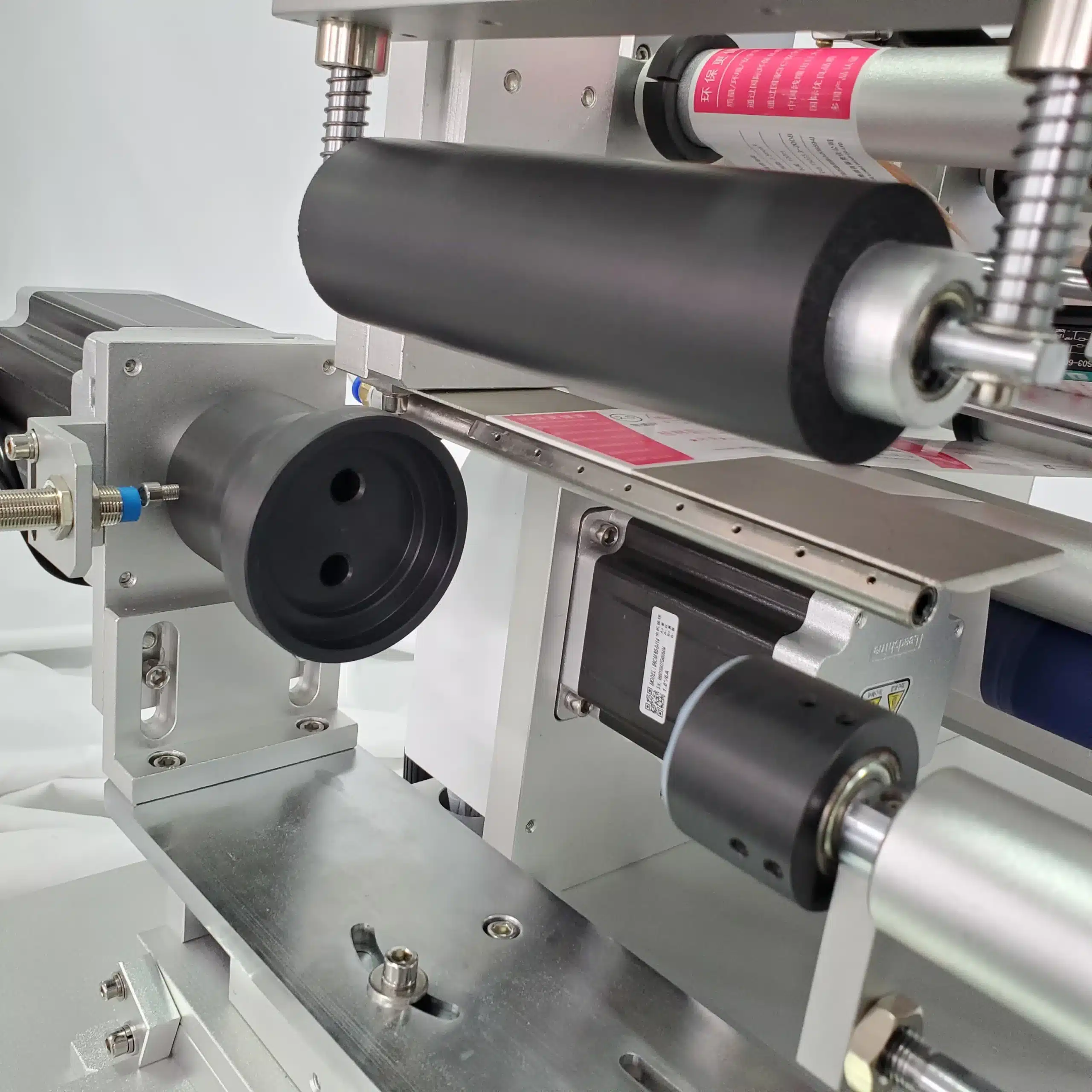
Full wrap-around for flat and square bottles: the hard geometry ordinary labelers can’t handle.
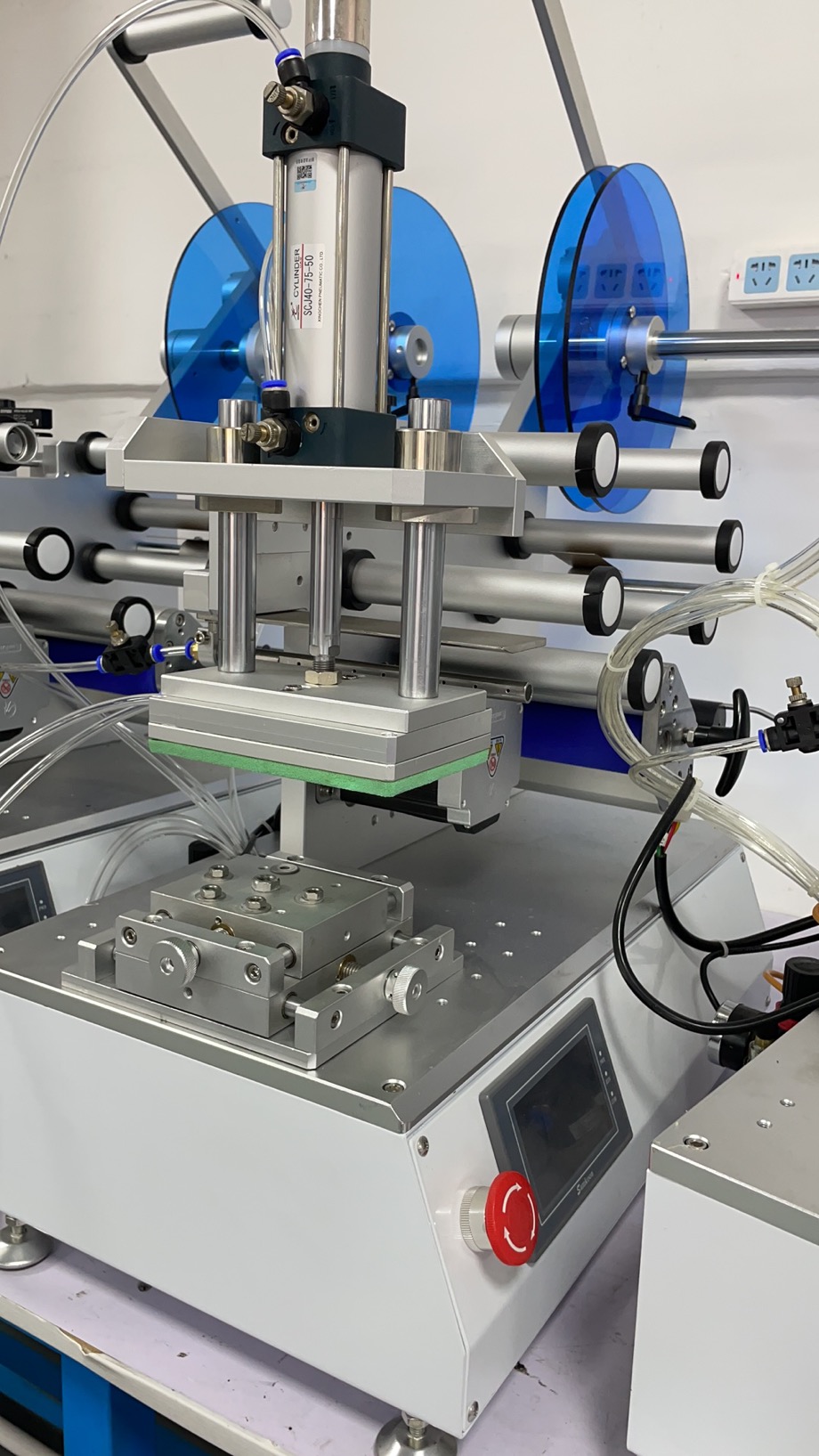
Three-cylinder suction structure with ±0.2mm precision; our most accurate labeler, for small labels on premium flat surfaces.
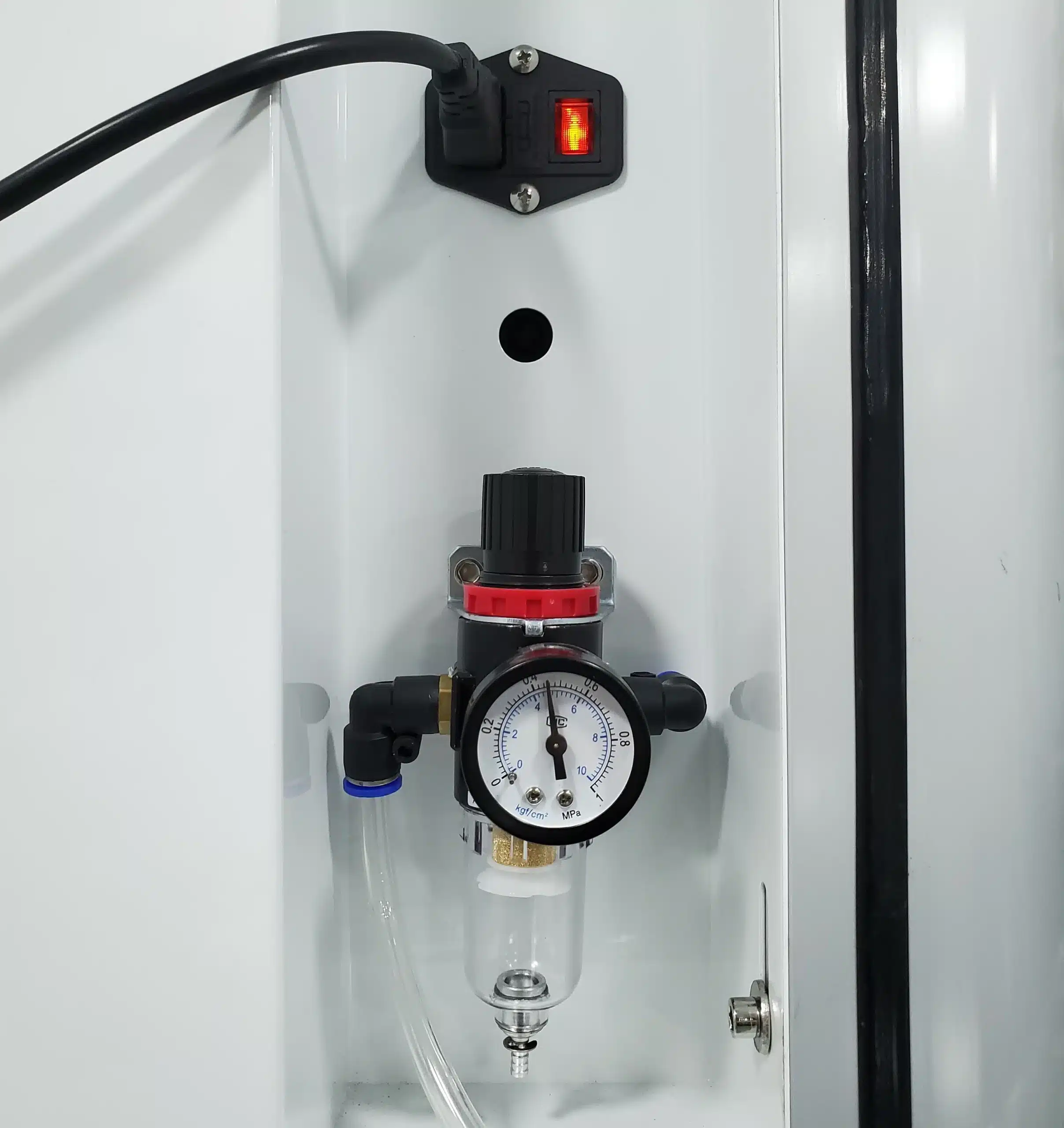
Fold-over flag labeling for anything long and thin: tubes, wire and cable, pens.
| Model | Accuracy | Speed | Product range (mm) | Label L × W (mm) | Footprint (mm) | Power / weight | Price |
|---|---|---|---|---|---|---|---|
| T801 · floor round bottle | ±0.5mm | 20–30 pcs/min | φ10–150 × H 20–300 | L 20–300 × W 20–230 | 950×560×520 | 220V 200W / ≈45 kg | From $600 |
| T802 · flat suction | ±0.5mm | 20–30 pcs/min | L 20–200 × W 20–150 × H 0.2–120 | L 20–100 × W 15–130 | 840×470×840 | 220V 300W / ≈48 kg | From $600 |
| T803 · front & back roller | ±0.5mm | 20–30 pcs/min | L 20–120 × W 20–180 × H 0.2–75 | L 15–300 × W 15–130 | 880×540×880 | AC220V 500W / ≈58 kg | From $600 |
| T805 · full wrap square/flat | ±0.5mm | 15–30 pcs/min | L 20–200 × W 20–150 × H 5–120 | L 15–200 × W 20–150 | 950×780×900 | 220V 660W / ≈60 kg | From $600 |
| T807 · high-precision flat | ±0.2mm | 20–30 pcs/min | L 10–300 × W 20–300 × H 5–85 | L 10–50 × W 5–100 | 550×440×870 | 220V 300W / ≈45 kg | From $600 |
| MT-50 / 60 / 130 · desktop | [TBC] | [TBC] | Small round bottles / flat pieces | [TBC] | [TBC] | [TBC] | From $600 |
| MT-190e / 190 · front & back | [TBC] | [TBC] | Round bottles, wine bottle front & back | [TBC] | [TBC] | [TBC] | From $600 |
| T808 · fold-over | [TBC] | [TBC] | Tubes, wires, pens | [TBC] | [TBC] | [TBC] | From $600 |
Hand labeling works until it doesn’t. One person can keep quality up for a batch of 100–200 bottles; beyond that, crooked labels and bubble traps creep in, and the bottleneck starts deciding how many orders you can accept.
A semi-automatic machine removes the human alignment problem: you load, trigger, and the machine wraps or presses the label to ±0.5mm at 15–30 pcs/min. At a realistic 20 pcs/min, one operator and one machine out-produce three people hand-labeling, with reject rates you can actually audit.
The jump to a fully automatic labeling machine makes sense when volume outgrows one station: typically when a shift needs more than one dedicated labeling operator, or when the machine must keep pace with an automatic filler. Work your own hourly rate and daily volume through the upgrade & break-even calculator before you decide.
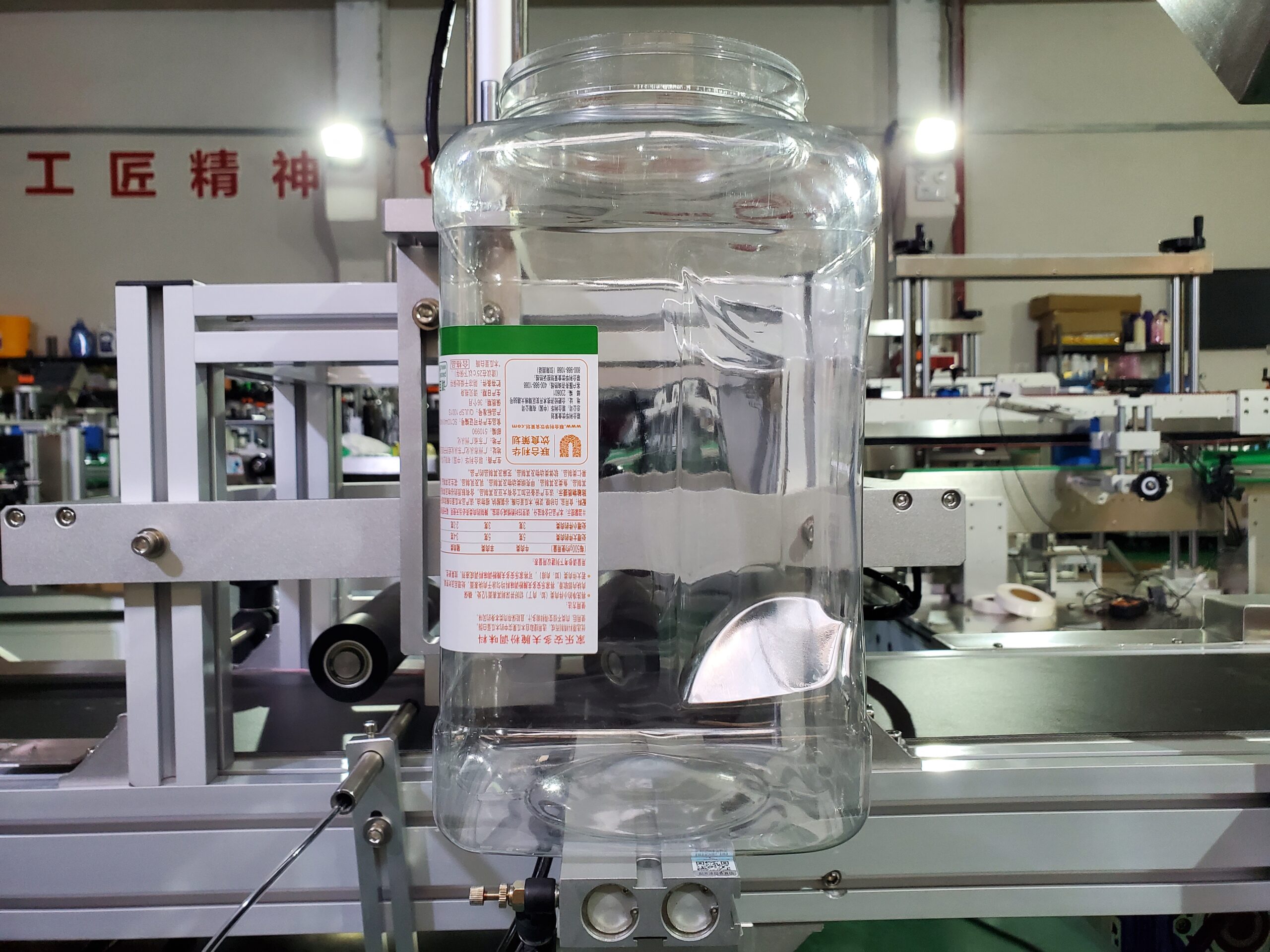
The cycle is three moves: place a bottle against the jig, press the pedal, lift the finished bottle out. At 20–25 pcs/min, 2,000 bottles is roughly 80–100 minutes of trigger time; the rest of the day is loading empty racks, unloading finished ones and swapping label rolls.
That is the honest arithmetic of a semi-automatic: it multiplies one careful person instead of replacing them. Most of our semi-auto customers run exactly this pattern (a morning batch, an afternoon batch, one roll change per day), and the operator finishes with dry hands and a stack of identical bottles.
Watch a real operator pace in the test videos: the rhythm is visible within ten seconds, and so is the consistency.
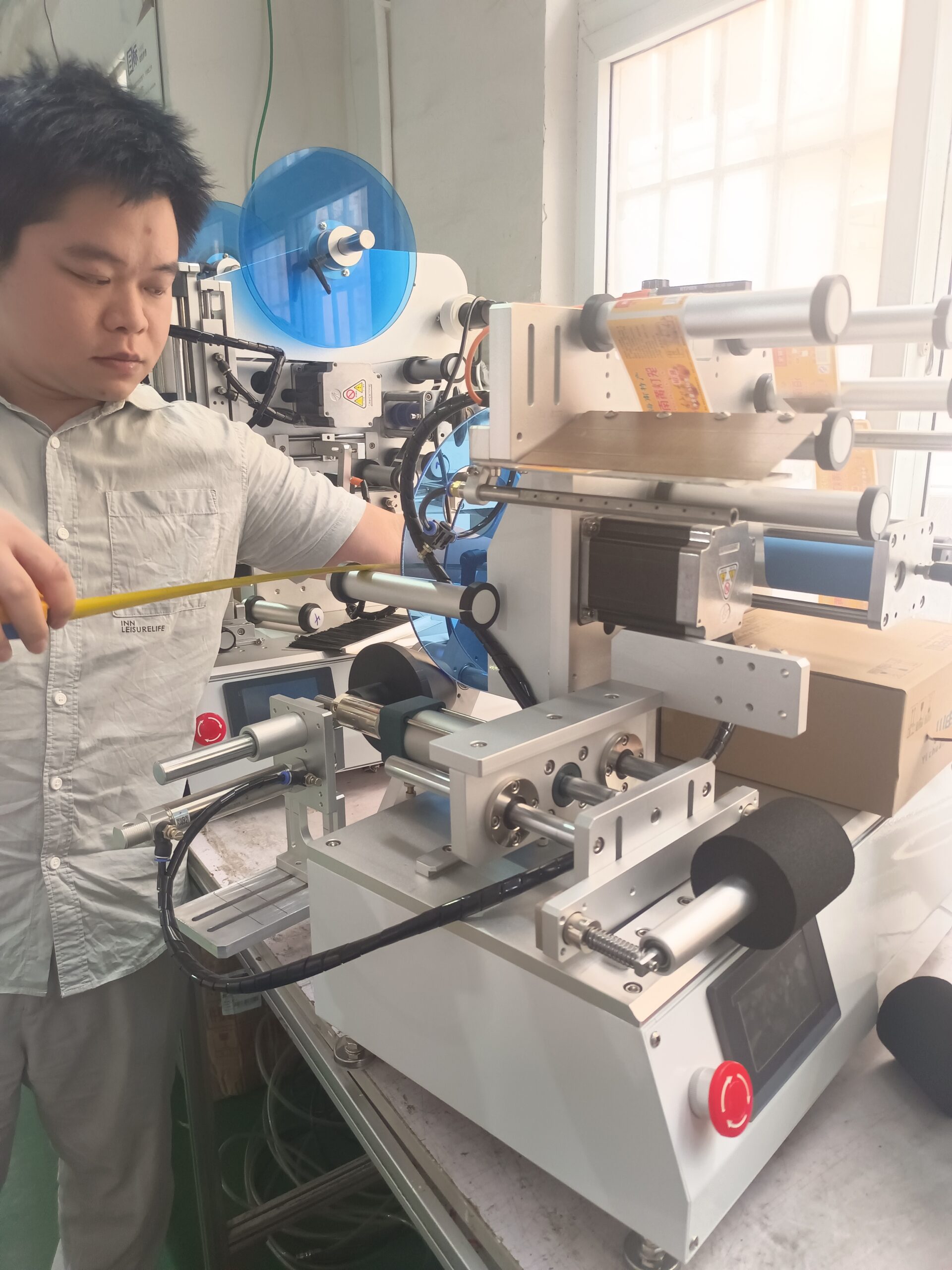
Filmed session: 2,000-bottle day on a T801, unedited pedal-to-packed pacing.
These are not hypothetical markets: each category below has been through our factory test bench, and the footage is archived.
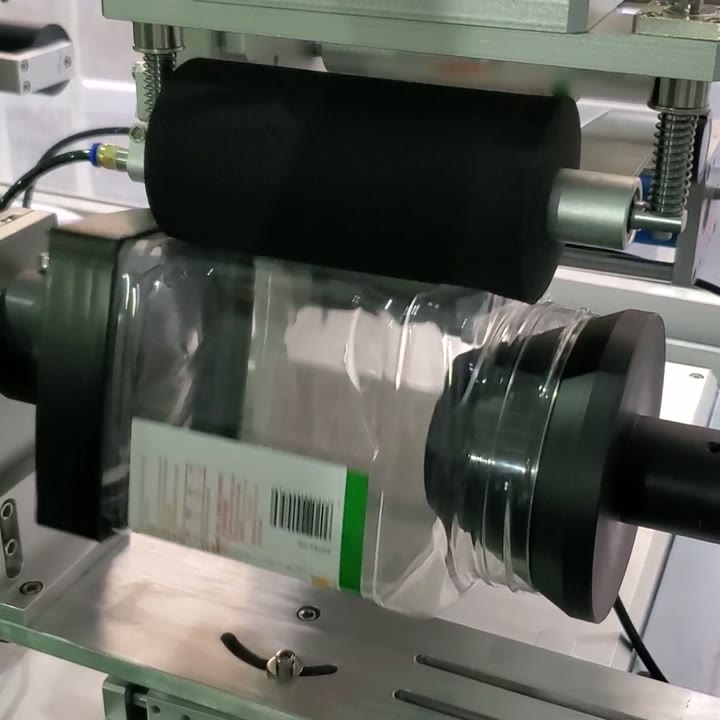
Straight-wall cosmetic bottles and facial-cleanser tubes labeled front-and-back on the T803 roller platform. Cosmetics industry →
Round jars and woozy-style sauce bottles wrapped on the T801. Food & beverage →
Slim φ10–30mm containers handled on the benchtop tier, with the automatic upgrade path via the T923.
Small cylinders and fold-over flag labels via the T808, a niche the desktop tier owns.
Clear film pouches labeled with transparent-label sensing: the T803’s special SICK sensor setup.
Front and back labels on wine bottles with the MT-190e/190. Wine & brewery →

MT-50/60/130 and MT-190e/190 live on a bench, plug into a wall, and cost the least. They are the right call when batches are small, SKUs change constantly and floor space is worth more than throughput. A tabletop unit travels: many customers start it at the kitchen bench and graduate it to the studio corner.
T801–T808 bring caster-mounted frames, bigger label capacity, wider size ranges (T801 covers φ10–150mm) and higher precision, including the ±0.2mm T807. They are the right call when labeling is daily work, when two product families share the machine, or when accuracy is a brand promise.
Transparent labels are invisible to standard label sensors: the beam passes straight through film and liner alike. The fix is a special sensor tuned to detect the boundary between clear material and backing, and it is exactly what the T803’s SICK sensing setup was specified for.
If your brand uses clear-on-clear, tell us at inquiry stage: we confirm sensor selection during engineering evaluation and prove it on your own label material in the test video, before you commit.
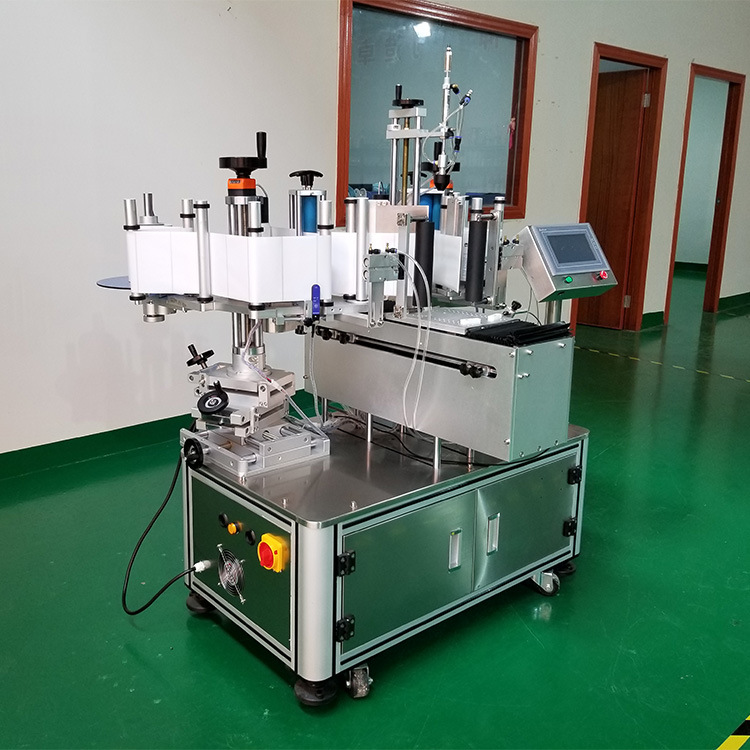
Front-and-back roller platform with transparent-label detection, confirmed on your material during the FAT run.
The range starts from $600 for desktop entry units; floor-standing models with full specifications typically land between $600 and $4,500 depending on platform and options. Send your bottle and label for a firm quote.
A semi-automatic machine applies the label but a person loads and unloads each container: 15–30 pcs/min with one operator. A fully automatic machine feeds itself from the conveyor and runs 40–300 pcs/min unattended. The upgrade pays for itself when volume exceeds one labeling station; the break-even calculator runs your numbers.
Rated speed is 15–30 pcs/min. In practice, plan on 900–1,500 bottles per hour of continuous labeling at 15–25 pcs/min, plus loading and unloading time. At a realistic 20 pcs/min, 2,000 bottles a day is about 80–100 minutes of trigger time.
Yes, that is the T805’s specialty: full wrap-around labeling for flat and square bottles at ±0.5mm, products up to L 200 × W 150 × H 120mm. For front-and-back-only application on square bottles, see the double-side labeling machine range including the semi-automatic MT-860.
Yes, on the T803 platform. Its SICK special sensor detects transparent labels that standard sensors miss. Declare clear-on-clear at inquiry so we match the sensor and prove it on your material in the test video.
Standard machines run 220V 50/60Hz. A 110V 60Hz export version for North America is available on request [TBC; voltage certification list pending]. Tell us your market at quotation and we ship the correct configuration.
Standard semi-automatic machines dispatch within 7–10 days of payment confirmation. Every unit is fully assembled, adjusted and test-run with your product samples before it leaves; the test video ships with the machine.