
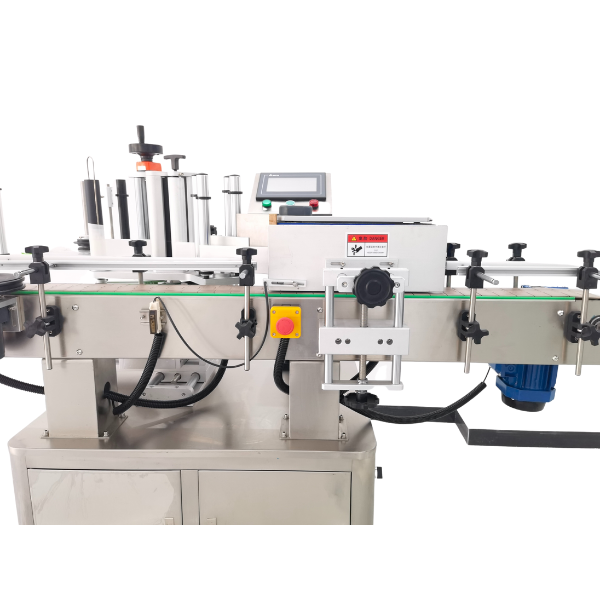
T921 · Wrap-Around Round Bottle
The workhorse automatic round bottle labeling machine: roller wrap-around for food, beverage, chemical and cosmetic lines that never stop.
Wrap-around, positioning, double-side and special-application systems from 40 to 300 pcs/min, factory-tested with your bottles before shipping.
Eight automatic platforms cover round bottles, small vials, flat surfaces, pouches and double-sided cartons.
The workhorse automatic round bottle labeling machine: roller wrap-around for food, beverage, chemical and cosmetic lines that never stop.
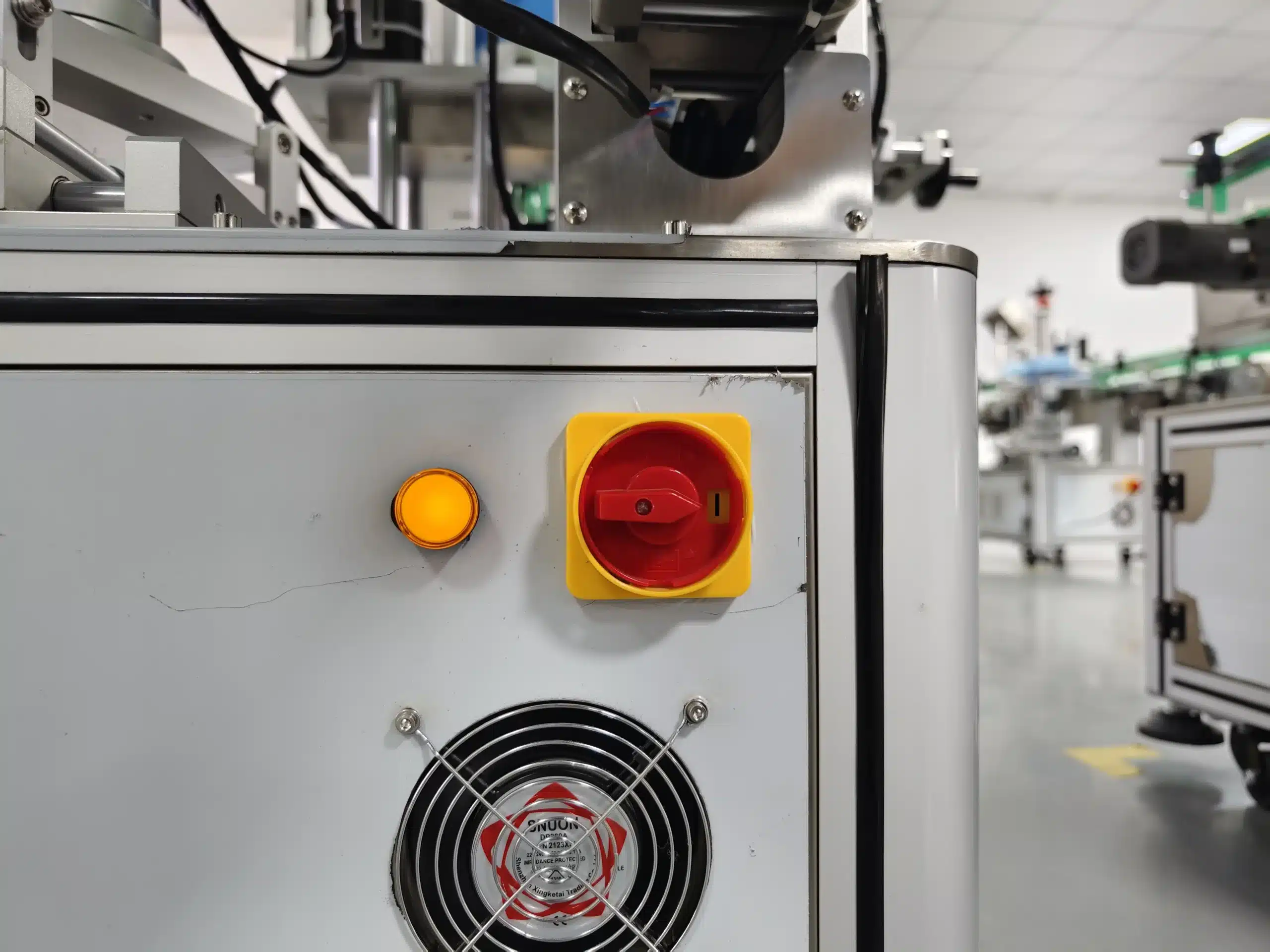
Rotary positioning labeler that lands the label at a fixed clock position; T922R adds star-wheel handling.
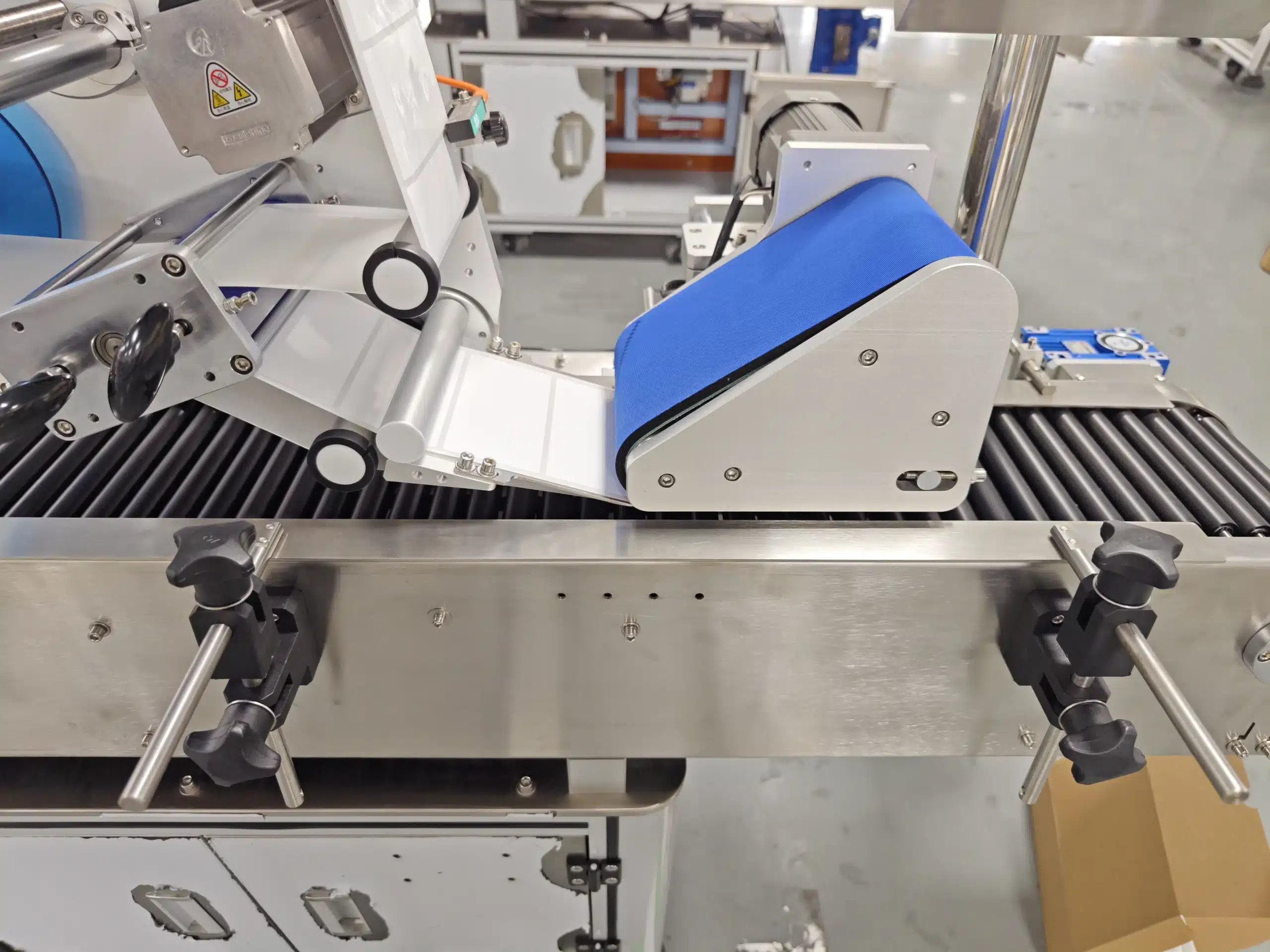
Vials, ampoules and e-liquid pods roll through lying down: stable labeling for φ10–30mm containers at up to 300 pcs/min.
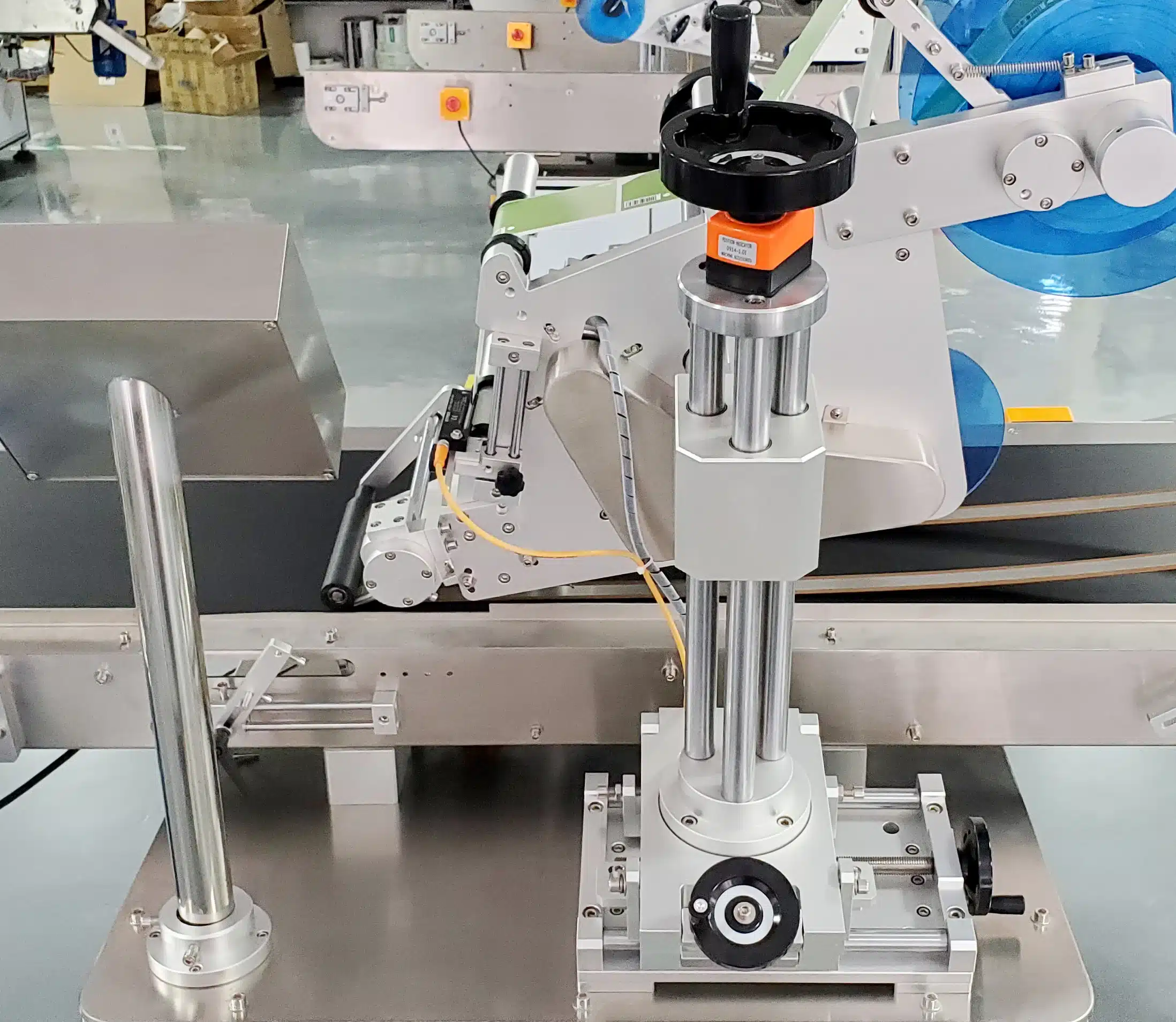
Inline flat labeling for boxes, cartons, lids and pouches, one accurate hit on any face.
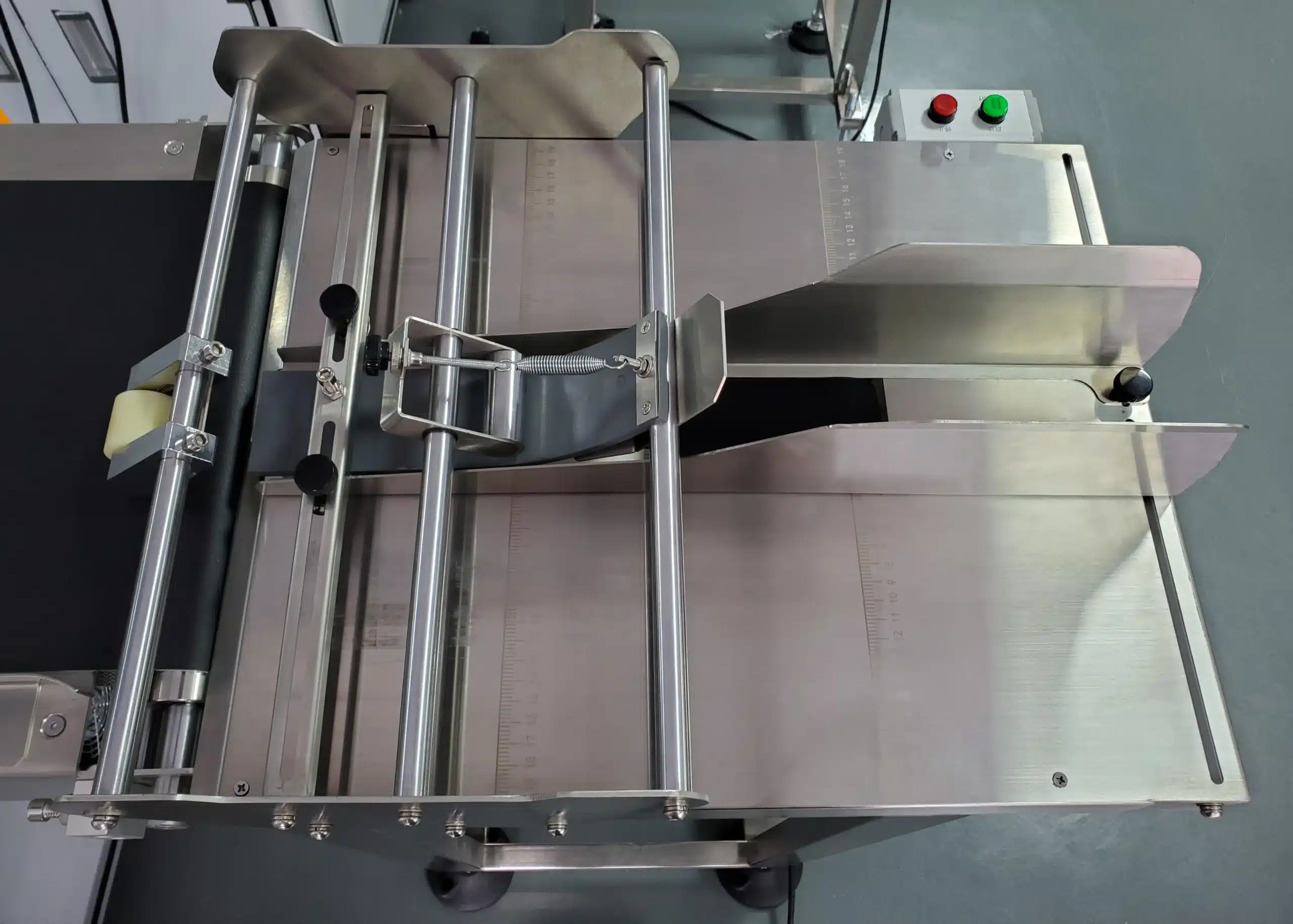
A friction page-feeder separates and labels cards, sachets and flat pouches from 0.2mm thick.
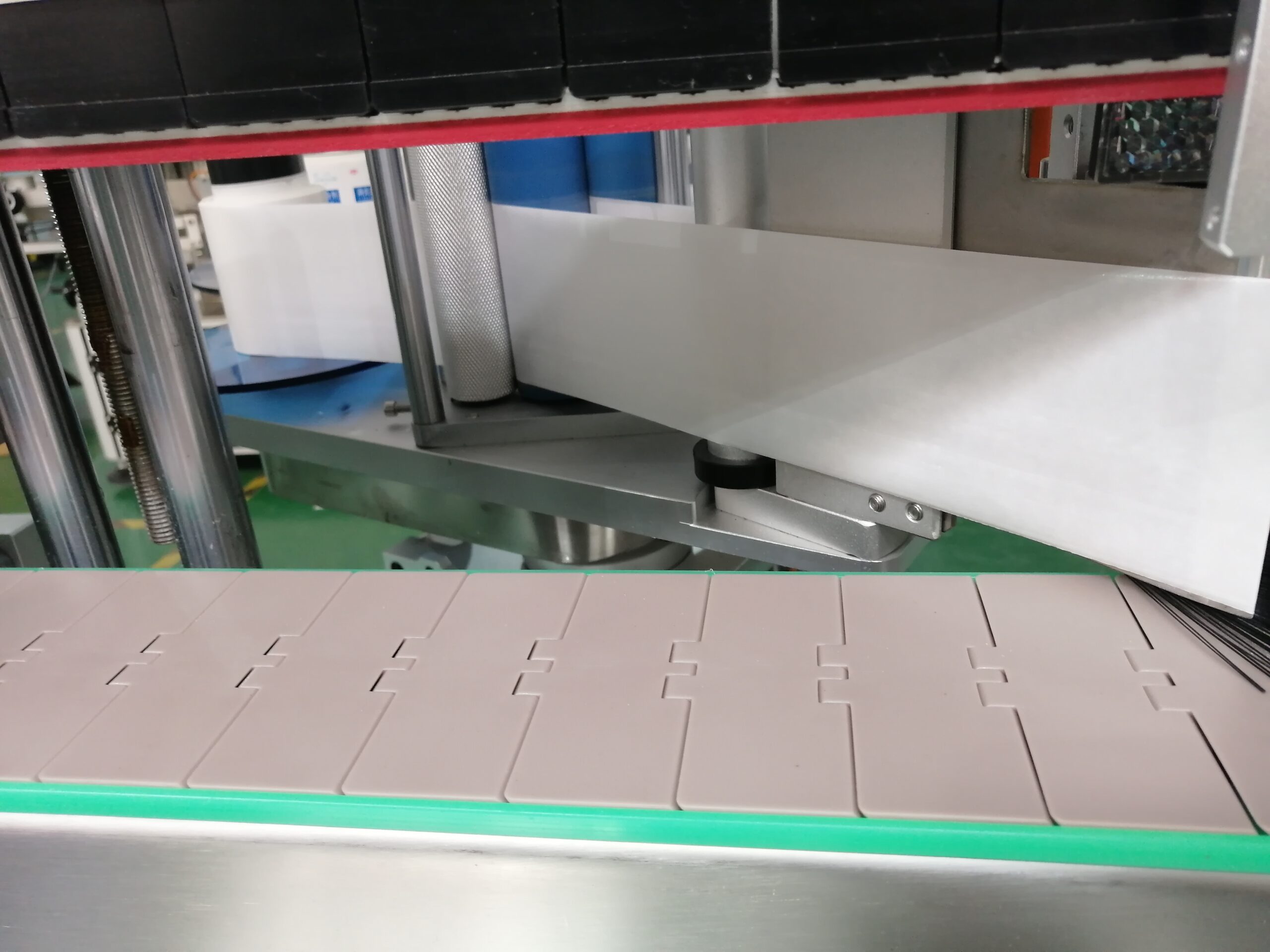
One-sided inline labeling for rectangular cartons and containers, the economical entry into fully automatic side labeling at 60–120 pcs/min.
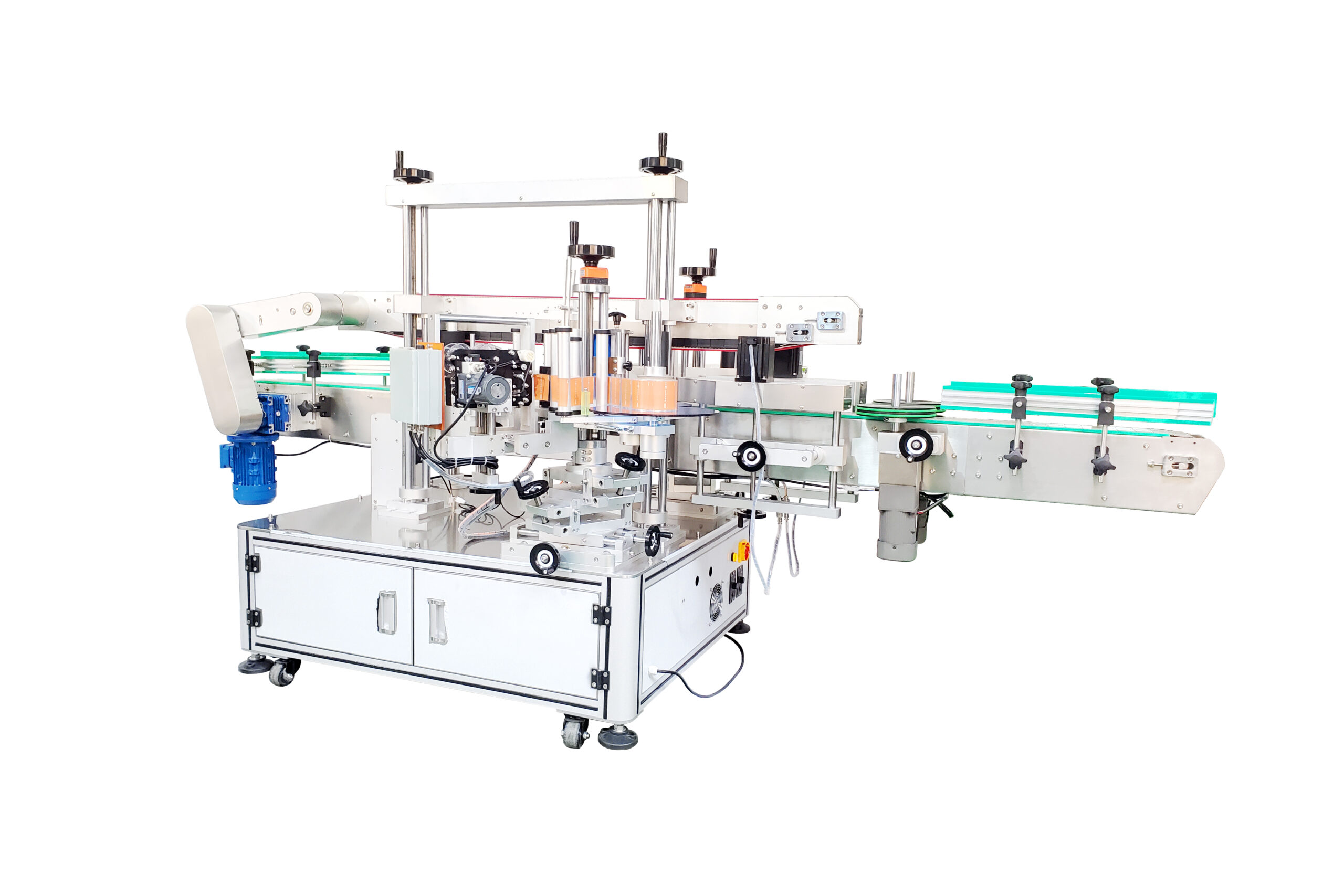
Front & back labels applied in a single pass on square and flat bottles.
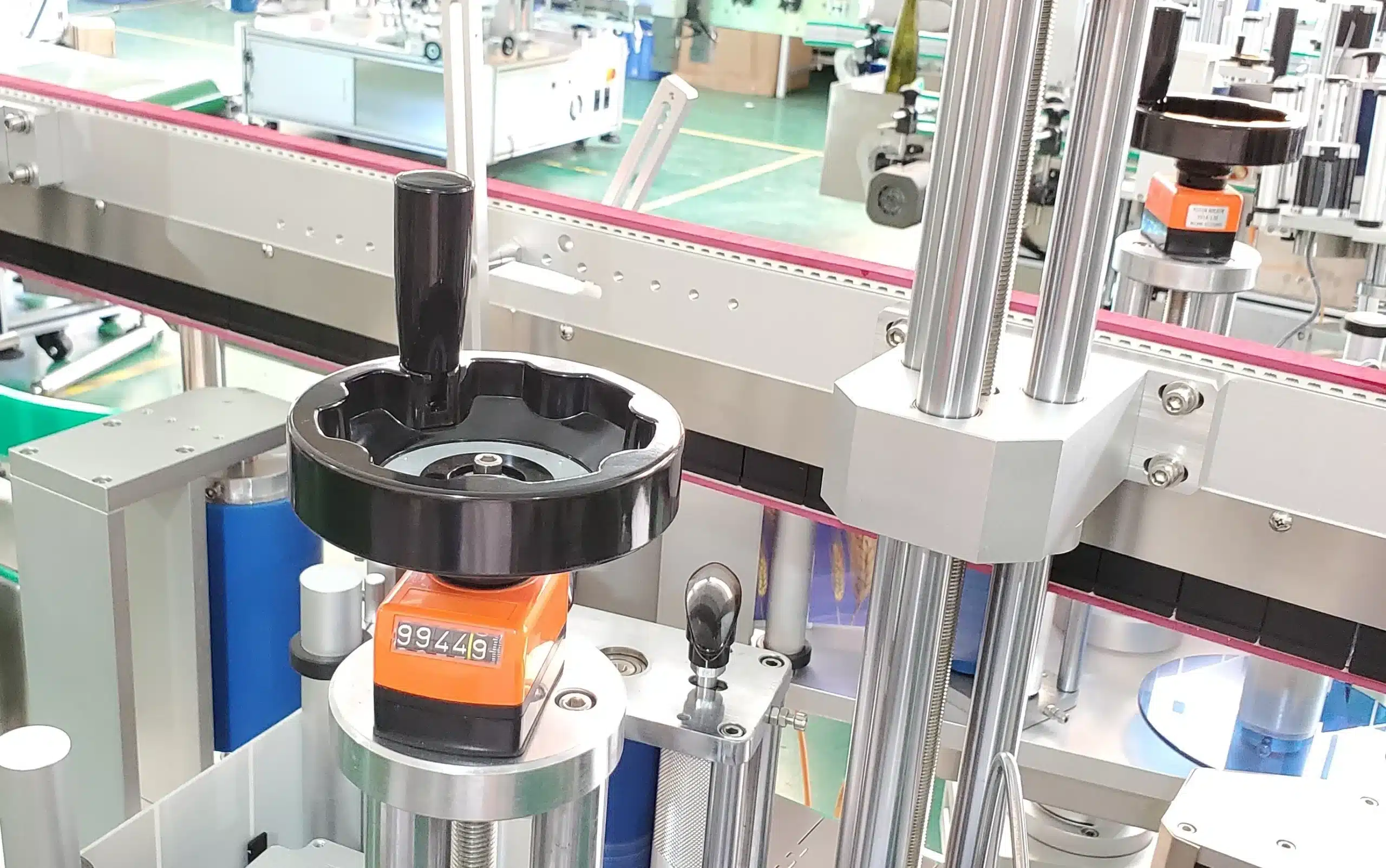
One machine, two duties: double-side application for flat bottles and wrap-around for round bottles, the answer to mixed-SKU filling halls.
Real specification-sheet numbers: accuracy, speed, container and label ranges, power and weight.
| Model | Type | Accuracy | Speed | Container range (mm) | Label L × W (mm) | Power | Weight | Price |
|---|---|---|---|---|---|---|---|---|
| T921 | Wrap-around round bottle | ±1mm | 40–120 pcs/min | φ25–100 × H 25–300 | L 20–300 × W 20–100 | AC220V 800W | ≈215 kg | From $6,000 |
| T922 / T922R | Positioning round bottle (star-wheel) | ±1mm | [TBC] | Round bottles | [TBC] | [TBC] | [TBC] | From $6,000 |
| T923 | Horizontal small bottle | ±1mm | 100–300 pcs/min | φ10–30 × H 15–110 | L 20–300 × W 20–120 | AC220V 800W | ≈220 kg | From $6,000 |
| T931 | Flat surface | ±1mm | [TBC] | Flat products | [TBC] | [TBC] | [TBC] | From $6,000 |
| T932 | Page-fed cards & bags | ±1mm | 40–120 pcs/min | L 40–300 × W 40–200 × H 0.2–5 | L 6–300 × W 15–130 | 220V 600W | ≈224 kg | From $6,000 |
| T961 | Single side | ±1mm | 60–120 pcs/min | L 20–300 × W 30–100 × H 60–360 | L 20–300 × W 20–175 | AC220V 2400W | ≈520 kg | From $6,000 |
| T962 | Double side | ±1mm | 60–120 pcs/min | L 20–300 × W 30–100 × H 60–360 | L 20–300 × W 20–175 | AC220V 2400W | ≈520 kg | From $6,000 |
| T963 | Double side + round combo | ±1mm | 60–120 pcs/min | L 20–250 × W 30–90 × H 60–280 | L 20–300 × W 20–175 | 220V 1500W | ≈520 kg | From $6,000 |
If your label is a single wrap that can start anywhere on the circumference, the T921 roller system is the fastest and most economical route. The moment your label must align with a cap knurl, a seam, a spout or a printed mark, you need the T922 positioning platform: the bottle is clocked to a fixed angle before the label is released. Tell us what the label must line up with and we will confirm which of the two survives the test video.
Tiny containers will not stand still on a belt at speed. The T923 takes them lying down: vials, ampoules, lip balm and e-liquid bottles roll along guide rails and come out labeled at up to 300 pcs/min, the highest throughput in the range.
Square and flat bottles need two labels pressed from two sides, or they need a full wrap that must not wrinkle over the corners. The T962 applies front and back in one pass. The full engineering story (including the diagonal-wrinkle fix) lives on the double-side labeling machine page.
Thin, flat products such as cards, sachets and pouches are best fed from a stack, one sheet at a time. The T932 page-feeder handles products from 0.2mm thick with labels as small as 6mm long.
Match the platform to your honest peak demand, not your best daydream:
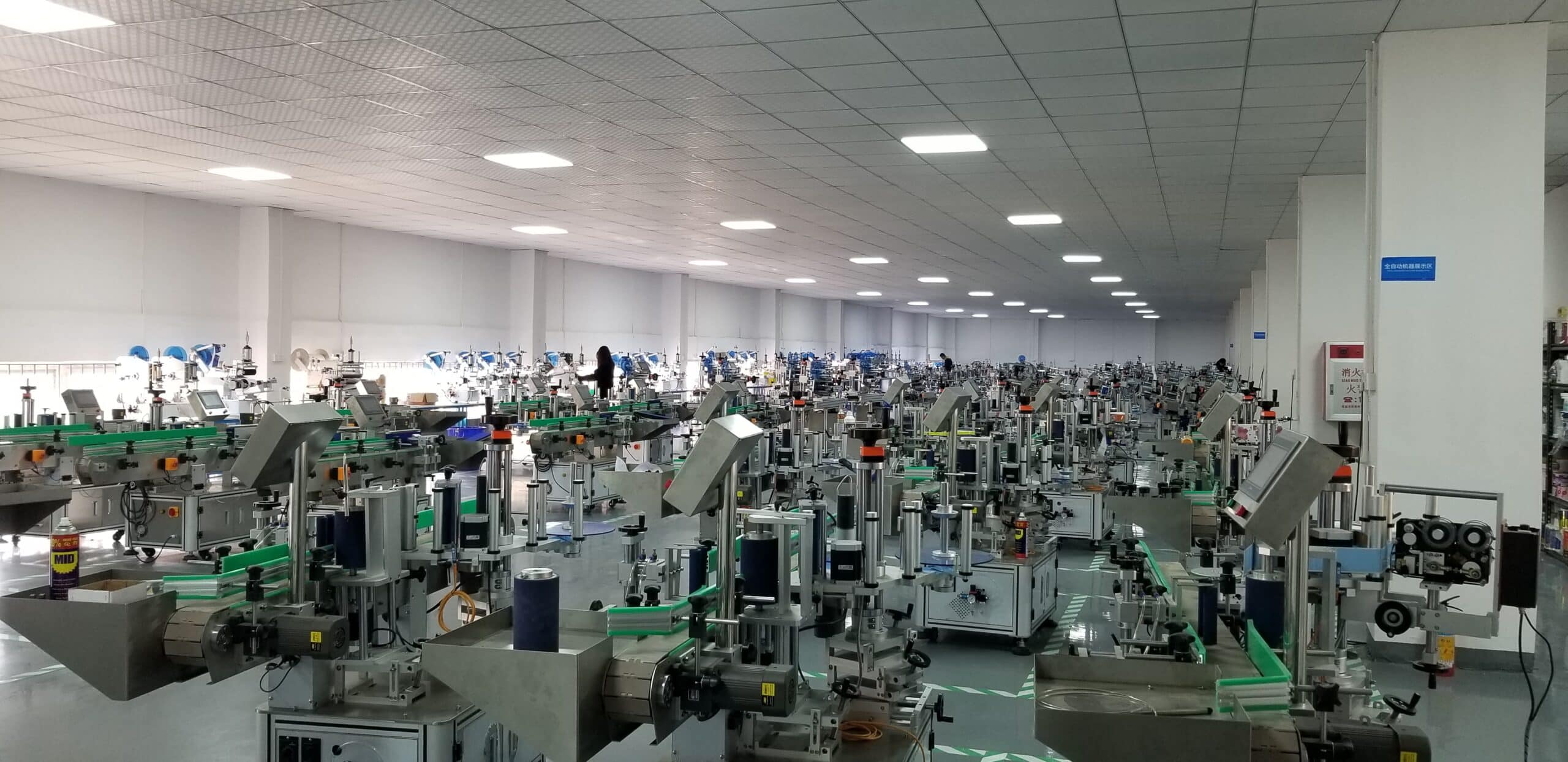
A semi-automatic floor model keeps up with one filler. Compare the semi-automatic range first.
T921 wrap-around, T932 page-fed or T961/T962 side systems hit this band all day, the core of the automatic range.
The T923 owns this tier for vials and slim containers; large-diameter wrap lines step up to multi-head or rotary builds.
Every supplier prints ±1mm. The question is ±1mm at what line speed and with which bottle? Always ask for the working condition: accuracy quoted at top speed on a smooth φ30 vial is not the same as on a sweaty φ80 PET bottle. We quote accuracy against your stated target speed, then prove it in the FAT video.
A machine that needs 20 minutes and two tools to change bottle sizes quietly deletes a day of production every month. Ask what a changeover physically involves: knobs, scales and pin swaps, or shims and hex keys. We film changeovers against the clock; ask to see one.
An automatic labeler is only as good as its marriage to your filler and capper. We need three inputs: conveyor surface height, direction of travel and available footprint. Where a full machine will not fit, our labeling heads bolt onto the conveyor you already own.
Labels run on 76mm cores with outer rolls up to 300mm. Two details decide success: whether your liner width falls inside the machine’s label range, and whether the label is transparent: clear-on-clear needs a special sensor. Send the label spec sheet, not just the bottle.
We build with SICK and Datasensor label sensors, Panasonic PLC, Mingwei power supplies and LeadShine stepper systems, brands your local electrician can actually source. No proprietary black boxes, no six-week waits for a photoswitch.
The machine should not be “inspected on arrival”. It should be accepted before shipping. Every HiPaks automatic unit runs a full-speed test with your own bottles and labels, filmed for your review, before the 70% balance is due. See our FAT & quality process.
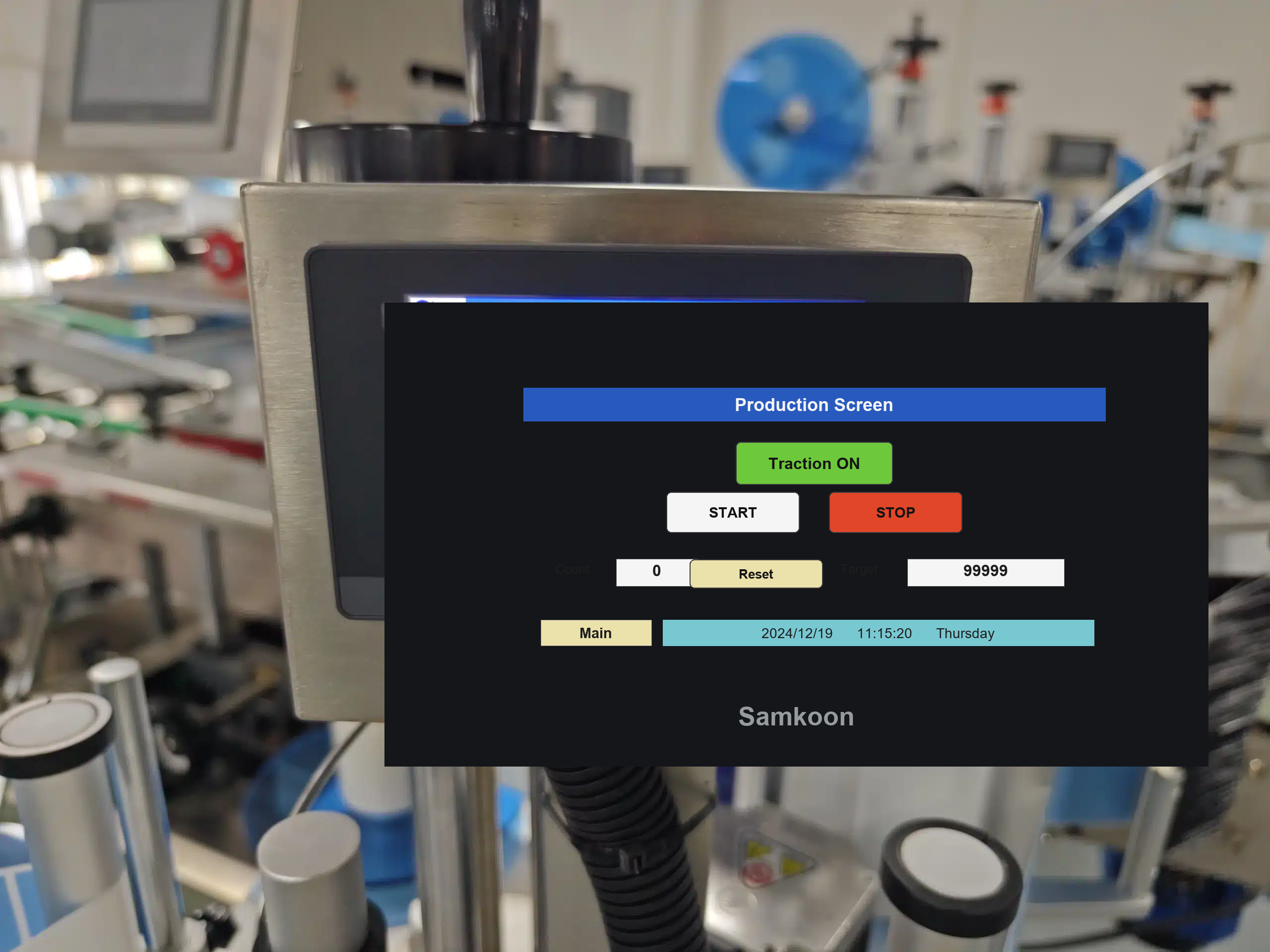
Recent factory test-run clips from this machine class:
One millimetre is about the thickness of ten sheets of copy paper. At 120 pcs/min your line is labeling two bottles every second, and the label edge still lands within that paper-thin window, bottle after bottle, roll after roll.
On a wrap label, that is the difference between a seam that hides under the graphics and a seam that cuts a letter in half. On a front face, it is the difference between “aligned” and “recalled by marketing”. We film seam placement at speed so you can judge with a loupe, not a brochure.
Need tighter than ±1mm? Our desktop precision tier reaches ±0.2mm. See the semi-automatic range for the ±0.2mm model.
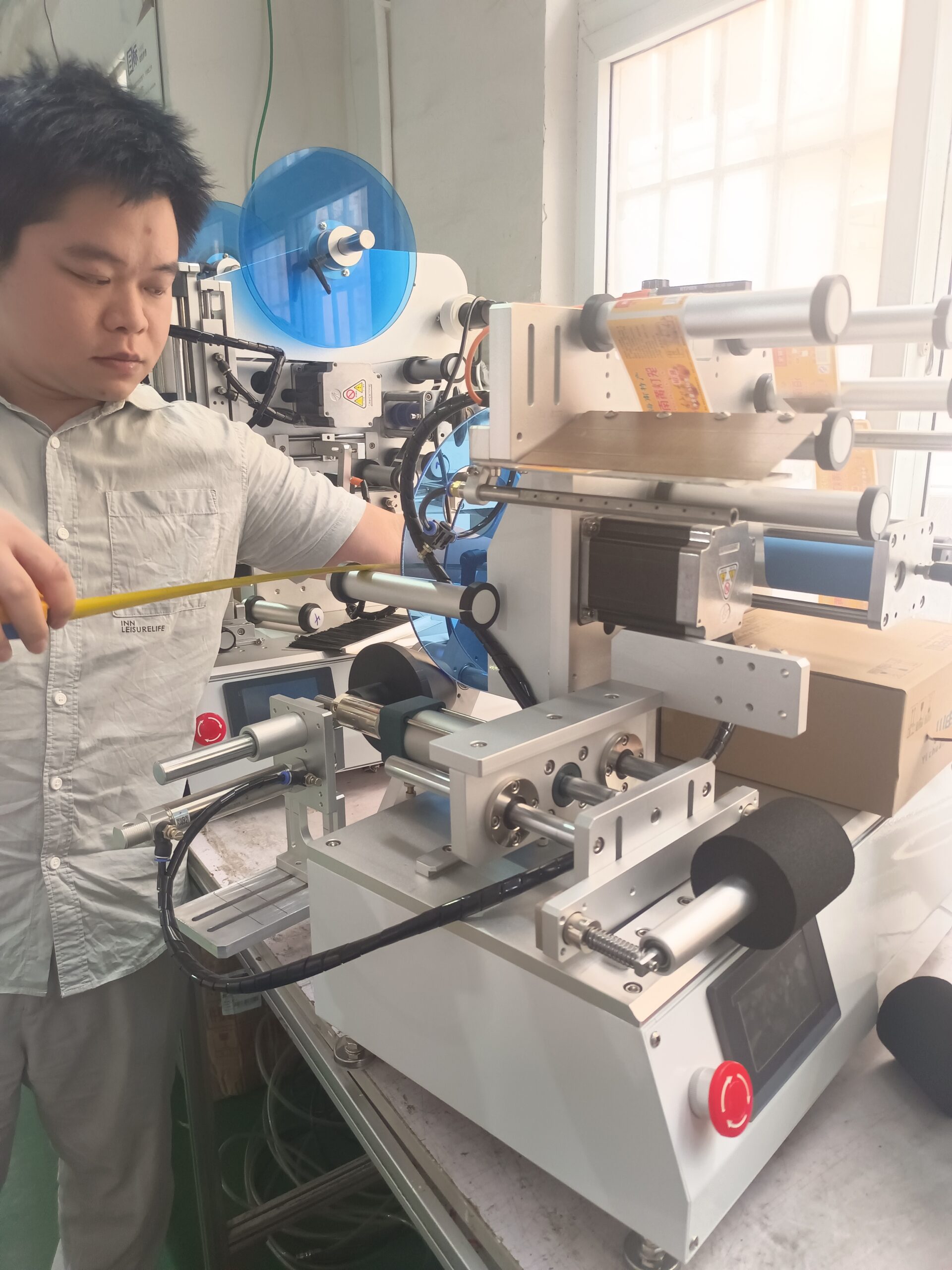
Side-by-side of seam position across 50 consecutive bottles from a recorded FAT run. The measurement strip shows the spread staying inside ±1mm.
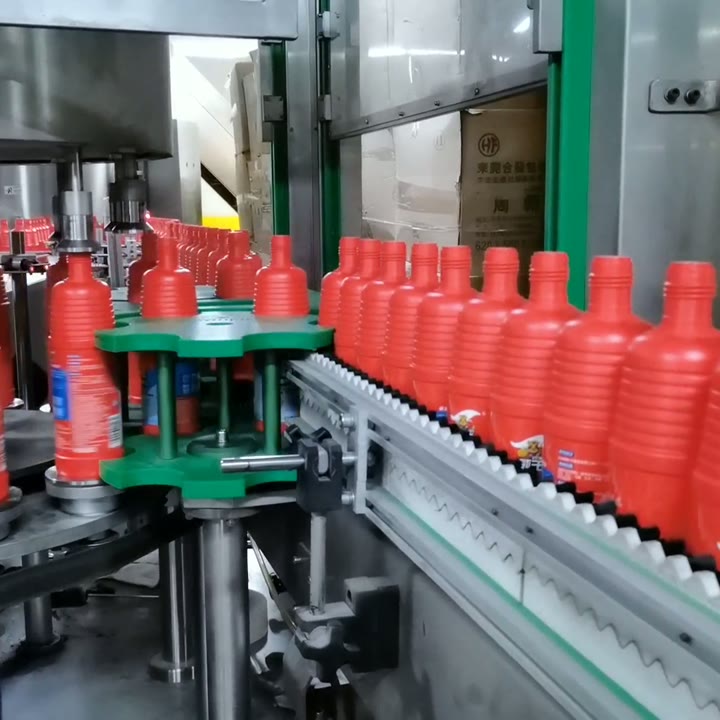
Sauces, honey and condiments: wrap and double-side, with net-content and ingredient panels placed where inspectors expect them. Food & beverage solutions →
Water, beer and wine bottles at line speed; front-and-back wine labeling on MT-190e platforms. Beverage, wine & brewery →
Straight-wall and flat cosmetic bottles, clear-on-clear labels handled with SICK sensing. Cosmetics & personal care →
Vials and tubes on the T923 horizontal platform: speed with placement you can audit. Pharmaceutical & lab →
Pair automatic case labeling with our print & apply systems for variable data. E-commerce & logistics →
Jerry cans, round chemical bottles and drum-adjacent formats with GHS-ready panel placement. Chemical & industrial →
Two situations send buyers to our engineering desk. First: the container a standard labeler refuses to hold: tapered, oval, arc-sided or bottom-only labeling. That is a job for custom labeling solutions with engineered jigs.
Second: the line already exists and a full machine will not fit between the capper and the case packer. Our T951/T952/T953 labeling heads plug into your existing line with height and angle adjusted to your conveyor, a retrofit, not a rebuild.
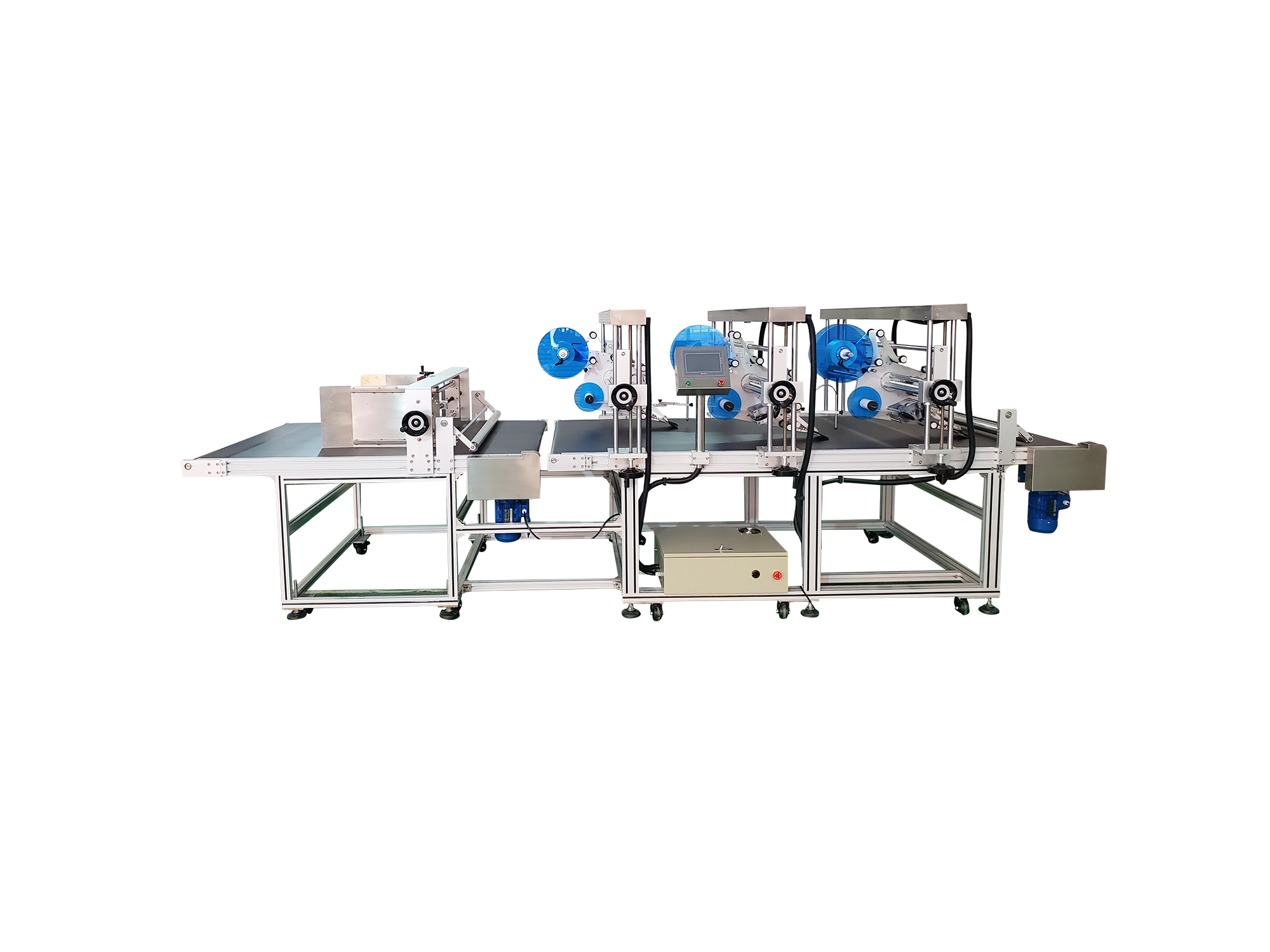
Custom fixtures are designed, built and archived for your exact container. Reorders skip the tooling fee.
We load your bottles, film the run at target speed, and ship only after the 10-point FAT checklist passes.
Our automatic range starts from $6,000, with typical builds landing between $6,000 and $15,000 depending on platform (wrap, horizontal, page-fed or double-side), label head count and conveyor length. Hot-melt rotary systems for beverage-scale lines are quoted separately. Send your bottle and target speed for a firm quotation.
Automatic models are built and specified to ±1mm. We state accuracy against your working condition (your container, your label, your target speed) and then demonstrate it on video during the FAT run before shipping. If a quoted number is not tested at speed, it is marketing.
Yes. We need your conveyor surface height, direction of travel and the gap available for the machine. For tight layouts, our T951/T952/T953 labeling heads mount directly onto an existing line. See the retrofit guide.
It depends on how far apart the two SKUs are, but our machines are designed around tool-light adjustments: scaled knobs, pin swaps and belt tracking rather than shims. We film changeovers against the clock. Ask for the changeover video of the model you are considering.
Clear-on-clear is a sensor problem, not a machine problem. Standard sensors fail on transparent liners, so we fit special SICK sensors where the label spec calls for them. This is confirmed during engineering evaluation, which is why we always ask whether your label is transparent before quoting.
As a rule of thumb, one operator hand-labeling tops out around 100–200 bottles per batch before quality slips, and a semi-automatic unit covers roughly 15–30 pcs/min of steady demand. When a shift’s volume exceeds what one operator plus one semi-auto can hold, automation pays. Work your own numbers in the upgrade & break-even calculator.
Standard automatic builds are currently estimated at 15–35 working days [TBC, final window confirmed per order]. Payment is 30% T/T deposit and 70% T/T balance before delivery, with the FAT video of your own bottles recorded before the balance is paid. Semi-automatic machines ship within 7–10 days of payment confirmation.
Yes. We supply OEM and private-label machines for distributors and integrators, including marketing materials, spec sheets and spare-part support. Start through the manufacturer portal or contact us directly to join the network.