
6
Problems that bring buyers here
By pain point, by industry, by container. Pick your path, land on a proven model, then watch it run on your own bottles.
Find the one that sounds like your line, then jump to the models that answer it.
Tapered, oval, square and recessed surfaces defeat standard wrap setups: oriented round, double-side or an engineered fixture.
Custom & jigsBenchtop 15–30 pcs/min, automatic inline 40–300 pcs/min, rotary hot melt 12,000–15,000 BPH.
Automatic range±0.5mm benchtop, ±1mm inline, readings recorded at the FAT with your containers and handed over as video.
FAT processBarcodes, lot codes, dates and serials printed and applied in one pass from your data source.
Print & applyFood washdown and chemical plants: sensors, surfaces and conveyance specified per environment.
Chemical & industrialFrom $600 with one operator, and a break-even you can run before you commit.
Semi-automatic rangeNo engineering background needed: start from whichever detail you already know.
Food, beverage, cosmetics, pharma, e-commerce, chemical: the line layout and regulatory reality for each.
Industry hubsRound, flat, square, oval, cartons, wire: six shapes, each mapped to the platform that handles it.
Shape to modelWrap, oriented wrap, double-side, print & apply, hot melt: what each technology can and cannot do.
Platform logicWhen no standard machine fits, the fixture is the product: evaluated, proven on video, archived.
Custom buildsEach shape opens the catalog at the matching platform.
Not a buzzword: a fixture drawing, a proven application path and a filmed run on your container before the balance. If a standard platform can do the job, we say so and quote the standard machine.
The engineering shows up as placement, not adjectives: seams that hide under artwork, labels that sit square on a corner, codes that scan on the first pass.
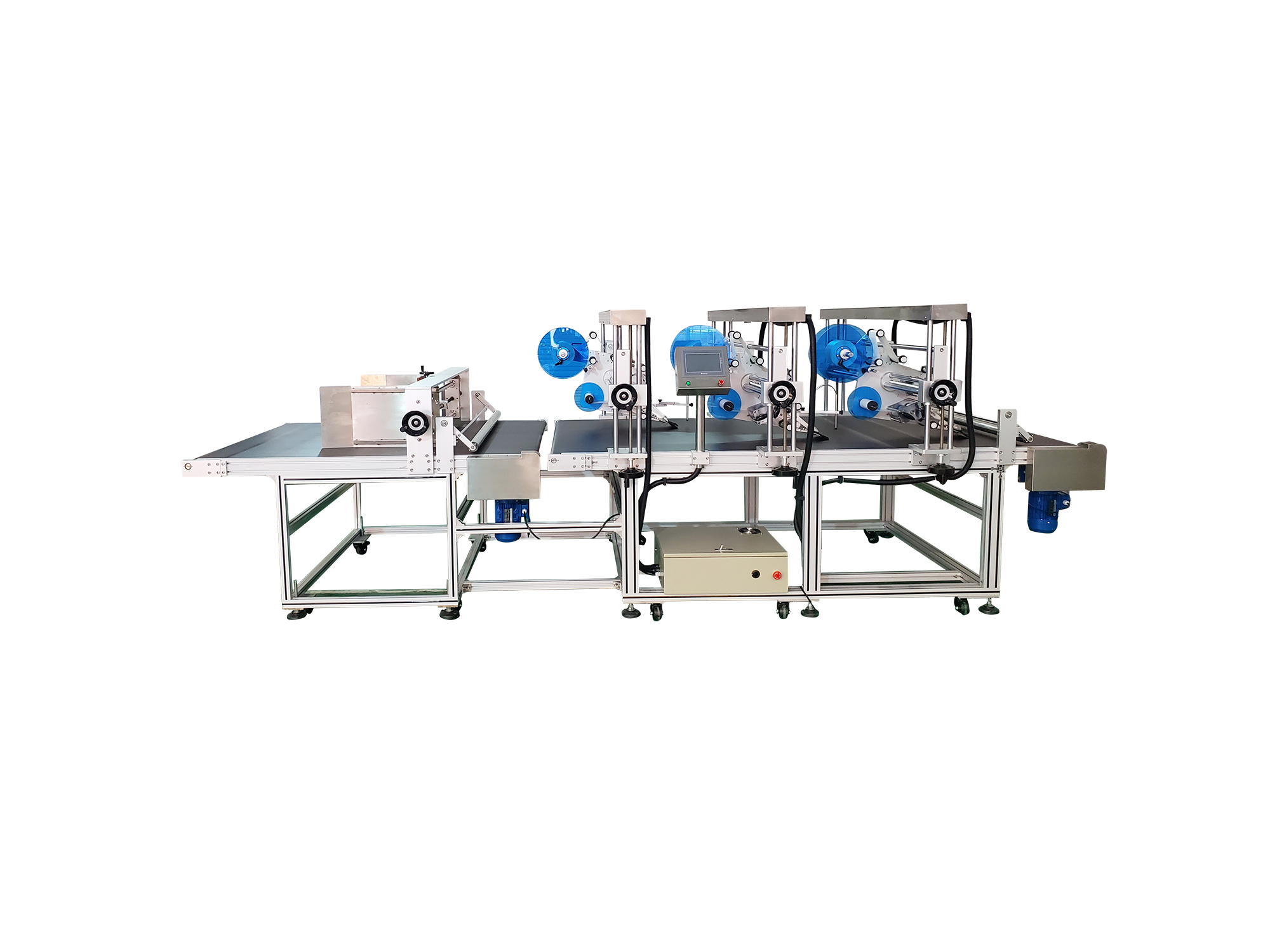
Four clips across the range: semi-automatic, double-side, hot melt, horizontal.
The same four steps whether the answer is a catalog machine or a purpose-built line.
Application engineering (fixture or platform selection), the test run on your containers, integration guidance for conveyor and PLC, documentation, and commissioning support. Tooling is quoted as its own line and archived for reorders.
Five inputs: conveyor surface height, travel direction, product spacing, sensor position and supply voltage. Heads and platforms adjust for height and angle at install, and the FAT proves it before shipment.
It depends on operator hours replaced, label material and reject rate. A semi-automatic typically pays back where one operator plus one hand-labeling station is the current bottleneck; run your own numbers in the break-even calculator rather than taking a percentage.
A standard labeler is a catalog platform with a documented range. A custom solution adds engineered tooling for a container outside that range: tapered, recessed, oversized or oddly shaped. The evaluation decides which one you actually need.