
A labeling line handles two packaging specifications without a rebuild when the difference between them sits inside the machine’s format envelope, which is the range of container sizes, carton sizes, label sizes and line speeds one configuration can cover. Anything outside that range resolves into one of three outcomes: a stored recipe, a quoted change-part kit, or a second machine. The judgment comes from a matrix built before the quote, and it is proven at factory acceptance by running both corner formats three times with a first-off check after each trip. In 2026 the useful question is not whether one line can run two formats, but which two, at what cost, with what evidence.
What Makes Two Packaging Specs One Line’s Job?
A format envelope is the set of container sizes, carton sizes, label dimensions and line speeds that one machine configuration covers without new hardware. The envelope has three axes, and a format change only stays inside it when all three agree. Geometry covers the smallest and largest product that the guides, conveyor and labeling head can reach. Label covers web width, label length and gap. Speed covers the rate at which the head still holds placement accuracy, which on our full-automatic machines means ±1 mm, and ±0.5 mm on a semi-automatic model. Most mixed-format enquiries break on the third axis, because a head rated from 40 to 300 pcs/min on one carton can lose its band on a taller carton with the same label gap. According to ISO 9001, the settings behind a conforming first-off must be documented and controlled.
Three Outcomes: Recipe, Change Part or Second Machine
In practice a format change resolves into one of three outcomes, and naming the outcome before the quotation is what keeps a project from turning into a rebuild. A recipe change is a program selection on the HMI, so no tooling is touched. A change-part change swaps a defined kit, such as a peel plate, tamp pad, web guide or star wheel, before the new format runs. A second machine is the honest answer when the geometries differ in kind, round bottle wrap against flat carton top, or when the kit list grows long enough to make a change impractical. According to EU Machinery Regulation 2023/1230, any guard opened during a change needs an interlock that stops hazardous movement, and that design cost belongs in the change-part tier.
Which Differences Stay Inside the Recipe?
A recipe covers differences the control system absorbs without touching hardware: label position offsets, conveyor and head speeds, sensor thresholds, rewind tension and inspection limits. A useful recipe stores every number the first-off depends on, so the operator selects the SKU and the machine reloads position, speed and limits in one step. Label content belongs there too, because text, lot coding and barcode data change with the SKU while the mechanics do not. According to the GS1 General Specifications, a barcode is acceptable only when print quality and data structure are verified against the symbol specification, so the recipe should carry the verification thresholds, not just the placement offset. A supplier who cannot show a recipe screen with those fields is offering a memory jog, not a program.
Where the Envelope Ends: Part Swap or Second Machine
The envelope ends where the hardware stops sharing adjustments, and three clues mark that line. First, the label web is wider than the unwind and rewind shafts can carry, so the whole paper path changes. Second, the container sits outside the travel of the guides and the head, so a new star wheel, belt set or tamp pad is needed. Third, the labeling geometry changes in kind, which is the round bottle against flat carton case. No recipe and no kit reaches that requirement, because the head approaches from a different direction. A wrap-around machine plus a flat-surface labeler usually beats one compromise machine that does both jobs poorly. According to OSHA 1910.212, guards must protect the operator at every point of operation, and a new geometry brings its own guarding question.
Build the Judgment Matrix Before You Ask for a Quote
The judgment matrix is a one-page comparison that turns two formats into a decision, and it has five columns: what differs, whether the control system covers it, what hardware must move, who proves it, and what it costs. Fill the geometry row with the smallest and largest dimensions of both products, not nominal sizes, because guides are set from extremes. Fill the label row with web width, label length and gap for each format, and check the data against the machine selection guide. Fill the speed row with the rate you need and the accuracy band at that rate. According to ISO 2859-1, first-off inspection is a sampling scheme indexed by an acceptance quality limit, so the matrix carries the AQL you will accept and the sample size behind it.
Recipe, Change Part or Second Machine, Side by Side
The table sorts the outcomes by what moves, who proves it and what it costs to keep ready. A format that lands in two rows at once is governed by the harsher row, because the gentler row never overrides a hardware limit, and the kit price is the one buyers forget.
| Tier | What moves | Evidence at acceptance | Cost to keep ready |
|---|---|---|---|
| Recipe | HMI selection, stored offsets and speeds | Timed first-off on each format | Engineering time, no parts |
| Change part | Peel plate, tamp pad, web guides, star wheel | Kit fitted, first-off, rerun at rate | Kit price, spares, requalification |
| Second machine | Conveyor, guarding, head, controls | Full acceptance on the second unit | Second capital purchase |
Who Signs Each Row of the Matrix?
A row without a named owner is a wish. Give the geometry row to the buyer’s packaging engineer, the recipe row to the controls engineer, and the kit row to whoever holds the spare parts budget. Two signatures per row: one from the party that supplies the data, one from the party held to it. According to ISO 9001, information that changes a decision needs an owner and a revision, so date every cell and keep the sheet with the order.
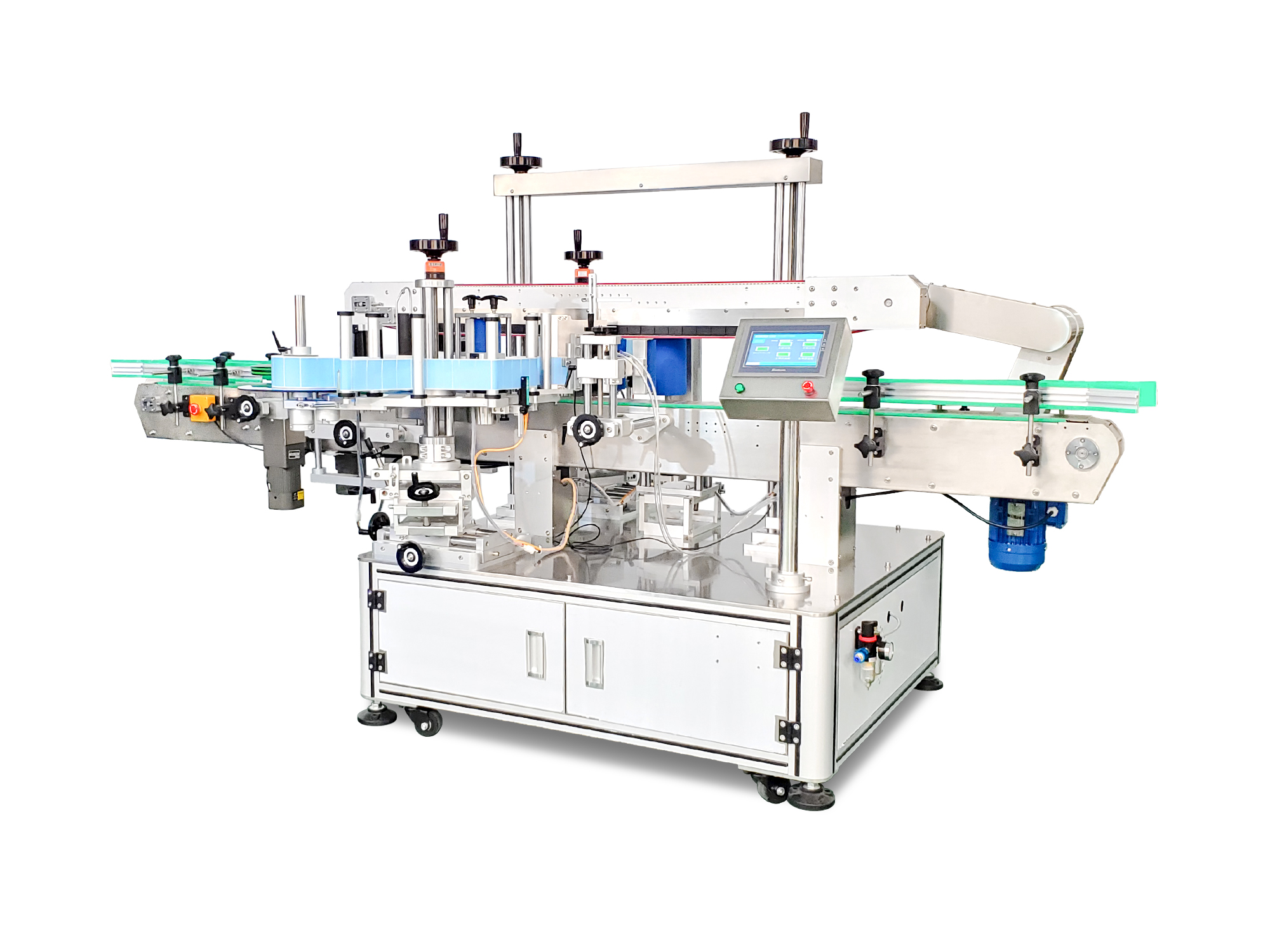
Factory Proof: Two Corners and Three Round Trips
Factory acceptance is where the matrix becomes evidence, and the test is a loop rather than a demonstration. Run the smallest format at production speed, check the first-off against the agreement, switch to the largest format, check again, then return to the first. Three round trips give six changeovers and six first-off checks, which cover the steps nobody demonstrates twice. Add one middle format, even at 10 percent of your volume, because a machine set for a 200 ml and a 1 L bottle can still fight a 500 ml bottle whose shoulder sits where the wrap belt runs. Time every trip with the same stopwatch and operators, and record each setting touched by hand. According to our factory acceptance records, the trips that fail are rarely the first; the third and fourth expose a guide tightened by feel. Video the loop, because a recording settles arguments that memory cannot, and our acceptance test page shows what the record contains.
The Change-Part Kit: Money and Re-Qualification
A change-part kit is a priced list of the parts swapped for a named format, and it should be quoted with the first order, not after the machine lands. Ask for three things in writing: the kit contents per format, the spare parts you will wear out, and the requalification steps after a swap. Wear parts are predictable, because pads, belts and peel plates have a life measured in labels, so order the kit with the machine. Requalification matters more than the parts, because a swapped pad changes the contact geometry, so the first-off check has to repeat. According to Incoterms 2020, FOB places risk transfer on board, so a kit ordered later travels on its own freight terms and its own delay. A retrofit ordered without a kit list usually pays for that omission twice.
The Clause Set That Makes the Proof Binding
The clause set is the part of the purchase order that converts a promise into an obligation, and five lines do most of the work. Step 1, define both formats by dimension and label size in an appendix, not by product name. Step 2, write the acceptance test as the loop above, with the trip count and the first-off check stated. Step 3, list the change-part kit, its price and its lead time. Step 4, require the recipe export and the changeover procedure as delivered documents. Step 5, tie the balance payment to the test, which on our terms means 30% with the order and 70% before shipment, released after the loop passes. According to EU Machinery Regulation 2023/1230, the machine must ship with instructions for use, and changeover steps belong there.
Acceptance Schedule for a Two-Format Line
The schedule below names evidence rather than intention. According to ISO 2859-1, each first-off is a sample judged against an acceptance quality limit, so the pass condition column states that limit and the sample size behind it, and a row without evidence will be argued about once the crate is open.
| Schedule item | Evidence accepted | Pass condition |
|---|---|---|
| Envelope definition | Dimensioned drawing of both formats | Matches the products on site |
| Corner run A | Timed loop video and first-off report | Quoted rate at 100% of the run |
| Middle format | First-off report at the midpoint | No tool beyond the kit |
| Changeover | Timed trip and settings list | Within the agreed time |
| Kit and spares | Priced list and lead times | Delivered with the machine |
| Requalification | Procedure and signed first-off | Same limit on both formats |
Can One Labeling Machine Really Run Two Carton Sizes?
Yes, when both carton sizes sit inside the machine’s format envelope, which means the guides, conveyor and head travel cover both without new hardware. The practical test is the matrix: if the difference is label position, speed and sensor threshold, a recipe handles it; if it needs a different tamp pad, web width or star wheel, a kit handles it; if the head approaches from another direction, a second machine is the answer. Cartons are less forgiving, because a tamp head must reach two heights and often two widths. According to EU Machinery Regulation 2023/1230, guards must suit every format the machine is declared for, so the declaration has to name every format you intend to run.
Do Change Parts Have to Be Quoted With the First Order?
They should be, and the reason is control rather than price. A kit quoted later is priced against a machine already delivered, so the buyer pays freight twice. A kit quoted with the machine also forces the format question early, which is when the envelope can still change without a redesign. Ask for the kit as a line item per format, with spares split out, and ask which parts are consumed by labels rather than by time. According to Incoterms 2020, FOB Shenzhen means risk passes when the goods are on board, so a kit shipped months later carries separate freight and delay.
What If Only the Container Changes and the Carton Stays?
Then the change is probably a recipe plus a container kit, with carton tooling untouched, which is the least disruptive of the three outcomes. A container change moves the guides, the head height and sometimes the wrap belt, while the label and its data stay the same, which makes it the cheapest format change to prove. Run the new container at production speed for one timed loop, check the first-off, then confirm the old container still runs afterwards, because a guide moved for the new size can be left wrong for the old one. According to ISO 2859-1, a first-off is a sample judged against an acceptance limit, so the same limit applies to both containers.
What Should You Send Before the Quote?
Send four things and the quotation becomes an engineering answer instead of a price. First, the dimensioned drawing of both formats, including the smallest and largest container or carton you will actually run. Second, the label artwork with web width, length and gap for each format. Third, the rate you need and the accuracy band you will accept, stated in millimetres and in degrees if skew is a rejection reason. Fourth, a photograph of the current line and the conveyor height. According to Incoterms 2020, FOB Shenzhen defines the delivery point, so name the destination port at the same time. We run both formats on the machine before shipment and send the video, and our quotation team answers with the machine configuration and the kit list together.
