
Single-roll run time is the number of labels wound on one roll divided by the line’s application rate, so every roll decision sits behind one division. Four clauses set the count: core inner diameter, maximum outside diameter, wind direction, and labels per roll. A fifth, splices per roll, decides how often the roll stops the line by itself. A 76.2 mm core, or 3 inches, is the common default on a bottle labeling line, and 152.4 mm, or 6 inches, is the large-roll alternative. In practice a 3,000 label roll running 120 bottles per minute reaches 25 minutes, so 19 roll changes take 12% of an 8 hour shift before any other stop happens. Get the four clauses wrong and the line still will not fail loudly. The line stops mid-shift for a roll change nobody scheduled, or stops because a splice tab tripped the gap sensor. The buyer’s job is to make the label supplier sign the numbers the machine drawing already assumes, and every value here is confirmed against bottle size and shift pattern in the quotation.
Which Roll Dimensions Set Single-Roll Run Time?
Single-roll run time on a bottle labeling line is a division problem rather than an opinion, because the labels wound on the roll and the rate the applicator holds are the only two inputs. First, take a 60 mm label on a 3 mm gap, so a 63 mm pitch, and 3,000 labels on one roll. The web holds 189 m, and at 120 bottles per minute the roll runs 25 minutes. Second, move only the roll diameter. On a 76.2 mm core a 400 mm roll holds 2.7 times the labels of a 250 mm roll, because wound area grows with the square of the radius, while the core removes 9.3% of the small roll face and 3.6% of the large roll face. Third, confirm liner caliper, since two rolls of identical diameter still differ by a few percent in count. In practice, ask for labels per roll in a 2026 quotation rather than metres, and read the pitch a container needs on our bottle labeling pages first.
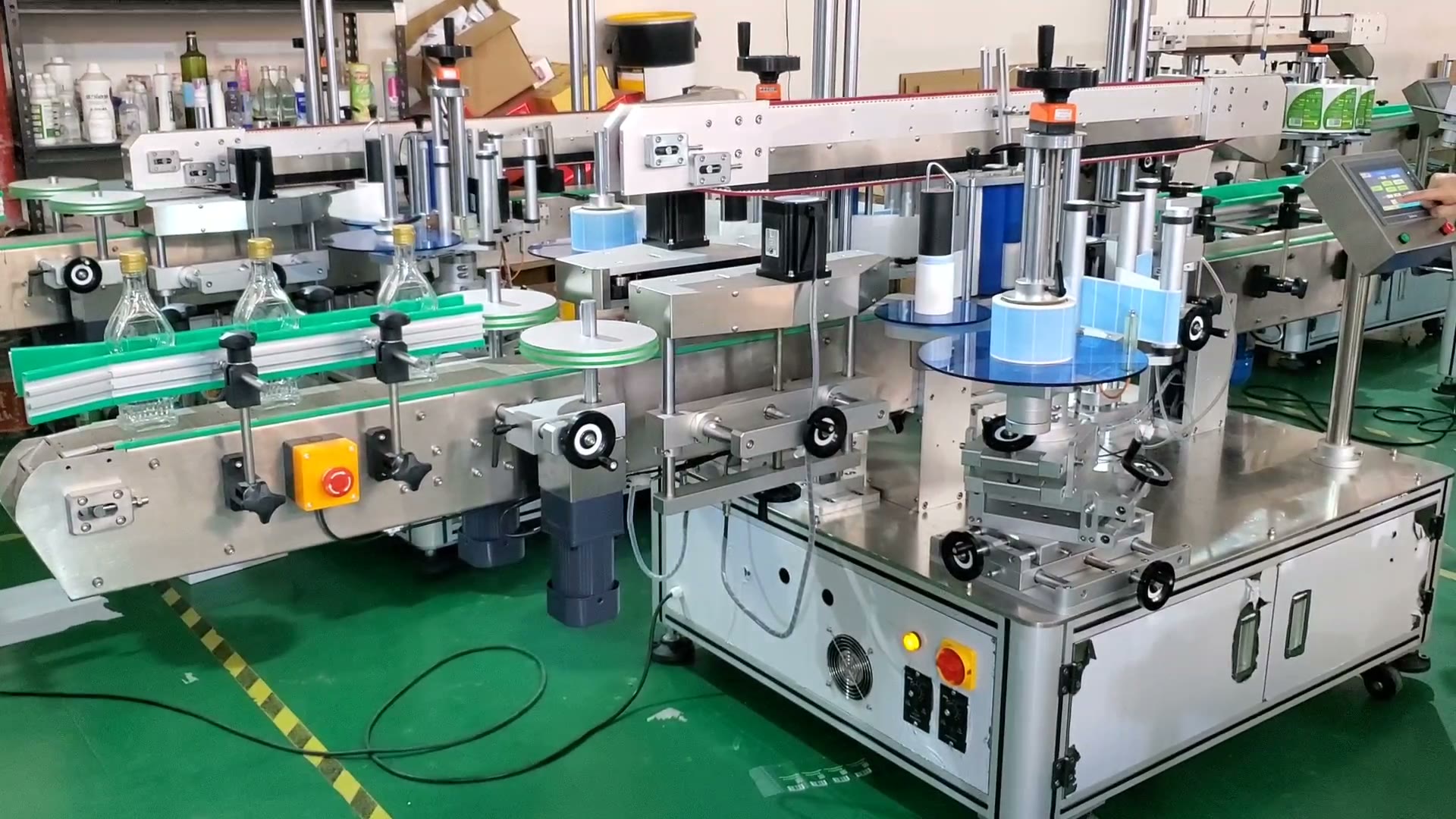
How Do Core Diameter, Pitch and Line Speed Become Minutes?
Roll time in minutes is a division of three inputs, and that division is the only arithmetic a roll specification needs. The first input is labels per roll as the supplier states the count. The second input is pitch, meaning label length plus the gap between labels, because pitch decides how much web each bottle consumes. The third input is the sustained application rate in bottles per minute, measured over a 30 minute window with the line running, never the nameplate figure. Divide labels by rate and the answer is available run time. For example, 3,000 labels at 120 bottles per minute gives 25 minutes, so an 8 hour shift of 480 minutes consumes 57,600 labels and 19.2 rolls. At a 3 minute change, 19 changes take 58 minutes, or 12% of the shift. That percentage is the argument for a larger roll, a smaller core and a splice count the line can absorb.
What Does a Sustained Rate Reading Look Like on the Floor?
A sustained rate reading is a stopwatch count of bottles finished per minute with the line running, never the figure on the HMI. Run 500 bottles, note the elapsed time, and repeat three times across a shift, because a line averaging 120 bottles per minute at 07:00 can hold 104 after a roll change and a conveyor restart. Write all three readings on the worksheet with the date and the operator name. Pitch moves the rate as well: a 90 mm label on the same applicator takes 43% longer per bottle at one web speed, so a line quoted at 120 bottles per minute on a 63 mm pitch is not a line at 120 bottles per minute on a 90 mm label. In practice rate and pitch travel together, and both belong in the roll clause. Automatic lines get a deeper treatment on our automatic labeling pages.
Which Fields Go on the Roll Specification Worksheet?
The worksheet below carries the fields a supplier needs before quoting, and each row answers a stop the line takes later when the field is left open. Fill in the machine drawing value first, then the supplier value, and treat disagreement between the two as a question for the builder. Send the sheet with the bottle drawing and the shift pattern, because a 350 mm roll on a 76.2 mm core carries 76% of the labels a 400 mm roll carries, and only the line owner knows which number fills a shift.
| Field | Write this | What a wrong value costs |
|---|---|---|
| Core inner diameter | 76.2 mm, core material | chuck slip, register drift |
| Labels per roll | 3,000 at 350 mm outside diameter | unplanned roll change |
| Maximum outside diameter | 350 mm, guard clearance checked | guard clash, no spare room |
| Wind direction | labels face out, arrow on carton | web threading, peel plate jam |
| Splices per roll | two maximum, flagged, metres marked | sensor stop, false reject |
| Pitch and web width | 63 mm pitch, 100 mm web | rate drift, sensor teach change |
| Liner and release | paper or film, static grade | peel force, static build-up |
Why Does Wind Direction Cause Stops That Look Like Sensor Faults?
Wind direction is the side of the roll that carries the label face, stated with the rotation the roll must turn to feed the peel plate. A roll wound labels-out feeds a standard wrap-around applicator, because the web passes the peel plate with the liner turning sharply away and the label continuing onto the bottle. Hand the same machine a roll wound the other way and the label reaches the peel plate adhesive-up, transfers to the wrong surface and jams within a few bottles, which the operator reads as a sensor fault. A turnover bar can reverse the web, but the extra bar adds a wrinkle path on thin film liner. Print-and-apply units add a second constraint, since the printer platen fixes which face can take the print. In practice, state the direction on a drawing in words and print the arrow on every carton.
How Many Splices Should One Roll Carry?
A splice is a joint where one label web is joined to the next inside the roll, and every joint arrives as a stop the line will take. Overlap splices double the caliper for a few millimetres. Extra caliper is enough for a gap sensor to read a missing label, and enough for a peel plate to drag. A butt splice with a tape tab is thinner, but a loose tab can lift and stick to the plate. Two splices in a 3,000 label roll are 0.07% of the labels and two stops, so the count matters less than the flagging. Specify two splices maximum and 1,500 labels minimum between joints, then ask for a flagged tab a splice sensor can see. Wire the sensor to a spare input, as the row list on bottle labeler PLC IO list explains.
What Limits Maximum Roll Diameter and Core Choice?
Maximum outside diameter is a limit set by four clearances, and the smallest of the four wins. Unwind arm travel sets the mechanical stop. The guard envelope sets what a risk assessment will accept, since a roll overhanging a guard counts as a change to machine guarding. A dancer or tension arm sets how much mass the web can hold steady, because a heavy roll changes tension as the radius falls. The distance to the peel plate sets the longest free web span before the label is applied. Core choice follows: a 152.4 mm core carries a heavy roll with less mandrel deflection than a 76.2 mm core, while a thin-walled cardboard core crushes under a pneumatic chuck and slips a few degrees, which appears as register drift rather than a fault code. The inch is exactly 25.4 mm according to International Bureau of Weights and Measures definitions, as the SI Brochure records, so a 6 inch core is 152.4 mm with no rounding.
Which Clauses Belong in the Label Supplier’s Roll Specification?
Write eight clauses into the label purchase specification, and treat the first three as fixed because the machine cannot compensate for any of them. The last five are commercial choices which move run time and stop count. In practice the first three are also the ones that stop a line during the first shift.
- Core inner diameter, core material, and the chuck the core must fit.
- Labels per roll, with the outside diameter at which that count is delivered.
- Wind direction as a drawing plus a printed arrow on every carton.
- Maximum outside diameter accepted inside the guard envelope.
- Maximum two splices per roll, flagged, with position in metres from the core.
- Pitch, web width, liner grade, and release value declared by the supplier.
- Static-dissipative liner where the zone classification demands one, with zone definitions from Health and Safety Executive guidance on the classification page: a Zone 2 place is one where an explosive atmosphere is not likely in normal operation.
- Roll weight per spindle, plus the label count printed on carton and pallet label.
What Should You Record on the First Roll and Audit on Delivery?
A first-roll record is a one page evidence sheet, and four numbers plus one photograph replace every later argument with a label supplier. The sheet takes ten minutes at the machine. Photograph the roll on the spindle, and add the carton face and pallet label to the same sheet. Keep the sheet with the delivery paperwork and hand a copy to the planner who builds the changeover schedule, because a roll that measured short changes the plan for the week. A roll reaching the line without a measured reference becomes the new normal by default, and a supplier who changes a liner grade quietly then stays invisible. HiPaks states unwind limits on the quotation drawing against the bottle drawing rather than against a catalogue number, so the sheet starts from the machine. The crate list on labeler crate items beyond customs paperwork uses the same evidence logic for the machine itself.
Which Four Measurements Go on the First-Roll Sheet?
Four measurements show whether a delivered roll matches the clause sheet. Outside diameter with a tape across the roll face, core inner diameter with a caliper at two points ninety degrees apart, web width at three points along the unwound length, and the count printed on the carton checked against the labels a run reaches before the first splice. Add a photograph of the roll on the spindle from the operator side, because that photograph is what proves wind direction in a later dispute. Then compare measured run time with calculated run time: a roll reaching 22 minutes against a calculated 25 has lost 3 minutes, or 12% of the roll, and the gap is the number to raise with the supplier. Write the four readings on one dated line, because four scattered readings are four opinions.
What Does a Quiet Spec Change Look Like on Delivery?
A quiet specification change is a swap of liner grade, core vendor or splice type with no change to the part number and no mark on the carton. Three checks catch the drift: core inner diameter with a caliper on every pallet, wind direction against the reference photograph, and the splice count on the first three rolls of the pallet. A liner grade change shows as a label lifting at the trailing edge rather than a machine fault, which the pattern in oval bottle trailing edge wrinkle faults describes, and the correction is a teach value rather than a mechanical adjustment. In practice, keep the approved reference roll, photograph each new pallet against the reference before releasing the pallet to the line, and write the pallet date on the sheet, because a dispute six months later turns on which delivery was approved.
