
A labeler crate can clear customs with an invoice, a packing list and a certificate of origin and still stall commissioning, because those documents describe value, origin and quantity, not performance. The entry file a broker builds under 19 CFR 142.3 is a release file, and it says nothing about which bottle the machine was proved on. The wood answers to ISPM 15, which regulates the crate rather than the labeler inside it. What the plant needs on the first working day is a second file: the bottles that ran at acceptance, the roll they ran with, the parameter backup, the recording, the sensor and pneumatic list, the guards that came off the machine, the humidity card reading, the duplicate list, and the split between originals and copies. Those nine items are this page.
Why a Cleared Crate Can Still Stall Commissioning
Customs clearance and commissioning readiness are two tests a crate passes at different moments. Clearance asks whether the goods may enter: classification, value, origin, wood treatment. Commissioning asks whether the machine can be set back to the state it was proved in, on your container, at your speed, with your label stock. A broker can finish the first test in hours and never touch the second, and that gap is where the delays live. The failure is quiet. The labeler runs well on the demo roll left in the applicator, then loses placement on the first production roll because the liner releases differently and the sensor teach value no longer matches. Nothing is broken. The evidence that would have prevented the drift was never packed. In 2026, write the nine items into the machine specification instead of leaving them to packing courtesy.
Three layers sit in the crate and decay at different speeds. The customs original set is complete by definition. The paper evidence set survives but loses its index, so nobody matches a video to a checklist row six months later. The machine resident layer, meaning recipes, drive parameters, teach values and the bottle lot actually run, fails first and fails silently, because no department owns it. One archive identifier across checklist, video, backup and duplicate list rebuilds that state years later.
Sample Bottles and the Leftover Roll: The Two Items Nobody Can Remake
Two items cannot be recreated after the fact: the bottles that ran and the roll they ran with. Everything else can be reproduced from a file, a phone call or a purchase. These two cannot, because both encode settings tuned by hand and never written down. A sample bottle carries the effect of peel plate gap, wrap belt pressure, star wheel position and brush contact on one wall thickness and one surface finish. The leftover roll carries the effect of liner release, face stock stiffness and web width on the teach value and rewind tension. Once the bottles are binned, the machine still runs on whatever the next operator guesses.
What the bottle lot has to record
Record the lot, nominal size, material, wall thickness range and surface finish, then keep the bottles. Two bottles from the same drawing and different moulds can shift a seam far enough to change where a wrap label lands, and the machine was set on the mould you sent. Keep the set in one labelled box that stays with the machine, and photograph the contents next to the duplicate packing list. If a new lot arrives, run it against the sample set before adjusting anything. The sample bottle is the reference that stops an operator tuning the machine to a bad lot.
What the leftover roll has to show
Mark the roll with five things: unwind direction, splice position, core size, web width and liner type. Direction matters because an applicator threaded for one face cannot simply take a roll wound the other way. The splice matters because that is where a web doubles, breaks or drifts, and an operator who knows where it sits watches the right metre of the run. Liner and web width matter because the teach value was set on them, and a roll from a different coating batch can read differently at the gap. Tape a written flag to the roll.
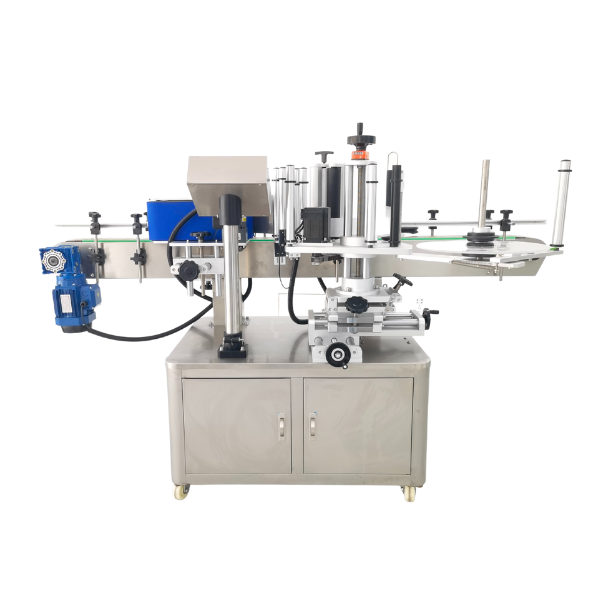
The Nine Items and the Question Each One Answers
The nine items below answer questions that customs never asks, and each has a named owner at arrival. Read the table as a receiving script: a row with no owner in your organisation is the row that will be missing, and the symptom will look like placement drift or a slow changeover rather than a missing document. Invoices, certificates of origin, bills of lading and wood treatment stamps are absent by design, because they belong to the release file.
| Item | Question it answers | Owner at arrival |
|---|---|---|
| Sample bottles from the acceptance run | Which container was the machine proved on | Plant QA |
| Leftover label roll, direction and splice marked | Which web path and liner the settings assume | Line operator |
| Parameter backup, drive plus printed sheet | Which values were accepted, and at what firmware | Maintenance |
| Full recording and signed checklist | That the run happened at contract speed | QA and finance |
| Sensor and pneumatic model list | What to buy locally when a part fails | Maintenance |
| Guards and acrylic doors, boxed and labelled | That safety hardware is complete | EHS |
| Humidity indicator card and desiccant count | Whether the cabinet saw condensation in transit | QA |
| Duplicate packing list and loose part labels | Which crate holds which item | Receiving |
| Originals and QA copies filed apart | Who physically holds the legal set | Finance |
The Data Layer: Backup, Recording and the Model List
The data layer is three files for three readers. The parameter backup serves the technician who restores a recipe after a drive is replaced. The recording serves the auditor who asks whether the machine ever ran at the contracted speed. The model list serves the store keeper who needs a sensor in a country where the original brand has no distributor. A crate carrying one of the three is half documented. Buyers increasingly ask for all three before the balance clears, which is reasonable, because acceptance produces all three anyway. The failure mode is not that the files do not exist, but that they never leave the builder’s laptop.
The backup format that survives five years
Put the backup on two media and one sheet of paper. The first medium is a drive that leaves the crate with the machine; the second is a copy sent by email before sealing, so a lost drive is an inconvenience rather than an event. The paper is what most buyers forget: parameter names, factory defaults, the values proven at acceptance, the firmware version and the date. Paper survives a humid crate, a flat battery and a lost drive, and it is the only format an operator can read at the HMI with gloves on. Number it with the checklist identifier.
The model list that saves a local purchase
A model list is not a brand list. For each sensor it has to state the sensing principle, the housing form, the output type and the connector, because a substitute that changes principle changes the reject behaviour even when the part bolts on. A capacitive sensor swapped for a diffuse optical one reads a clear label differently, and the difference appears as false rejects rather than an error message. List the photoelectric and fibre sensors, the gap sensor, the encoder, the power supply, the stepper drives, the cylinders, the valves and the filter regulator, with part number and position. HiPaks builds with SICK and Panasonic sensing, Mean Well supplies and Leadshine drives.
The Physical Layer: Guards, Moisture and the Duplicate List
The physical layer looks like packing but functions as documentation. Guards come off a machine for transport because acrylic doors crack and interlocks bend, so the crate should hold a labelled box of safety hardware rather than a machine with its doors taped shut. A humidity card is a measurement, not a filler, and its reading is only valid in the first minutes after opening. A duplicate packing list is a reconciliation tool, because the original is already with the broker. Handle all three in that order, photographed and recorded, and the arrival inspection becomes a fifteen minute job instead of a two day argument.
Guards travel off the machine
Pack the acrylic doors and interlock brackets in one box, label it with the serial number and the words guard set, and list the fasteners by position rather than by size. A mixed bag of screws is why guard sets sit on a shelf for a month. Reconnect the interlock circuit before the first powered run and prove it: open the door, confirm motion stops, close it, confirm the machine will not restart until reset is pressed. If a hinge arrives bent, straighten or replace it rather than running with the door off.
Read the humidity card before the first power-on
Read the card at the moment of opening, before crate air mixes with building air, and photograph it next to the duplicate packing list. Count the desiccant bags as well, since a missing bag explains a saturated card. Then let the machine reach room temperature before energising, because condensation forms on cold metal when warm humid air reaches it, and control boards and drive covers are where it does the most damage. A card at its highest reading is not grounds to reject the shipment, but it is a reason to open the cabinet and dry it first.
The duplicate list and the split filing
Keep one packing list inside the crate and send one by email before sealing, because the original has gone to the broker. Mark loose parts with the identifiers the list uses so a small box of change parts is not mistaken for packaging. Then split the filing: customs originals go to finance and the broker and never travel to the plant floor, while the QA set stays with the machine and a second copy goes to a server. The signed acceptance report is the document most often lost, because everybody wants to hold it.
What to Check in the First Working Day
Order matters more than thoroughness on day one. Work outside in, and stop at the first failed row.
- Photograph the crate exterior, the marks and the wood treatment stamp before opening.
- Read and photograph the humidity card, then count the desiccant bags against the list.
- Open the duplicate packing list and tick each line, including loose part labels and the guard box.
- Separate the originals from the QA copies and hand the originals to finance the same day.
- Check the sample bottle box and the flagged roll, then store both with the machine.
- Load the parameter backup onto the machine’s own storage and confirm the recipes open.
- Reconnect and prove the guard interlocks before any powered run with product.
Anything that fails here is a claim, and a claim is easier on day one than on day thirty. Report it with the archive identifier and a photograph, not a description. HiPaks ships one machine as a minimum order, works on 30 percent deposit and 70 percent before shipment, and runs the buyer’s own bottles and labels before crating, so the sample set and the flagged roll are a normal part of the build. Warranty is one year on the whole machine with lifetime technical support, wear parts excluded, and lead time sits at 7 to 10 days for many semi automatic builds and 7 to 25 days for automatic configurations.
Questions Buyers Ask About a Labeler Crate
Whose job is it to put the sample bottles in the crate?
The buyer ships the bottles, the builder keeps the set that ran, and the builder packs that set. Write the number of bottles and the return address into the purchase order, so the set is not treated as packaging waste once the acceptance run is signed off.
Can I use a new roll instead of the leftover roll from the test?
Replace it only after the direction, splice position, core size, web width and liner type are written on the parameter sheet. A fresh roll from a different coating batch can change how the gap sensor reads, and the teach value in the backup was set on the old roll.
Is a highlight video enough if the full run was long?
No. A highlight cannot show speed hold, a changeover and an interlock test in sequence. Ask for the full length file with the timer and counter in frame, and keep the archive identifier on the signed checklist so the two can be matched years later.
What should I do if the humidity card reads pink on opening?
Photograph it before the air mixes, count the desiccant bags against the packing list, and let the machine reach room temperature before power-on. If the card sits at its highest reading, open the cabinet, inspect the boards and drive covers, and dry before energising.
The crate is only half the delivery. Review the on-site pattern on our factory acceptance test page, watch real runs on labeling test videos, and check spares lead times through labeling machine parts. If you already own a HiPaks machine and are missing one of the nine items, support can reissue the backup and the model list. To have the sample set and the flagged roll written into a new order, send your bottle and label details with the SKU list.
