
A used labeler is a different purchase when the machine has to sit in your warehouse and be resold, serviced and certified by you rather than shipped straight onto a production line. Three tests decide it: whether the wear parts interchange with a model you still sell, whether the control platform is still supported and its firmware can be flashed, and whether the tooling can be re-machined for the next bottle. Four model types fail those tests at any price: obsolete controllers, discontinued servos and sensors, single-source wet glue cams, and safety circuits that cannot be brought to the standard in force. The legal side is separate and usually ignored. A substantial rebuild can void the original CE plate and make you the manufacturer. The table in the last section scores the whole decision.
Why a Used Labeler Is a Different Decision When You Are the Reseller
A distributor stocking a used labeler buys three liabilities that an end user never sees: the service call, the spare parts shelf and the conformity file. An end user who buys the same machine can retire it when a board fails. You cannot, because a customer who bought it from you expects an answer, and the answer usually has to come from a part you do not stock or a controller you cannot program. That is why the inspection question changes. It is no longer whether the machine runs today, but whether you can keep it running for the next owner, at a margin, without rebuilding the engineering file from scratch. HiPaks builds new machines for more than 50 countries and over 500 factories, and supports them with a one year machine warranty plus lifetime technical support, wear parts excluded, so we see which parts a distributor really consumes. The three tests below come from that service side.
Write the three liabilities on one page before you bid. A used labeling machine for resale is worth what its service file is worth, not what its hour meter says, and a machine that answers all three questions can sit in a warehouse for a season without ageing.
Test 1: Do the Wear Parts Interchange With the Machine You Still Sell?
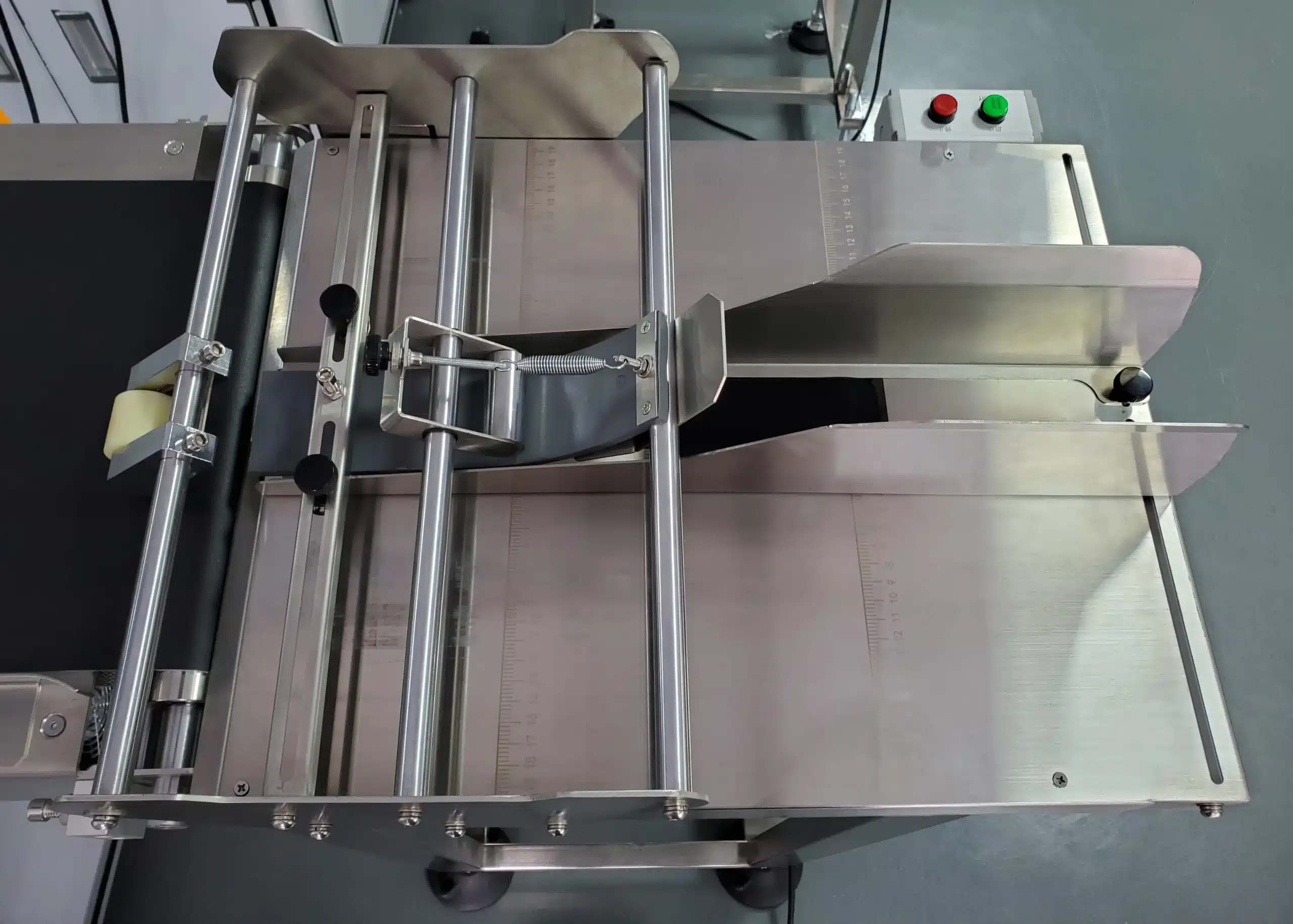
The first test is a parts shelf question, not an engineering question. Take the wear list from the used machine and lay it beside the parts list of a model you currently sell. Count how many line items are the same part number, or a part that fits both machines without machining. Peel plates, wrap belts, guide rails, gap sensors, drive belts, suction cups and safety switches are the items that decide whether a used unit becomes service revenue or a drawer of dead stock. Count by line item, never by value, because one expensive servo can hide twenty cheap parts that never fit again. A workable screening default is two thirds of the wear list interchangeable with a current model. Set your own number before you bid, then apply it to every machine you are offered.
How to run the count
Build the list from the machine, not the brochure. Photograph each station and write down every part that touches product, label or web: peel plate, wrap belt, vacuum cups, guide rails, drive belts, gap sensor, safety switch, and the rollers that carry the web. Mark each item shared, adaptable or unique against your current model’s parts list. Adaptable counts as half a line item, because it costs machining time. Unique is a cost, not a spare part.
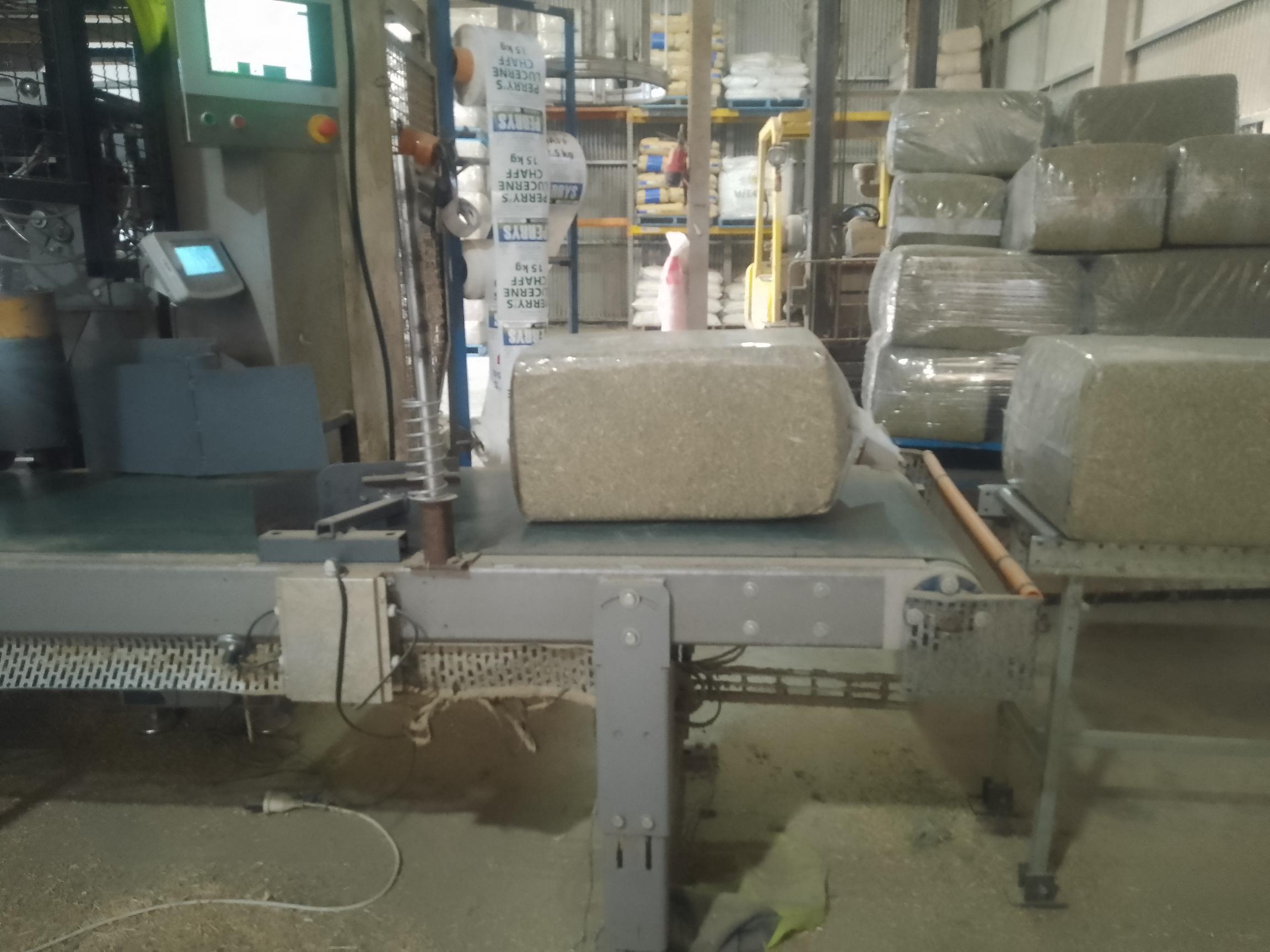
Shared parts are the difference between stock and dead weight. HiPaks keeps SICK and Panasonic sensing, Mean Well power supplies and Leadshine steppers on current builds, so a distributor carrying a current model often finds a common sensor or drive inside an older cabinet. The labeling machine parts page groups the wear list by station, the same grouping you should use on the machine in front of you.
Test 2: Is the Control Platform Still Inside a Support Window?
A control platform is inside a support window when the maker still sells the programming software, still documents the firmware, and still supplies a like for like replacement for the CPU. Outside that window the machine may run perfectly today and still be unsellable, because you cannot promise a customer years of support on a controller you cannot program. The test takes one hour with the cabinet open and the machine powered. Photograph every controller, drive, servo amplifier and HMI, read the firmware string from each, and confirm whether the programming tool is licensed to you or only to the previous owner. Then export a recipe and load it back. A machine that cannot export its own parameters has no backup, and a machine with no backup has no resale value beyond the frame and the motors.
Four readings that answer it
- Firmware string: read it from each device, not from a label on the cabinet door.
- Software licence: confirm in writing that the programming tool transfers to you with the machine.
- Like for like CPU: ask the maker whether a drop-in replacement still ships, and at what lead time.
- Recipe export: export one recipe, power cycle the machine, reload it, and watch for errors.
A machine that passes all four readings is serviceable. One that fails the licence step is a museum piece with good paint, whatever the hour meter says. Our support desk answers firmware questions before a quote is signed, so a platform can be checked before the machine is paid for.
Test 3: Can the Tooling Be Re-Machined for the Next Bottle?
Tooling is the part of a used labeler that a reseller can actually improve. Peel plates, guide rails, wrap belts, star wheels, feed screws and change parts are cut, turned or milled from stock, so a machine shop can usually make a new set for a different bottle if it has a drawing and a datum. The question is not whether the tooling fits your customer’s bottle today. It is whether the tooling comes off with standard fasteners, whether a drawing exists, and whether the wear surfaces still have material to remove. A peel plate polished through its edge has no life left, while a guide rail with two millimetres of stock can be re-cut for a narrower bottle. Ask the seller for the change part list and the bottle range the machine was last set for.
What a machine shop can recover, and what it cannot
Peel plates, guide rails, star wheels and feed screws are recoverable, because they are cut or turned from bar and plate stock. Wrap belts and coated rollers are bought, not machined, so check that a belt in the right length and profile still exists. Hardened cams and vacuum drums are the weak points: without a drawing and without material to remove, a shop can only copy a worn part, and the copy will not restore the timing the machine was built with.
Where the machine joins somebody else’s line, the tooling question extends to conveyor height and infeed timing. The labeling line retrofit page covers that boundary.
The Four Red Line Models to Refuse at Any Price
Four machine types go on the refuse list regardless of price, because the cost of making them resellable sits outside the machine. They are not bad machines. They are machines whose support chain has closed, and a closed support chain turns every future fault into a custom engineering job that you will fund. The test for each is documentary rather than mechanical, and it takes less than an afternoon on a machine you are being offered. If the seller cannot produce the document, treat the machine as if the document does not exist, and any answer given on the phone should be repeated in writing before you commit. That habit will save more money than any negotiation on purchase price, because the machines you refuse never generate a service call you cannot answer or a part you cannot source.
Red line 1: a controller the maker no longer programs
If the programming software is not sold, not licensed and not supported, you cannot recover a lost recipe, change a timer or add a reject output. The machine runs until the first fault that needs logic, and then it is scrap with a conveyor attached.
Red line 2: a servo or sensor family with no like for like replacement
A substitute that needs a different mounting, cable or amplifier turns a one hour swap into a two day retrofit, in the customer’s plant rather than yours. Confirm the exact family is still catalogued before you buy.
Red line 3: a wet glue machine whose cams and glue rollers are single source
On a cam driven wet glue labeler, cam timing is the machine. Without drawings, every new bottle format becomes a reverse engineering job, and that is how a distributor loses a season. Ask for the drawing set, not a promise.
Red line 4: a safety circuit that cannot reach the standard in force
If guard monitoring, the e-stop category or the stop time cannot reach the standard in force without redesigning the circuit, the machine cannot be sold into the EU or UK as a used unit, whatever its condition.
One condition sits outside the four. A machine with no serial plate, or a plate that does not match the frame, is not a paperwork preference. A removed serial usually means a history you cannot insure, and it surfaces when your customer asks for the technical file.
What Turns a Cosmetic Rebuild Into a New Machine Under UK and EU Law
The legal test is not how much work you did, it is whether the machine changed. The Health and Safety Executive sets the line in the UK. Refurbishment, even very substantial, where parts are replaced with new similar versions, does not require re-marking, but machinery that has been so transformed or substantially rebuilt may have to be treated as new machinery and put through conformity assessment, a technical file, a declaration of conformity and marking under the Supply of Machinery (Safety) Regulations 2008. On the EU side the same logic runs through the Machinery Directive 2006/42/EC, which applies to machinery placed on the market for the first time and to existing machinery modified to such an extent that it becomes de facto new machinery. Paint and bearings do not move you across that line. A new control philosophy does.
The like for like line
Replacing a worn guard with an identical new guard, changing a motor, repainting, servicing, or fitting a better interlock wired the same way stays on the safe side, according to the same HSE guidance on refurbished and modified machinery. The line moves when design, function or safety changes substantially, for example when significant new hazards appear or when a new method of control replaces the one the machine was built with. A manual machine converted to computer control is the example the guidance uses. On a labeler, a servo indexer that changes the motion profile, or a light curtain with its own logic unit replacing a mechanical safety strategy, is the change that should stop a rebuild until the conformity work is costed.
The modifier becomes the manufacturer
The same page describes the distributor case directly. New machinery sold to an importer or distributor who then modifies it at a customer’s request before it is first put into service can lose the original assessment and marking if the change is substantial and was not foreseen or agreed by the manufacturer. The modifier is then considered the manufacturer and must meet the obligations of the regulations. That is the risk carried by a distributor who buys used, rebuilds for a client and invoices as refurbished. The way out is documented: get the original builder’s written view before metal is cut, or rebuild to the original specification and say so on the invoice.
What the Old CE Plate Is Worth After a Rebuild
A CE plate is a statement about a technical file, not a sticker with a font. On a used machine it can be valid, invalid or unknown, and only the first state lets you resell without new conformity work. Valid means the original manufacturer’s file still exists, the machine has not been changed beyond like for like, and the file, the declaration of conformity and the marking transfer with the machine. Invalid means the machine has been changed enough to count as new, or the file cannot be produced. Unknown means you cannot tell, which you should treat as invalid until the seller proves otherwise. A distributor selling into the EU or the UK is part of the supply chain, so the question reaches you even when somebody else built the machine and signed the file.
Three states of a nameplate
- Valid: original plate, original file, like for like parts, and a declaration of conformity that travels with the invoice.
- Invalid: rebuilt beyond like for like, or a file that cannot be produced, so a fresh assessment is owed by whoever places it on the market.
- Unknown: no file, no history, or a plate that does not match the controller, which you price as a new build.
Timing matters for EU stock. Regulation (EU) 2023/1230 replaces the Directive on a mandatory basis from 20 January 2027, and machinery placed on the EU market before that date has to comply with the Directive. A machine rebuilt in 2026 and warehoused into 2028 may be placed on the market under a different basis than the one it was assessed against. Read the CE, UL and CSA certification guide before you set a rebuild scope. ISO 9001 and CE are in progress with us, so we answer conformity questions from documents rather than from a printed badge.
Questions Distributors Ask Before They Buy Stock
Four questions come up every time a distributor asks us to comment on a used machine, and they concern the plate, the controller, the price comparison and the service call. The short answers sit below. The plate answer depends on whether the rebuild stayed like for like or crossed into substantial modification, because that decides who owes the technical file. The controller answer depends on a licence and a firmware string, both of which are documentary. The price answer depends on four cost lines that never appear on the seller’s invoice. The service answer depends on whether you bought a machine you can support or a machine you can only broker. None of these can be settled by paint, an hour meter or a seller’s description, which is why the stock file in the final section exists. Treat them as purchase questions rather than legal advice.
Can I put my own CE marking on a used labeler and resell it?
Only if you can stand behind the file. A like for like refurbishment can keep the original marking, but once design, function or safety changes substantially the machine is treated as new, and the person placing it on the market owes the assessment, the technical file and the declaration of conformity. A plate you print without that work is a claim you cannot support. Establish first which state the plate is in: valid, invalid or unknown.
How do I check a control platform support window in one afternoon?
Photograph every controller and read the firmware string from the device, not a door label. Confirm in writing that the programming licence transfers to you. Ask the maker whether a drop-in replacement CPU still ships. Export a recipe, power cycle and reload it. Four passes mean the platform is serviceable; a failure at the licence step ends the assessment.
Are used labelers cheaper than a new semi automatic machine?
Sometimes, and not on the invoice. A new semi automatic machine ships in 7 to 10 days with a one year warranty, lifetime technical support with wear parts excluded, a minimum order of one unit and 30 percent deposit with 70 percent before shipment, FOB Shenzhen. A used machine adds the wear parts you cannot source, the engineering hours to re-tool it, the conformity work if you rebuild it, and the warehouse time before it sells. Compare the two on the same bottle and output, after those four lines are priced.
Who answers the service call after I resell the machine?
You do, unless something else is agreed in writing. That is the difference between stocking and brokering. If the builder still supports the platform, buy the parts and firmware access before you sell and put the support route in the quotation. If the platform is closed, sell the machine as a parts source or do not stock it. The distributor who cannot answer the first service call loses the account.
The Stock File and the 48-Hour Gate
Open the stock file in two days, not two weeks. Day one is physical and happens at the seller’s site with the machine powered: counted run, cabinet photos, tooling removal, safety function test. Day two is documentary and happens at your desk: firmware strings, licence transfer, part numbers, nameplate, invoice chain, and the seller’s written statement about the conformity file. Nine records close the file. If any of the first five is missing, do not pay a deposit. If the last four are missing, you are buying a machine to break for parts, and the price should say so before the truck is booked. The gate is not a survey, it is a yes or no on nine records, and two days are enough because nothing on the list needs a laboratory. Run it the same way every time, so two machines can be compared on one page.
- As-found photo set by station, taken before anything is cleaned.
- Nameplate and serial photo, plus the location of the technical file if one exists.
- Controller inventory: every PLC, drive, servo amplifier and HMI with model and firmware string.
- Software licence and password statement, in writing, from the seller.
- Wear list matched line by line against a model you currently sell.
- Tooling list with drawing status for every change part.
- Safety function record: e-stop, guard interlock and stop time, tested and filmed.
- Counted run on the bottle and label you intend to resell it for, with placement measured.
- Title, invoice chain, lien check and any warranty the seller will assign to you.
| Gate | Pass signal | Stop signal | What you do |
|---|---|---|---|
| Wear part interchange | Two thirds or more of the wear list fits a current model | Under one third fits and no drawings exist for the rest | Price as a one-off project, or refuse |
| Control platform | Tool licensed to you, recipe exports and reloads, like for like CPU still sold | Tool licensed only to the previous owner, no export permitted | Refuse, because no backup means no resale support |
| Tooling | Change parts release with standard fasteners and drawings exist | Cams or coated parts with no drawing and no stock to remove | Buy only with a quoted tooling package |
| Safety circuit | Guard monitoring, e-stop and stop time can reach the standard in force | The circuit needs a redesign before it can be sold in the EU or UK | Refuse for those markets |
| Conformity file | Original technical file and declaration travel with the machine | Plate present, file missing, history unknown | Treat as a new build and price the assessment |
| Provenance | Invoice chain, intact serial, no lien | Serial removed or no invoice chain | Walk away |
| Exit plan | A named customer range and a service route exist | No named buyer and no engineer to service it | Do not stock it, broker it instead |
A factory acceptance test is the cheapest version of this gate when you buy new, and the same nine records apply. HiPaks runs the test on your own bottles before shipment, ships semi automatic units in 7 to 10 days and automatic units in 7 to 25 days, and quotes FOB Shenzhen on 30 percent deposit with 70 percent before shipment, 50/50 on some models. Lead times are confirmed at quotation against your bottle list.
Stock only machines you can service, certify and re-tool. Send the bottle range and the label construction you plan to resell for, and request a factory quote that includes the parts list and firmware access in writing, or ask for a test run video on a new machine before you commit stock budget.
