
A tamper-evident label is not a stronger sticker. It is a construction that changes visibly and irreversibly when a package is opened, and it only counts if it sits across the real access point, bonded well enough that peeling destroys it. Three pressure-sensitive formats do most of the work: void stock that leaves a message, destructible eggshell stock that fragments, and perforated seals that tear as the pack opens. Ordinary labelers apply all three, yet each fails in its own way at the applicator. The table below compares the formats, and the sequence after it turns marketplace acceptance into filmed factory evidence.
Which Tamper-Evident Format Fits Your Package
Buyers usually arrive asking for “a tamper seal” and leave with one of four very different constructions. Each shows tampering differently, and each makes its own demand on the applicator, so the format decision and the machine decision belong in the same conversation.
| Format | Evidence it leaves on opening | Where it fits best | What it asks of the labeler |
|---|---|---|---|
| Void film | A “VOID” message or security pattern appears on the label or the surface when it is lifted | Cap joints, carton flaps, access panels on glass, plastic and metal | Complete wet-out and uniform wipe pressure, or the pattern activates patchily and proves nothing |
| Destructible eggshell | The brittle face fractures into fragments that cannot be reassembled | Warranty seals on jars, small containers and electronics cartons where reuse must be impossible | Gentle peel geometry and controlled web tension, or it tears apart during dispensing |
| Perforated or fibre-tear seal | The label tears along a score line, or fibres delaminate so the flap cannot be reclosed invisibly | Paperboard cartons, folding-carton lids, sleeve joints | Clean die cutting plus a wipe that seats both sides of the tear line without pre-breaking it |
| Shrink band | The band splits or wrinkles when the closure turns | Jar lids and bottle closures in food, cosmetic and pharmaceutical lines | Applied by a sleeve or banding line rather than a pressure-sensitive head; see our shrink sleeve labeling machines |
Two of these rows behave like any other pressure-sensitive job with sharper settings. One of them, the shrink band, is a different machine class entirely, which is why a rejection letter about “missing tamper evidence” should be read twice before you order anything: the fix may be a label, a band, or both.
What Marketplace and Retail Inspectors Actually Check
Marketplaces and retail chains rarely cite a law in their rejection notices. They enforce their own packaging sheets, which sit on top of whatever regulation applies to your product class. The most borrowed reference is the United States rule for over-the-counter drugs, 21 CFR 211.132, because it compresses the idea into three testable promises: the package carries an indicator or barrier to entry, breaking or missing it gives visible evidence, and the feature survives normal manufacturing, distribution and retail handling. Consumer brands copy that logic even when no inspector demands it, and buyers should expect the same three questions from any receiving dock.
On top of that baseline, retail programs add the details that actually trigger rejections. The seal must bridge the opening point, not decorate one rigid face beside it. There must be no clean-removal path, meaning a patient thumb cannot lift the label intact and stick it back. Placement must be consistent across the shipment, because a seal that wanders looks applied by hand and gets sampled harder. Evidence must be visible under store lighting, without tools or a screen. None of these checks involves line speed, which is worth saying plainly: in the letters we see from buyers, rejections trace back to construction choice or placement consistency far more often than to throughput.
Why Brittle and Void Stock Stress a Labeler
Security constructions are engineered to fail when abused, and an applicator is a small abuse machine: it peels, accelerates, presses and cuts at speed. Understanding where the stress lands is the difference between a line that runs and a line that feeds the reject bin.
Brittle facestock changes the peel
An eggshell label has almost no stretch tolerance. It tears at the first sharp corner it meets, so the peel plate, guide rollers and dispense path must be smooth, and unwind tension has to stay low and stable, or the roll destroys itself before a single bottle arrives. Die-cut quality matters just as much, because a nicked edge or a damaged liner from the converting step will fracture the facestock on the machine no matter how gently you set it. When a buyer ships us their real security label rolls before shipment, this is exactly what the trial exposes: a construction that dispenses cleanly, or one that needs a different liner, a wider radius, or a slower dispense. On our lines the label-present sensor is set for the specific stock as well, since some security films read very differently to a sensor than a paper label does, and we fit sensors from SICK or Panasonic so the threshold holds across lots.
Void patterns punish pressure errors
A void label only tells the truth when every square millimetre of it made contact. Wipe pressure that is too light leaves invisible channels, and weeks later a corner lifts with no pattern behind it, which satisfies nobody at a receiving dock. Pressure that is applied in the wrong place, or a dispense speed racing the container, folds or skews the label so the pattern activates during application instead of during tampering. The fix is ordinary engineering: a wrap or wipe station set for the container, dispense speed matched to line speed, and placement held tight enough that the seal lands across the closure every cycle. Our automatic lines hold placement repeatability within plus or minus 1 mm excluding container and label variation, and the semi automatic range within plus or minus 0.5 mm, with the MT-807 bench unit reaching up to plus or minus 0.2 mm where registration matters most. What those numbers cannot do is forgive a container that arrives skewed or a label cut too close to the artwork, which is why the acceptance test below runs on your parts, not ours.
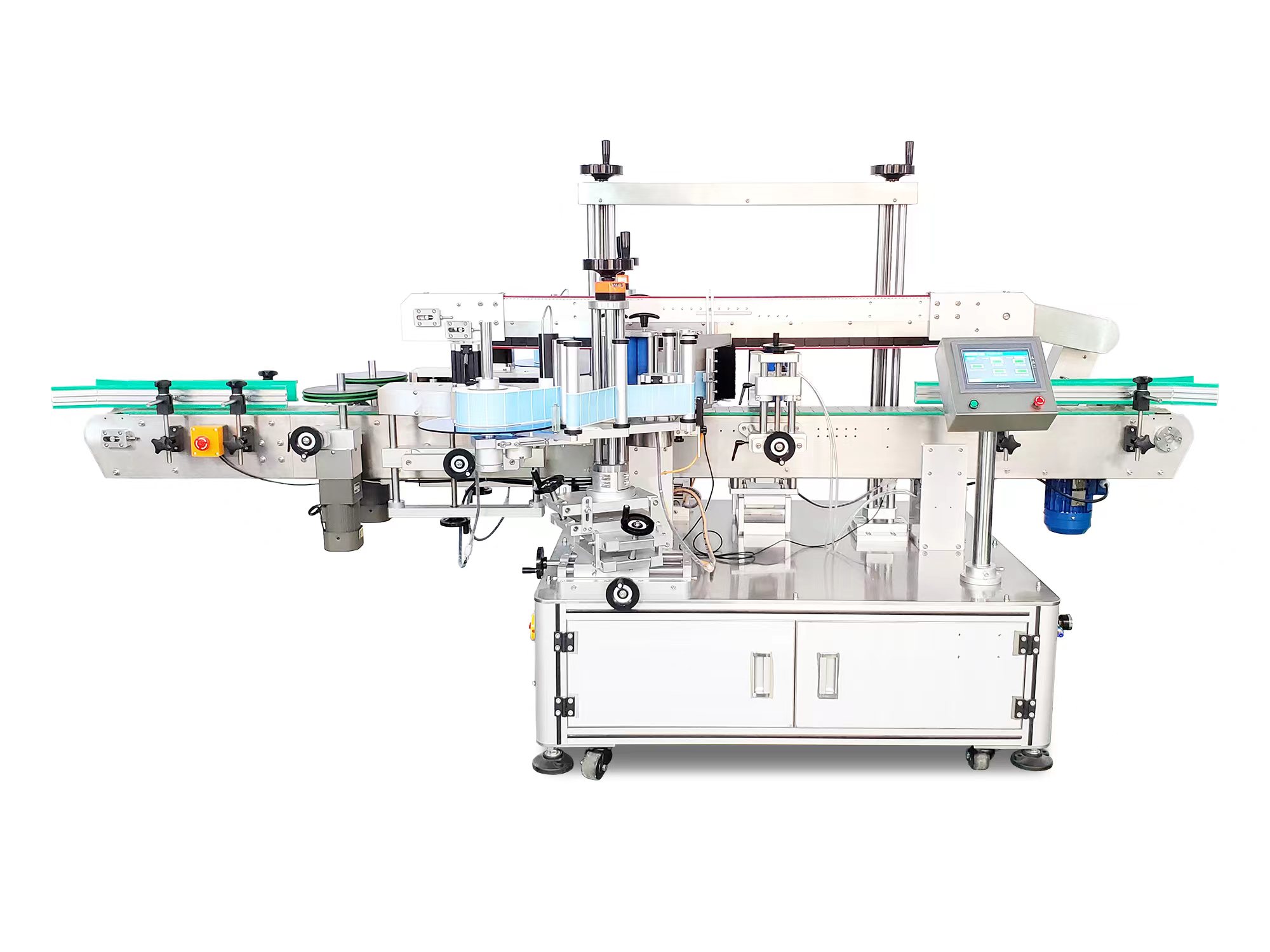
The Acceptance Sequence That Proves Batch Consistency
Everything above can be written into a purchase order as evidence obligations rather than promises. This is the sequence we run with buyers before a machine leaves the factory, and it converts a marketplace requirement into a filmed, repeatable procedure:
- Send the factory your real containers and rolls from the actual security label lot you intend to buy, including the liner, not a printer’s proof.
- Name the worst case in writing: smallest carton, fastest contracted rate, coldest morning in your plant, and the corner or closure the seal must bridge.
- Require a filmed run on that worst case at contract speed. We run the customer’s own bottles, jars and cartons before shipment as standard practice and send the video back for sign off, so placement, wet-out and seal behaviour can be reviewed frame by frame.
- Challenge the evidence: pull sample units, attempt removal at a shallow angle and a steep one, attempt to reapply, and confirm the pattern, fracture or tear appears every time while the intact label survives normal handling.
- Freeze what passed into the commissioning sheet: wipe pressure, dispense speed, sensor threshold, placement tolerance and the reject rule for missing or skewed seals.
- Agree the retest triggers: a new label converter or lot, a new container supplier, or a faster contracted rate reopens the test, not just the invoice.
On throughput, be honest with yourself the same way. A security construction may run below the speed an ordinary label tolerates, so the number that matters is correctly sealed units per hour on your geometry, not a brochure maximum. Our semi automatic machines run 15 to 30 pieces per minute and automatic lines 40 to 300 pieces per minute on general work; where a security stock can sit inside those bands on your container is a number we confirm against your label at quotation, because constructions differ far more than machines do.
Tamper Label Questions Buyers Keep Asking
Will a destructible label shatter inside my applicator before it reaches the bottle?
Not when the dispense path is set for it. The failures we see come from three places: a damaged or nicked die cut, a peel radius too tight for the film, or unwind tension left at the setting for paper. Any of the three will shred an eggshell roll in minutes. This is why the filmed trial matters: on your roll, on our machine, at your rate, you watch whether the label dispenses whole and seats flat, and any setting that passed is written into the commissioning sheet so the knowledge does not leave with an operator. Many security constructions also publish a minimum application temperature on their datasheet, and your plant’s coldest shift is part of the worst case we test.
Should I choose void or destructible stock for my product?
Decide by the failure you need the seal to announce. Void stock communicates: it prints its message and suits closures and cartons where a receiving inspector must see evidence at arm’s length. Destructible stock blocks reuse: it suits warranty points on jars and small containers where the goal is that nobody can ever reapply a clean label. Perf programs on paperboard split the difference by tearing with the flap. If your rejection letters name lifting or reuse, choose accordingly, and if they name placement, no stock change will save you until the application is fixed. Where your format turns out to be a band rather than a label, the jar lines we build around our jar labeling machines pair pressure-sensitive seals with sleeve bands on one conveyor.
When a marketplace rejects a shipment, who is at fault, the label maker or the machine builder?
Responsibility follows evidence, and the acceptance sequence exists to produce it. If the seal was applied on-camera, inside the frozen settings, and still fails the marketplace’s test, the construction is suspect and the label converter owns it. If the seal drifted off the closure, or was applied half-bonded, the application owns it and the machine settings say so. Without a filmed record, both parties argue; with one, the next corrective action starts the same afternoon. That record is also why our factory acceptance test runs on your parts rather than demo stock.
Rejection notices are expensive way of telling you the seal was never proven. Prove it instead, on your containers, at your rate, on video, before the crate closes. Watch how these runs are documented on our labeling test videos page, then send us your container and security label spec and we will quote the trial together with the machine.
