
A datum is a feature on the bottle that the machine is told to hold to, and a label is square to a datum, not to a bottle. The moulded seam on a flat-sided or square bottle moves with cavity and shot, so the purchase order names four things before any angle is written: the datum feature, the reference dimension the tolerance is measured across, the height of the check, and the condition the figure is guaranteed at. One angle becomes a different displacement on every reference length, which is why one tolerance supports three acceptance arguments. Three clauses keep the first bottle honest: the datum toleranced on the moulder’s drawing, stored as a recipe item and re-checked on every bottle-lot change, and a written fallback when the feature cannot be found.
What Do Five First-Week Complaints Have in Common?
Five complaints reach a labeler builder in the first weeks, and all five start with a datum: a label off the seam, a back label that does not face the front panel, a wrap splice landing on the seam, a label edge crossing a panel corner, and rejects climbing only at running speed. A label off the seam is a registration error about the bottle axis. A label edge over a panel corner is a placement error against the panel zone, and a label whose own edge runs crooked is skew, coming from the peel and the wipe rather than the bottle. Rejects at speed are a timing error between encoder, capture and head. One specification cannot answer all five, because the errors are measured against three different references, and one tolerance buys an argument about which reference was meant.
Does Mechanical Pre-Orientation Find the Seam, or Only Present a Face?
What Can a Mechanical Stage Reach, and What Is Left to the Mould?
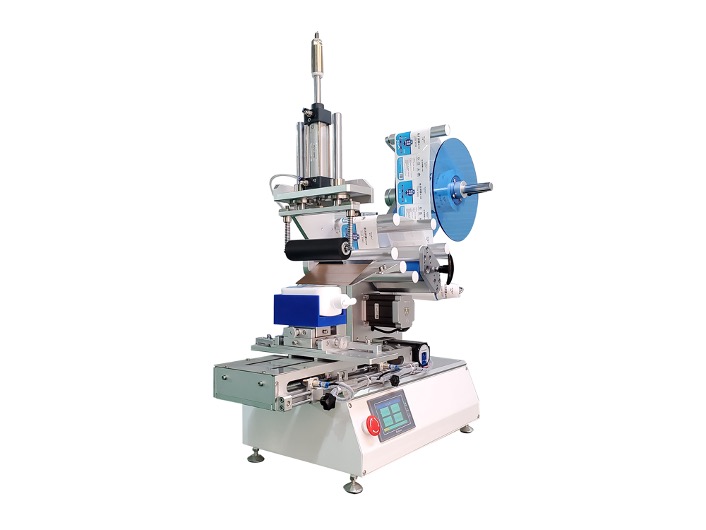
A mechanical pre-orientation stage is a set of guides, a timing screw or a star wheel presenting one face to the applicator. The stage reaches three things: a repeatable face against the guide rail, a stable attitude through the wrap, and a coarse angle before the peel. The stage does not reach the seam, because the seam’s position on that face is set in the mould, not in the machine. A guide presenting a face whose parting line wanders produces a label following the panel and looking off the seam, and the oval trailing edge notes cover the curved case while label shape decides the machine class.
Why Does the Seam Belong to the Mould Rather Than the Machine?
The seam is a moulding result, so a machine cannot hold an angle to a feature whose position no machine setting controls. A multi-cavity tool produces one parting line per cavity, and the distance from the parting line to the panel edge differs between cavities and drifts with tool wear. The consequence is arithmetic: a datum feature moving between cavities puts spread into the error budget before the applicator has contributed anything. Two routes follow. First, ask the moulder for the seam position as a toleranced callout on the bottle drawing, with the panel zone and the datum named. Second, decide which feature governs when seam and panel disagree. Published bottle standards do not settle the question: BS ISO 9058:2008 covers glass containers of circular cross section from 50 ml to 5000 ml, a different container and feature.
What Must a Vision Datum Have Before the Label Station Closes?
Which Signals Must Be Present Before the Head Fires?
A vision datum is a sequence, not a sensor. Five signals have to be present before the applicator fires. First, an encoder position, so a slipping bottle is still measured where the label will land. Second, a contrast line at the seam or the panel edge staying readable across the label lot and bottle colour. Third, a confidence value with a threshold written in the specification rather than left in a menu. Fourth, a phase delay between capture point and label station, because a correction computed after the head has fired is a correction for the next bottle. Fifth, a correction window closing before the peel plate. A chain missing one link fails at rated speed.
What Turns a Confidence Threshold into a Specification Line?
A confidence threshold is a written number and a written action, and neither belongs in a setup menu. The line needs four parts: the feature the threshold applies to, the value, the action when the value is missed, and the record the action leaves. Without the fourth part, a line reports rejects with no history, and a format that failed on one bottle lot looks identical to a machine that failed. In our own trial data, buyer bottles are labelled before shipment and the video returns with the run. According to ASME Y14.5-2018, a datum reference fixes which degrees of freedom are constrained, and a threshold silent on those degrees cannot be audited.
Which Line on the Specification Turns a Complaint into a Clause?
How Is Each Complaint Traced to One Specification Line?
| What the line reports | What is happening | Specification line that decides it | Evidence to demand | Answer that means the format is not fit |
|---|---|---|---|---|
| Label off the seam | Registration about the bottle axis | Datum feature, reference dimension, height | Seam toleranced on the bottle drawing | Seam varies by cavity beyond the angle |
| Back label not facing the front | Two datums, one per side | Datum A and panel zone named once | Both labels from one datum line | No feature is common to both faces |
| Wrap splice on the seam | Splice set by the roll, not the datum | Roll splice position from supplier | Splice drawing with web tolerance | Splice cannot sit outside the seam band |
| Label edge over a panel corner | Placement error against a zone | Panel zone with edge margin | Zone drawing, margin and radius | Panel narrower than label plus margin |
| Rejects climbing only at speed | Timing error, encoder to head | Figure guaranteed at rated speed | Rated speed, production bottles | Figure offered only at reduced speed |
How Do You Write the Angular Figure: Datum, Dimension, Height?
Why Does One Angle Become Three Different Numbers?
An angular tolerance is a ratio, so the linear number a buyer measures depends on the length the angle is projected onto. Three lengths are in common use: 1) the bottle radius, 2) the label width, 3) the label height, and a buyer collecting quotations usually receives the same angle projected onto a different one of the three. First, each conversion is arithmetically correct. Second, none of the three is the specification. Third, the witness picks whichever length passes. In practice, a line engineer checks the label edge at the top of a tall label, a quality team checks the corners, and a buyer compares the result against a linear placement figure measuring something else. Published placement accuracy is stated excluding product and label variation, at plus or minus 1 mm on a fully automatic machine.
Which Dimension Should the Purchase Order Name?
The purchase order should name the dimension the customer looks at, and that dimension is the label edge at the height the label sits. According to ASME Y14.5-2018, a tolerance is written against a datum and a defined feature, so the clause carries three parts on one line. First, the datum feature. Second, the reference dimension. Third, the measurement height. A clause naming only an angle leaves the reference dimension to the witness, and the witness picks a length that passes. In practice the clause matches the machine specification sheet, so buyer, builder and witness read the figure the same way.
What Does the First-Bottle Check Have to Draw, and Keep?
A first-bottle sample is a draw pattern, not a bottle count, and the pattern is what makes a reading comparable across cavities and label lots. The sample draws four ways: 1) across the run, at the start, middle and end of the shift; 2) across cavities, with the cavity number recorded against each bottle; 3) across the label lot, because a splice and a die cut change with the roll; 4) at rated speed, on production bottles and production labels. Three consecutive bottles from one cavity test the machine on the easiest population available. Then the bottles are kept, with the bottle identifier, the cavity number, the label lot, the measured displacement and the speed.
When the Datum Cannot Be Found, What Happens to the Line?
Which Fallback Rule Belongs in the Recipe Before the Run?
A fallback rule is a written decision for the run where the datum cannot be found, and three options exist with different costs. First, reject the bottle: the datum was not found, so the bottle leaves the line and the count is recorded. Second, stop the machine: the format is declared unfit until the feature is found again, which protects the run and costs production. Third, run and sort: the line keeps running with the last good angle applied and the deviation recorded against every bottle, and the bottles are sorted after labelling. One of the three belongs in the specification, chosen in writing before the run rather than at the reject bin.
When Is the Format Unfit Rather Than the Machine?
The format is unfit when the datum spread on the bottles is wider than the angle the specification allows, and that verdict belongs to the bottle drawing rather than to the machine. Two tests separate the cases. First, measure datum position on a sample drawn across cavities with the labeler stopped: spread exceeding the allowance ends the machine question. Second, run the same bottles on a second cavity set and compare: a figure moving with the bottle and not with the settings points at the mould. A machine is at fault when the bottles agree and the labels do not. Drift surviving both tests is a different question, set out in the placement drift attribution ladder.
What Can Be Checked Before the Machine Ships?
A trial run on the buyer’s own bottles is the last cheap test of a datum, because a drawing can be argued and a labelled bottle cannot. In practice, the drawing callout arrives with the purchase order or not at all. The commercial frame is short: MOQ one unit, 30% deposit with 70% before shipment, FOB Shenzhen, one year of warranty with lifetime support, machines running in more than 50 countries and more than 500 factories. Three items travel with the order: 1) the bottle drawing with the datum callout, 2) the label lot list, 3) the measurement height. First, the drawing fixes the reference. Second, the lot list fixes the sample. Third, the height fixes the reading. A test-run video shows the label edge against the seam at running speed, and the contact form carries the three items in one step.
Is a Degree a Specification on Its Own?
A degree is not a specification on its own, because the linear displacement a buyer measures depends on the reference dimension. Write the clause with three parts: the datum feature, the reference dimension the angle is projected onto, and the measurement height. A clause missing the reference dimension cannot be checked on a bottle.
Can a Mechanical Guide Replace a Vision Datum?
A mechanical guide is a transport device, not a datum. A guide replaces a vision datum only when the moulded feature and the panel sit in a fixed relationship on every cavity and every shot. Where the parting line wanders, the guide presents a face and the label follows the face, so the label sits off the seam while the machine holds a stable angle. The two stages do different jobs: the guide stabilises transport, and the vision station measures the feature.
How Often Is the Datum Re-Checked After a Bottle-Lot Change?
The datum is re-checked at every bottle-lot change and at every cavity or tool change, because the datum definition is stored with the recipe. In practice, the check is the first-bottle draw pattern repeated on the new lot, with the measured bottles kept beside the previous set and the two compared. A step between the two sets is a mould signal, and a drift is a settings signal.
