
A launch date contract is a set of money and evidence gates, not a damages clause. The gate which actually holds a Chinese labeling line to a date is the tranche still unpaid, the filmed acceptance run which releases money, and the drawings and control program handed over with the final payment. Liquidated damages and time-is-of-the-essence language look strong in a purchase order and behave like paper once a buyer in Ohio is chasing a factory in Shenzhen. According to UCC 2-718, a seller who withholds delivery after a buyer breach must return any payment above 20 percent of the contract price or $500, whichever is smaller, so United States law already treats a deposit as refundable value. In 2026 the useful question is which gate the money passes through, not which clause sounds strongest. This guide maps five gates to the risk each removes and pairs every gate with the evidence which proves it closed.
Why Do Liquidated Damages Fail to Protect a Launch Date?
A liquidated damages clause is a pre-agreed sum per day of delay, and the sum is worth only what a tribunal will enforce. According to UCC 2-718, a term fixing unreasonably large liquidated damages is void as a penalty, so a punitive rate written into a purchase order protects nobody. Article 585 of the Civil Code of the People’s Republic of China, adopted in 2020, lets a court or arbitration institution reduce an agreed sum which is excessively higher than the actual loss, so a Chinese supplier can litigate a rate down after a slip. Enforcement then crosses a border and costs more than a three week delay on one labeling line. The same United States section caps a seller’s default retention at 20 percent of the contract price or $500, which shows how modest statutory remedies are.
What Three Levers Actually Hold a Launch Date?
A launch date lever is a control point which changes what the other side does tomorrow, and only three levers qualify on a machine order. First, the unpaid balance, because a 70 percent tranche still sitting in a buyer’s account argues for a date more effectively than any clause. Second, the buyer sample milestone, because no factory can freeze a fixture without the bottles, labels and artwork which the trial consumes. Third, the ownership clause, because drawings, fixture files and the controller program are the assets a buyer needs when the original factory stops answering emails. According to Incoterms 2020, published by the International Chamber of Commerce, FOB Shenzhen shifts risk to the buyer once the machine is on board, so every lever must act before the container is sealed.
Where Does the 30 Percent Deposit Belong?
A deposit is a payment which buys a production slot, and the money earns the name only when the factory can start without further instructions. HiPaks quotes 30 percent by TT with a 70 percent balance before shipment, and 50/50 on some configurations, so the first tranche is the buyer’s main hold for the rest of the build. A deposit paid before the specification is frozen buys calendar days the factory spends waiting. According to UCC 2-718, when a buyer breaches and no liquidated damages term applies, the seller may keep only 20 percent of the contract value or $500, whichever is smaller, so a 30 percent deposit is partly refundable by default in the United States. In 2026 the practical fix is release against a frozen drawing set and a dated sample receipt. Buyers who want the background on supplier selection and payment safety should read buying a labeling machine from China first.
What Evidence Releases the 70 Percent Balance?
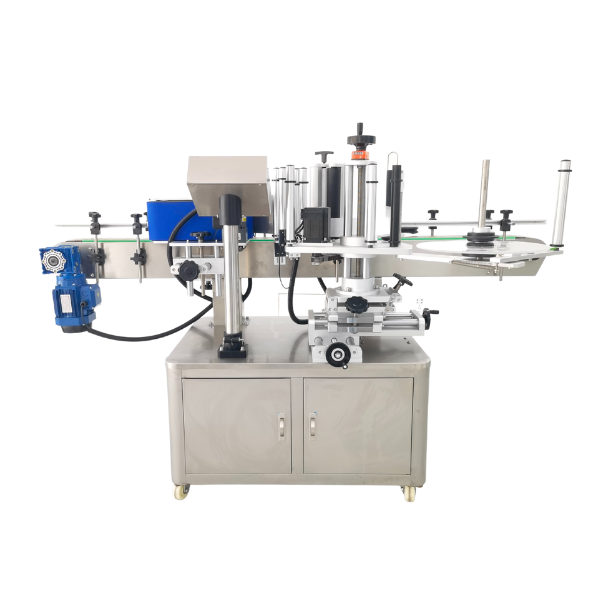
An acceptance gate is a defined test which turns a payment into a yes or no, and the gate holds only when the run happens on the buyer’s own bottles and labels. HiPaks runs customer containers before shipment and sends the video back, so placement, wipe pressure and reject behaviour can be reviewed frame by frame instead of promised in an email. According to ISO 9001:2015 clause 8.6, an organization shall not release products and services until planned verification arrangements are completed, which gives a quality system name to a payment condition. Write the 70 percent balance as payable against a signed and filmed acceptance run plus the packing list, and make the signed sheet travel with the invoice. A buyer who pays the balance on a photograph of a crated machine has purchased a crate, not a launch date.
What Belongs in the Sample Kit?
A sample kit is the physical and digital set which freezes a labeling job, and an incomplete kit is the most common reason a quoted date slides. The kit must be everything the run consumes: production bottles from every mould, the carton or jar at the smallest and largest size, label rolls from the actual lot with the liner, artwork at final revision, the contracted rate and the datum for placement. A printer’s proof proves colour, never dispensing. According to ISO 9001:2015 clause 8.2.2, an organization determines the requirements for the products and services to be offered, and the sample kit is where a labeling line does exactly that. Ask for a written kit list and tick every line before the crate is booked. In 2026 the orders we ship fastest are the ones where the kit arrived before the purchase order did.
How Do You Write the Sample Deadline?
A sample milestone is a dated buyer obligation which holds the factory clock until the kit arrives, and the clause protects a date only when the deadline sits in the order rather than in an email thread. State the date, name the carrier, and define complete kit receipt as the start of production. According to Article 80 of the United Nations Convention on Contracts for the International Sale of Goods, adopted in 1980, a party may not rely on a failure of the other party to perform to the extent that the failure was caused by the first party’s own act or omission. That sentence is the legal basis for a buyer-caused slip, and the clause should also name who books the courier and who pays the duty.
What Ownership Language Survives a Factory Change?
Ownership language is the clause which decides who holds the fixture drawings, the PLC program and the HMI recipe after the invoice clears, and a machine buyer needs all three in editable form. Write four things: the editable project file rather than a compiled upload, password-free access to the controller, one backup copy handed over at delivery, and transfer of the files on final payment. According to ISO 9001:2015 clause 7.5.3, documented information must be controlled for availability and protection, and a factory which applies that clause to a customer file set already behaves the way the contract asks. A service visit to replace a controller is cheap. Rebuilding a lost recipe from photographs is not, so keep an offline copy on a drive the buyer controls.
How Does Incoterms 2020 Move the Risk Date?
A risk date is the moment when loss of the machine stops being the seller’s problem, and the trade term in the quotation fixes that moment months before anyone discusses a launch. According to Incoterms 2020, published by the International Chamber of Commerce, FOB Shenzhen passes risk to the buyer when the machine is on board the vessel at the named port, so a contract which protects only an arrival date protects the wrong event. Under a 30/70 schedule the buyer has already sent 70 percent by then, which means money and risk travel in opposite directions. In 2026 the practical wording is a protected loading date plus marine cargo insurance from the factory gate, with a filmed loading sequence. For how transit sits inside the wider calendar, read our guide to labeling machine lead times from China.
Which Clause Locks Which Risk?
A launch date clause is a purchase order term which changes supplier behaviour before the ship date, and six clauses carry a launch date. The pattern is identical on every order we quote in 2026: money first, evidence second, ownership third. According to Incoterms 2020, only the loading row changes when risk passes, while the other rows change what a supplier does before the container is sealed. A 30 percent deposit without a drawing freeze buys waiting time. A 70 percent balance without a filmed run buys a crate. The table below pairs each gate with the evidence to attach, so a buyer can tick the rows in one meeting instead of finding a gap three weeks before a launch.
Clause, Risk and Evidence at a Glance
A clause matrix is a one page annex which pairs each gate with the document that proves the gate closed. According to UCC 2-718, a late-delivery rate is enforceable only while reasonable, so the remedy row carries the statute note. In 2026 the rows below cover the gates which a launch date depends on.
| Gate | Risk removed | Evidence to attach |
|---|---|---|
| 30 percent deposit | Production starts before the specification is frozen | Signed drawing set, dated sample receipt |
| 70 percent balance | Payment lands before the machine is proven | Filmed acceptance run on buyer bottles, signed FAT sheet |
| Sample deadline | Buyer-caused delay is blamed on the factory | Kit receipt date, carrier tracking record |
| Loading date | Risk point is confused with arrival date | Bill of lading, loading video, insurance certificate |
| File transfer | Program and drawings are lost after a factory change | Editable project files, controller password list |
| Late remedy | Damages clause is unenforceable when needed | UCC 2-718 reasonableness note, agreed daily rate |
China Labeling Line Contract Questions
Can a Chinese Factory Really Promise a Launch Date?
A launch date promise is a capacity commitment plus a documented acceptance step, and the promise holds only as far as the factory controls both. Chinese machine factories control production and internal testing, and control neither ocean freight nor a buyer’s artwork approval. According to Article 79 of the United Nations Convention on Contracts for the International Sale of Goods, adopted in 1980, a party escapes liability only for an impediment beyond control which could not reasonably have been taken into account when the contract was concluded, and Article 79(2) requires the sub-supplier to be exempt as well. In 2026 the honest promise is a protected loading date with a 30 percent deposit, a filmed acceptance run, and a named person who reports slippage weekly.
Who Pays When the Buyer’s Samples Arrive Late?
Buyer-caused delay is the one slip no supplier clause can absorb, and the cost lands on whoever owns the calendar. A factory which holds a production slot for a missing sample kit still pays rent, wages and schedule space for the days lost. According to Article 80 of the United Nations Convention on Contracts for the International Sale of Goods, adopted in 1980, a party may not rely on a failure of the other party to perform to the extent that the failure was caused by the first party’s own act or omission, so a buyer who ships samples late cannot then claim a 70 percent balance is due on the original date. In 2026 the fix is a dated kit milestone with a written consequence, agreed before the deposit leaves.
Does a 50/50 Payment Split Change the Risk?
A 50/50 split moves half the value at order and half at acceptance, and the split changes who holds the money rather than risk. HiPaks offers 50/50 on some models alongside the standard 30/70, and the larger first tranche reduces the balance a buyer can withhold if a filmed run fails. According to UCC 2-718, absent a liquidated damages term, the seller may keep only 20 percent of contract value or $500 after a buyer breach, which means a 50 percent deposit is exposed well beyond the statutory floor. In 2026 a buyer choosing 50/50 should ask for something in return: a fixed loading date, a filmed acceptance run, and file ownership on final payment.
How Do You Put These Gates Into One Order?
Putting the gates into one order is a drafting job, and the drafting fits on one page with five rows. Name the frozen drawing set as the deposit trigger, the filmed acceptance run as the balance trigger, the sample kit date as a buyer milestone, the loading date as the risk point, and the editable controller files as a final payment deliverable. According to Incoterms 2020, the loading date is the last moment a factory controls, so every row has to bite before the container is sealed. Our factory acceptance test page shows the evidence we attach to the balance row, and the labeling test videos page shows what a filmed run looks like on customer containers. In 2026 a buyer who sends a 30 percent deposit with a two line email has signed the supplier’s calendar. Send the container and label spec through our contact page instead.
