
Wet glue labeling machines are quoted per project rather than sold from a published price band, because five cost blocks move independently: the machine base and station count, the glue system, the label magazine and format parts, the container handling, and the electrical and safety package. Two lines that both label 8,000 bottles an hour can differ in price by the cost of a second station, a stainless frame or a wash-down package. What a buyer can do is compare quotes block by block instead of total by total. A single From price would mislead in this category, because the number without the specification is meaningless, and the specification is decided by your bottle, your label paper and your glue.
Why there is no From price for a wet glue machine
The self-adhesive category publishes From prices because a standard configuration exists: a frame, a head, a sensor and a set of rollers, and the customer’s container either fits the range or it does not. Wet glue is different. The glue system is built around the chemistry, the magazine around the paper stack, the handling around the bottle. Change one and the drawing changes with it.
On this site the labeling machine price guide lists seven bands with From prices for the standard categories and one row for project work, because that is the honest structure. A wet glue build sits in the project row, and when we quote one the number arrives with the specification attached.
The five blocks that make up the number
| Block | What varies | How it moves the price |
|---|---|---|
| Machine base and stations | Linear frame against rotary carousel; one label panel or three | Each additional station adds a glue unit, a magazine and a set of rollers |
| Glue system | Glue roller or glue pad; tank size; circulation and cleaning | Stainless wet parts, temperature control and clean-in-place design cost more than a bare roller |
| Label magazine | Paper stack height, label size range, suction or friction pickup | A magazine that handles body plus shoulder plus neck labels is a different mechanism |
| Container handling | Infeed screw, star wheels, wrap station, change parts | Format parts for each bottle size are machined, not switched |
| Electrical and safety | Voltage variant, guarding, CE documentation, control platform | Certification and documentation are engineering hours, and they do not scale with machine size |
Machine base and station count
A single-panel body label on a linear machine is the simplest wet glue build and the cheapest way into the technology. Add a back label and the machine needs a second station, a second glue unit and a bottle-turning arrangement. Add a neck label and geometry becomes the constraint, because the neck is where the diameter changes fastest. Station count is the largest multiplier in the quotation.
Glue system
Wet glue is water-based or paste adhesive, applied by a roller or a pad, and the glue system is where cheap builds fail first. A roller that is not stainless, a tank without temperature control, or a cleaning route that requires disassembly every shift all cost money later rather than at purchase. Two quotes that differ mainly in the wet parts and the guarding are not the same machine.
Label magazine and format parts
Paper labels arrive in a stack, not on a roll, and the magazine has to separate one label at a time from that stack without tearing or double-feeding. The mechanism depends on paper weight, label size and how much curl the stack has carried from the printer. A magazine set for one body label will not run a shoulder label without changes. If your product range includes three bottle sizes, ask what each format set costs, because that number is usually quoted separately and surprises buyers after the order.
The paper itself is a specification, not a commodity. Where a label or its adhesive comes into contact with food, EU rules under Regulation (EC) No 1935/2004 require the material to be manufactured so it does not transfer constituents in quantities that endanger health or change the food. A label outside a sealed bottle is not normally in contact with the product, but glue migration, condensation and wash-off water are the questions a technical buyer asks, and the answer decides which paper and adhesive grade the quotation prices. Compliant stock costs more than the cheapest paper, and that difference is an operating cost.
Container handling
Wet glue lines handle glass, and glass is heavy, abrasive and dimensionally inconsistent between suppliers. The infeed screw, the star wheels and the wrap station are machined for a bottle family. A line that must run returnable bottles from a pool needs more tolerance in the handling than one that runs new bottles from a single supplier, because pool bottles arrive with chips and dimensional spread.
Electrical, safety and documentation
This block is where quotations differ most and where the difference is hardest to see. A machine built for one market’s voltage, with guarding designed to a recognized standard and documentation in the buyer’s language, costs more than a machine built to no declared standard. It is also the block that decides whether the machine can be installed, insured and accepted by a corporate engineering team. HiPaks states CE and ISO 9001 as in progress rather than issued, and gives the current document status in writing at inquiry, which is the version of that claim a buyer can use.
Linear or rotary: where the money goes
A linear wet glue machine moves bottles in a straight line past one or more stations. It is simpler, easier to service and cheaper to build, and it suits moderate speeds and long runs of one container. A rotary carousel carries bottles around a drum and applies labels at several stations at once, which is how high-speed beverage lines reach five-figure bottles per hour. The rotary is the larger capital commitment because the carousel, tooling and drives are all more complex, and it only pays at sustained volume.
For context on the top of the market, the rotary hot melt systems on this site are listed from $25,000 (indicative), and they run 12,000 to 15,000 bottles per hour on film labels. A wet glue rotary is a comparable class of machine in mechanical terms, built around a different adhesive and a paper label. A linear wet glue machine is a different order of magnitude, and it is the version most regional bottlers usually need.
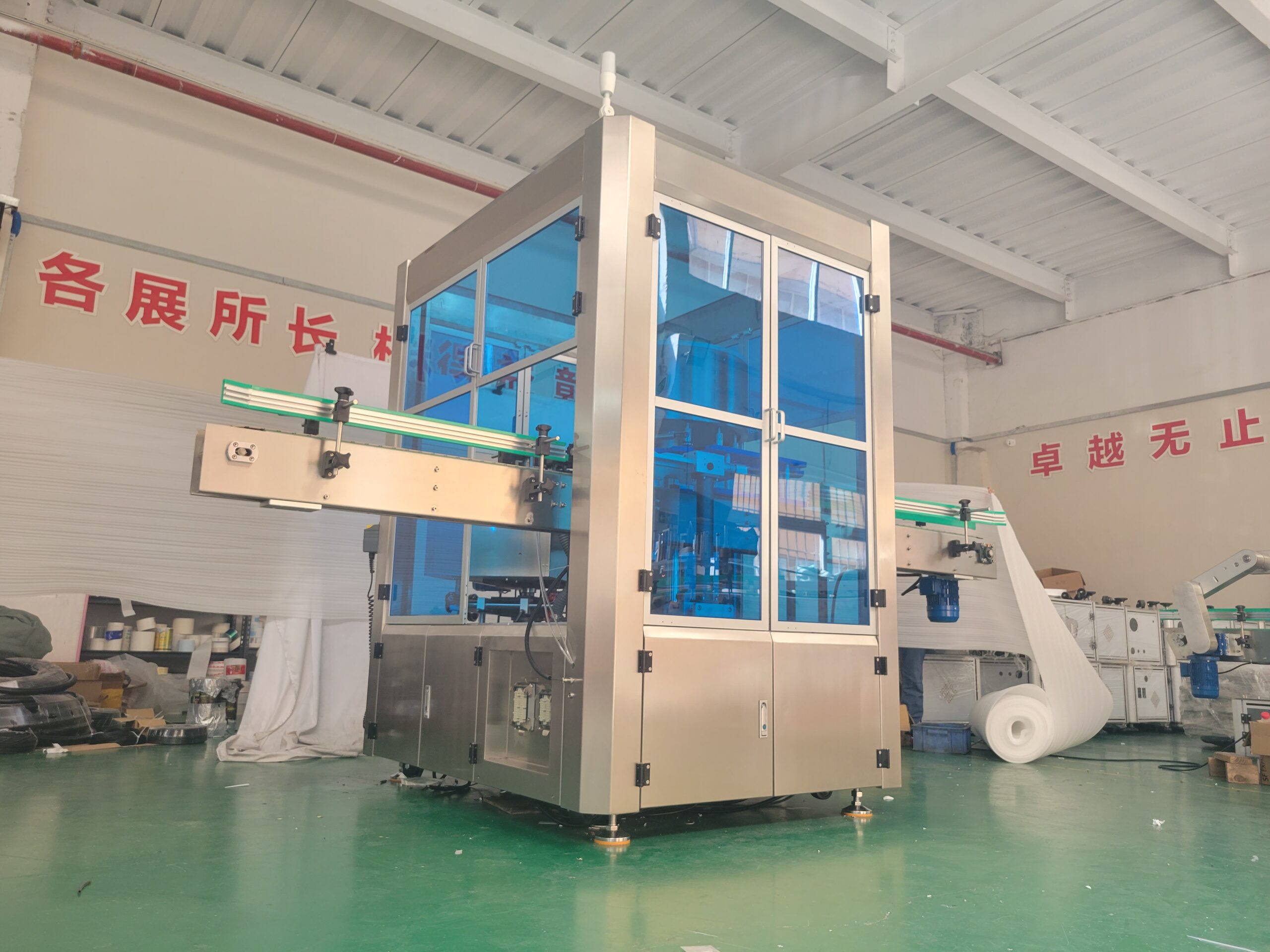
What a wet glue quote must itemize
Ask for these lines separately. A quote that bundles them into one number cannot be compared with a competitor’s, and the buyer ends up choosing on total price without knowing what was excluded.
- Machine base, number of stations and label panels covered
- Glue system type, tank volume, material and cleaning method
- Label magazine specification and the paper weight range it accepts
- Container handling for your bottle, plus the price of each additional format set
- Voltage, control platform, guarding standard and documentation language
- Spare parts kit and the recommended first-year spares list
- Installation scope: remote commissioning, on-site commissioning, or neither
- Lead time in weeks from drawing approval, not from deposit
Two further lines belong in the comparison even though they are not machine costs: freight to your site with crating for deck cargo, and the labor to move the machine from the loading dock to the line.
Machine price is not cost per label
Wet glue exists because the consumable is cheap. Plain paper labels carry no silicone liner and no pre-applied adhesive, and the glue itself costs a fraction of pressure-sensitive adhesive per label. The case is genuine at volume. The mistake is to compare machine prices and stop there.
Run the comparison over the label volume you will actually buy in three years:
- Label cost per thousand for paper against film or self-adhesive, at your artwork and size.
- Glue consumption per thousand labels, which depends on label area and the roller setting, not on a published figure.
- Wash-off and bottle reuse, if you run a returnable pool. Cold glue paper labels wash off in the caustic bath of a bottle washer, which is the reason breweries with refillable bottles stayed on wet glue for decades.
- Labor for glue preparation and cleaning, which is the recurring cost buyers forget. Wet glue needs more operator attention per shift than a self-adhesive line.
- Wear parts, mainly rollers and pads, which are consumables in this technology.
The result is a cost per labeled bottle, and that number decides whether wet glue wins. The hot melt versus pressure-sensitive comparison runs the same arithmetic for the film side, which most beverage lines end up needing.
Three cases where a wet glue quote is the wrong purchase
Being straight about this saves both sides a project. A wet glue machine is the wrong answer when the label is film, because film needs hot melt application at the label ends. It is the wrong answer when the SKU count is high and runs are short, because glue preparation dominates changeover. And it is the wrong answer when the site has no bottle washer and no intention of running returnables, because the wash-off advantage disappears and the consumable saving has to carry the case alone.
For film labels on beer, water or CSD lines, the standard product here is the hot melt glue labeling machine series, with the 12-station rotary at 10,000 to 15,000 bottles per hour. For short runs and frequent SKUs, self-adhesive is usually the lower total cost.
How to compare two wet glue quotes without being misled
Put both quotations on one sheet with the eight itemized lines above as rows, and mark a blank line as excluded rather than assuming it is included. Then check whether the format sets for your other bottle sizes are priced, whether lead time runs from deposit or from drawing approval, and whether the spares list names the parts that wear with prices against them.
Ask what happens at commissioning, too. Remote support is included on machines from this factory; on-site commissioning is a separate scope for line integration. The wet glue labeling machine manufacturer page explains how a project is scoped here, including the point at which a hot melt replacement is the better recommendation, and the wet glue labeling guides cover glue systems, paper selection and cut-and-stack labels.
If you are comparing a wet glue quote against a replacement, send the bottle, the label stock and your annual volume and we will run both numbers, including the case where wet glue is the right answer.
Frequently asked questions
Why is there no published price for a wet glue labeling machine?
Because the machine is configured around the glue chemistry, the paper label and the container. Station count, magazine type and handling all change with the bottle, so a single From price would mislead. A quotation with itemized specification is the only figure a buyer can compare.
Is wet glue cheaper than hot melt over five years?
It depends on label material and volume. Wet glue wins on label cost for long paper-label runs, while hot melt wins on film labels, wash-off avoidance and high-speed lines. The comparison belongs in a cost-per-bottle model using your actual label prices, not in a machine price comparison.
What does a wet glue machine need on site that a self-adhesive machine does not?
Glue preparation and cleaning facilities, more operator attention per shift, and usually more floor length for the same output. The wet parts also need a cleaning routine at every shift change, which a self-adhesive line does not have because it has no glue system.
Can I add a second label panel later instead of ordering it now?
Sometimes, if the frame and the drive were sized for it. Retrofitting a station onto a machine built for one panel is usually more expensive than ordering two stations initially, and on some frames it is not possible. Ask at quotation whether the base is station-ready, and get the answer in writing.
