
The short answer. Break-even is a division, not an opinion. Take the installed cost of the machine, divide it by the labour and rework it removes each month, and you have the payback in months. The labour term is the honest part: loaded cost per hour multiplied by the difference in minutes per unit between the two methods. Run that division for hand application against a semi-automatic machine and the answer is usually weeks, not years, because a bench applicator costs very little and removes most of the handling. Run the same division for a semi-automatic machine against a fully automatic line and the answer moves into years, because the automatic machine also buys a conveyor, a footprint and a changeover burden. The decision that matters financially is the second one, not the first.
The formula, written out plainly
Four lines cover the whole calculation. Write them on one page and the argument stops being about impressions.
Monthly saving = units per month × (labour cost per unit, old method − labour cost per unit, new method) + rework saving per month.
Labour cost per unit = minutes per unit ÷ 60 × loaded labour rate per hour.
Payback in months = installed cost ÷ monthly saving.
Installed cost = equipment + freight + duty + installation + training + the changeover parts you will actually need.
The fourth line is where most business cases fail. Buyers compare an equipment price with a labour saving and skip the three items in between, then discover at commissioning that the machine needed a compressed air drop, a guard, a new circuit and a set of format parts for the second SKU.
Input one: loaded labour cost, not the wage
The rate to use is what an hour of that operator costs the plant, not what appears on the payslip. Add employer contributions, paid breaks, supervision, training time and the cost of the space the operator occupies. A common rule of thumb is to multiply the gross wage by 1.25 to 1.6, and the exact multiplier depends on your country and your overhead accounting. Use your own payroll figure and be consistent between the two methods, because an inconsistent rate makes the comparison meaningless in either direction.
One more discipline: value only the labour the machine actually frees. If the operator stays at the cell to load and inspect, the saving is the difference between two rates, not the whole wage. Semi-automatic machines at 15 to 30 pcs/min still need a person feeding them. That person is cheaper per unit than a hand applicator, but they have not disappeared.
Input two: real units per hour, not rated speed
Rated speed is a laboratory number. Real output is rated speed minus changeovers, jams, label roll changes, breaks and the queue that forms when the upstream filler runs faster than the labeller. Measure a normal shift, not a good one.
For planning, the published ratings are the ceiling and not the expectation: semi-automatic machines run 15 to 30 pcs/min with an operator, fully automatic machines span 40 to 300 pcs/min depending on platform and product. A plant labelling 1,200 units a day is not machine-limited at all, it is handling-limited, and a bench applicator at 20 pcs/min covers that day in an hour of actual labelling.
There is a second effect that the formula usually misses. Hand application rate falls through a shift, because wrists and attention fatigue. The rate you measure at 9 a.m. is not the rate at 4 p.m. A machine’s rate does not fall, so the gap in the afternoon is wider than the gap in the morning, and the average is what belongs in the calculation.
Input three: rework and scrap from hand placement
Hand-placed labels fail in predictable ways: crooked by two or three degrees, wrinkled on a curved face, flagged at one edge, or applied over a smudge of product. Each failure costs the label, the labour to remove it, the labour to reapply, and sometimes the container. On a retail product it also costs the risk of a customer complaint.
Put a number on it rather than an adjective. Count rejects over one shift, multiply by the cost of the container plus label plus rework minutes, and add that to the labour term. A reject rate of one or two percent is ordinary for hand application on a curved surface; the exact figure for your line is the one you count, not the one in this article.
A worked example with every assumption labelled
The table below is arithmetic, not a quotation. Every figure in it is an example input chosen to show the method. Replace them with your payroll rate, your measured output and your own quotations.
| Line | Hand application | Semi-automatic machine | Fully automatic line |
|---|---|---|---|
| Units per month (example) | 24,000 | 24,000 | 24,000 |
| Minutes of labelling labour per unit (example) | 0.20 | 0.045 | 0.008 |
| Loaded labour rate per hour (example) | 6.00 | 6.00 | 6.00 |
| Labour cost per unit | 0.0200 | 0.0045 | 0.0008 |
| Labour cost per month | 480 | 108 | 19 |
| Rejects per month at the example rate | 1.5% = 360 units | 0.4% = 96 units | 0.2% = 48 units |
| Monthly saving against hand application | baseline | about 400 | about 500 |
Read the last row carefully, because it is the finding. The semi-automatic machine recovers most of the available saving. The automatic line recovers a little more labour and adds a large capital number, which is exactly why the automatic case has to be argued on something other than labour.
Sensitivity: months to payback
Capital cost is the variable that changes the answer most, so treat it as a range. The cells below are months to payback at the example savings above, with installed cost as the row variable. They are illustrative, and your quotation replaces the row labels.
| Installed cost (illustrative) | At 12,000 units/month | At 24,000 units/month | At 60,000 units/month |
|---|---|---|---|
| About 1,000, bench applicator class | about 3 | under 2 | under 1 |
| About 10,000, inline head class | about 20 | about 11 | about 5 |
| About 30,000, automatic cell class | over 60 | about 33 | about 14 |
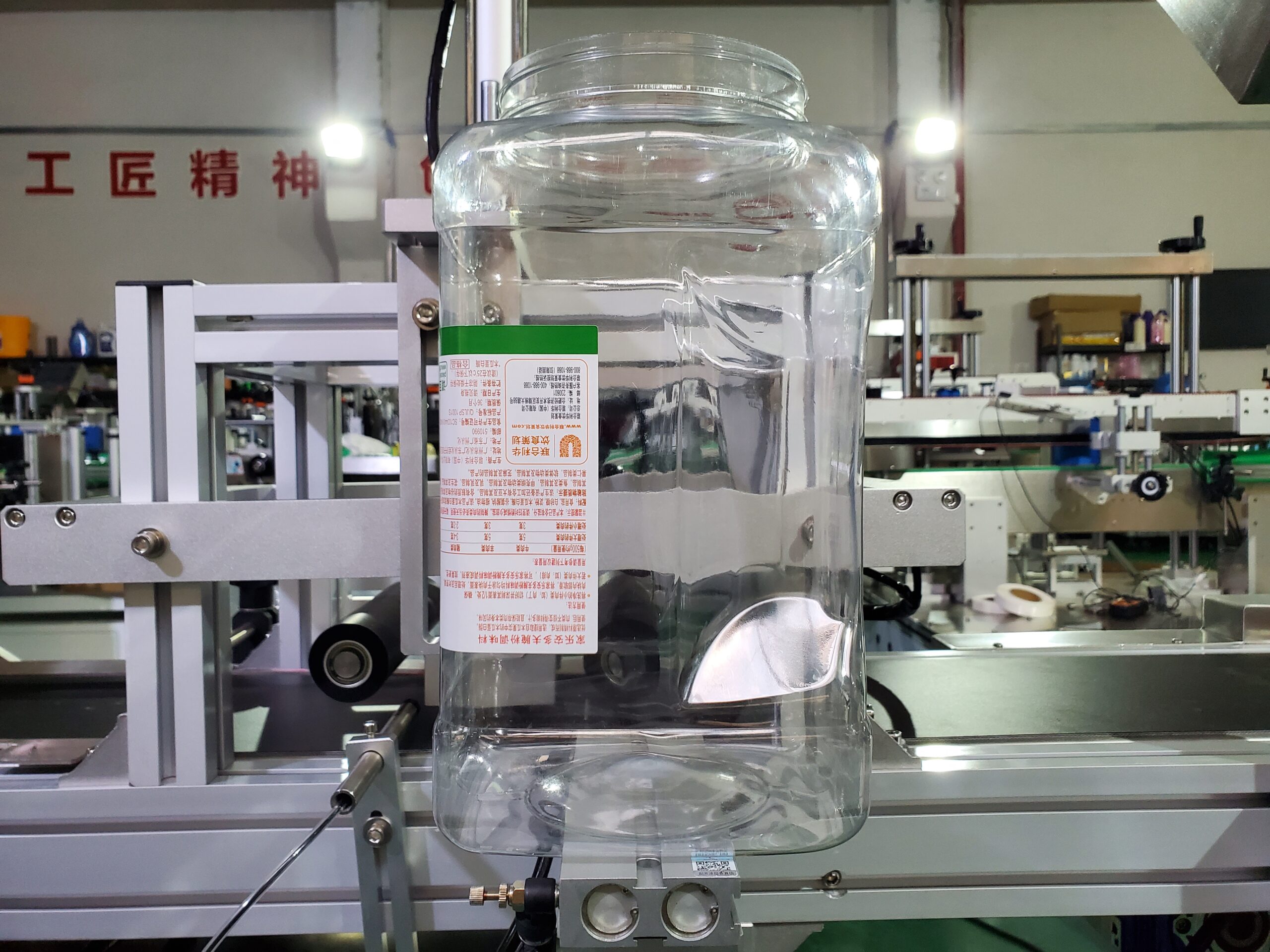
Two conclusions survive any reasonable change to the inputs. First, a bench applicator pays for itself at almost any volume where a person currently peels and places by hand. HiPaks lists semi-automatic applicators from $600, which is why that comparison is rarely worth a spreadsheet. Second, an automatic cell needs volume in the tens of thousands per month before labour alone justifies it, and it needs a second argument: line speed, consistency, or the cost of a customer reject.
The costs the payback hides
Each of these belongs in the installed cost line, and each is easy to forget because it arrives on a different invoice:
- Freight and duty. Landed cost is not the FOB price. The duty rate depends on how the machine is classified, and the published rates live in the Harmonized Tariff Schedule for US imports; other markets publish their own schedules.
- Installation. A rigging crew, an electrician, an air drop, and a day or two of production time lost.
- Format parts. Every additional SKU needs changeover parts, and they are priced separately. Ask at quotation, not after.
- Floor space. A machine occupies a footprint whether it runs or not. Space has a rent, and in a crowded plant it has an opportunity cost.
- Training and ramp. Output is below rating for the first weeks while operators learn the machine. Model that as a month at reduced rate.
- Spares and consumables. Wear parts are excluded from warranty on every machine sold in this market, including HiPaks, which offers one year on the machine plus lifetime technical support.
Where manual labelling is still the right answer
There are honest cases for keeping a hand process. Below roughly a few thousand units a month, the labour saving is small in absolute money even when the percentage looks large, and a machine adds a maintenance obligation, a footprint and a training requirement. Very high SKU counts with tiny runs can also lose on changeover time, because a fifteen minute changeover on a run of forty units is more expensive than applying those forty by hand.
Oversized or awkward products are the third case. A drum, a large panel or a one-piece custom shape often has no standard transport, and building a fixture to hold it costs more than the labelling it saves. In those cases a dispenser, which peels the label and presents it, removes the worst part of the job for very little money without pretending to automate placement.
Where the semi-automatic machine wins
The wide middle of the market. A bench or floor-standing applicator at 15 to 30 pcs/min with one operator covers small and medium runs, keeps changeover in minutes, and holds ±0.5 mm on a machine that costs less than a month of the labour it replaces. It also keeps the operator in the loop for inspection, which matters on cosmetic and pharmaceutical work where a wrinkle is a reject.
The honest limit is not accuracy, it is throughput. Once the filling line upstream runs faster than one person can feed the applicator, the operator becomes the constraint and the conversation moves to automatic.
Where the automatic line wins
Automatic machines are bought for rate and consistency, and the labour line is usually the smaller half of the case. At 40 to 300 pcs/min a single machine outruns several hand stations, which removes the queue between filling and packing. That queue is the real cost in most plants: buffer space, extra handling, and a shift pattern built around a bottleneck.
The automatic case also wins where a customer audit requires documented placement. A ±1 mm machine with a recorded reject signal answers an audit question that a hand process cannot, whatever the labour saving says.
How to test the answer before you spend
Three steps, in order, and the third one is free.
- Measure a shift. Count units, rejects and the minutes actually spent labelling. Most plants discover the hand process is slower than they assumed and the rejects are higher.
- Put the numbers into the calculation above with your own quotation in the capital row, including freight and the format parts for every SKU.
- Ask for a test on your own container and label. HiPaks runs the trial before shipment and sends the video back, which converts the rated speed in the quotation into a number you have watched.
The break-even calculator runs the same arithmetic if you would rather not build the sheet. Current reference points for equipment sit on the price guide, and the two hardware ends of this comparison are the semi-automatic range and the automatic range.
FAQ
How many units a month justify an automatic labeling machine?
On labour alone, usually tens of thousands. Below that, the monthly saving is small against the installed cost and the payback runs past a sensible horizon. The case improves when the machine also removes a bottleneck or satisfies an audit requirement.
Is a semi-automatic machine accurate enough to replace hand application?
Usually yes. Semi-automatic machines are quoted at ±0.5 mm, which is tighter than most hand placement and tighter than the print registration on many labels. The constraint is throughput, not accuracy.
What payment terms should I model in the cash flow?
HiPaks quotes 30% TT deposit with 70% before shipment, and 50/50 on some models, FOB Shenzhen, MOQ one unit. Model the second payment before the machine ships, not after it earns, because the saving starts only when it runs.
Does the lead time change the payback?
It shifts the start date. Semi-automatic machines ship in 7 to 10 days and automatic machines in 7 to 25 days by configuration, with custom builds from 25 days, plus transit and clearance. A three month transit is a quarter of saving you never collect.
If the sheet says the answer is close, the tie-breaker is usually the reject rate. Send one shift of rejects, or a video of the current hand process, and the recommendation gets specific.
Want the arithmetic checked against a real machine? Request a Free Test-Run Video, or browse the rest of the cluster under label applicator guides.
