
The difference between a labeling machine manufacturer and a trading company is not the price, the catalogue, or the English. It is who owns the machine’s design, its jigs, and its conformity paperwork when something goes wrong in year two. A factory machines the fixture that holds your bottle and signs the declaration of conformity under its own legal name. A trading company forwards your drawing to someone else and marks up the result. You can tell them apart in about two hours with four documents and one walk through the building. This guide shows what each document proves, what a trader is genuinely better at, and how our own plant answers the same test.
The difference, in one table
| Manufacturer | Trading company | |
|---|---|---|
| Who designs the machine | In-house engineering, drawings archived | A partner factory’s standard model |
| Who machines the jig | Own workshop, or a named local machinist | Whoever the order was placed with |
| Who signs conformity | The plant’s legal entity | Often nobody, or a third party’s document |
| Spare parts in year two | Part numbers on file, dispatch from stock | Sourced when you ask |
| Price | Factory cost plus margin | Factory cost plus two margins |
| Best at | One machine type, done repeatedly | Several machine types, one shipment |
Neither column is automatically better. A trader who consolidates a labeler, a capper, and a conveyor into one container is solving a real problem for a small buyer. The mistake is paying factory prices for trader accountability, or expecting trader convenience from a factory that has never consolidated a mixed order.
Document one: the business license and its scope
In China, a company’s business license lists its registered scope of activity, and the scope distinguishes manufacturing from sales. Ask for a scan, then read the scope line by line and compare the registered address with the address on the quotation. A supplier whose scope is sales, import and export, or “technology services” is not describing a plant.
The license also gives you the legal entity name, which should match the proforma invoice, the bank account beneficiary, and the name on any certificate. Different names across those four documents are the single most common pattern behind a deposit that is hard to recover.
Document two: the declaration of conformity and who signs it
This is the document most buyers never ask for and the one that matters most in a dispute. For machinery sold into the EU, the manufacturer carries out the conformity assessment, compiles the technical file, issues the declaration of conformity, and affixes the CE mark. The European Commission sets out that obligation, and it also warns that voluntary certificates issued outside the notified body system have no standing with market surveillance authorities or customs. The machinery section of the Commission site covers both points.
So ask a direct question: “Which legal entity signs the declaration of conformity for this machine, and can I see a signed example?” A manufacturer answers with a company name that matches the license. A trader answers with a partner’s name, with a certificate that carries no signatory, or with a promise to “provide CE” later. Each of those three answers points to the same conclusion: no one in your chain is accountable for the document.
Our own position is stated plainly rather than dressed up: the CE and ISO 9001 processes are in progress at the time of writing. We say that on the quotation because a buyer who discovers an overstatement at customs has no reason to trust anything else on the invoice. The full certification path, including what a UL or CSA version changes for North America, is set out in our certification guide.
Document three: the export record
A factory that has shipped to 50+ countries has a record of it, and the record is not a logo wall. Ask for two or three bills of lading or customs declarations with the consignee’s commercial details redacted, and check that the shipper is the same legal entity that will invoice you. A trader can produce bills of lading too, but the shipper name will be someone else, which is exactly the point.
Ask a follow-up that is hard to fake: which destination countries, which machine models, and which voltage and plug standard. Export history has texture. A supplier who has shipped to Germany will know about 400V three-phase and CE documentation; one who has shipped only domestically will not.
Document four: the component purchase trail
Branded components leave a paper trail. Ask for the part numbers of the label sensor, PLC, power supply, and stepper, then ask to see a purchase invoice for one of them with the price redacted. A plant buys SICK sensors, Panasonic PLCs, Mean Well supplies, and LeadShine steppers in batches and keeps the paperwork for warranty claims. A trader buys whatever the partner factory installed.
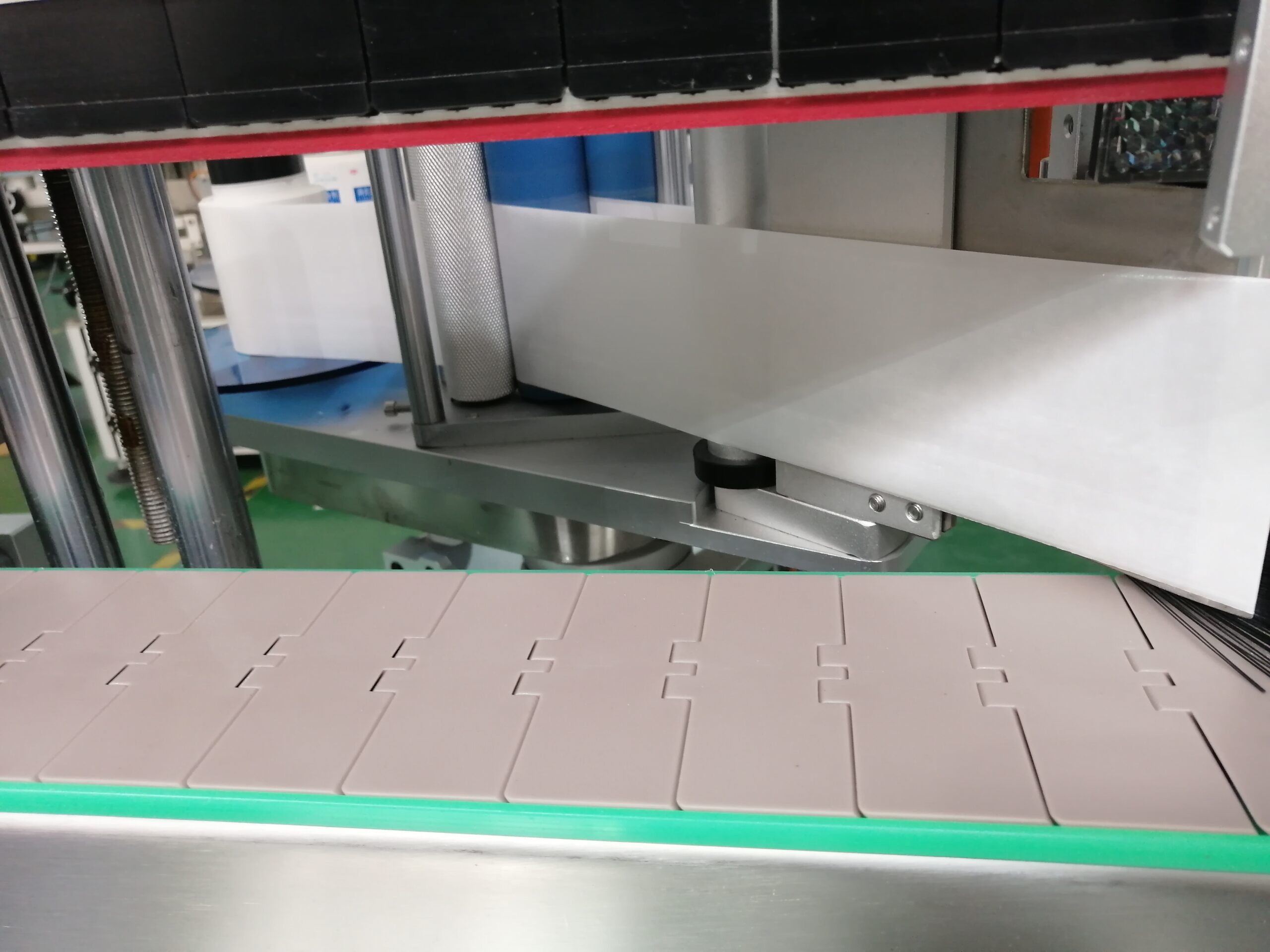
The factory floor test: five questions on the walk
Documents can be prepared. A walk cannot. Ask these five while standing in the building, and listen for the answers rather than the tour script.
- “Where is the jig for this machine?” A factory points at a shelf with the drawing attached. A trader looks for someone to ask.
- “Which bench assembled the last unit of this model?” A factory names a bench and a technician. A trader describes the model.
- “Can I see the acceptance test station?” A factory walks you to it, and there is a bottle on it. A trader shows you a video.
- “What is the serial number series for this model, and where is it recorded?” A factory has a register. A trader has a sticker.
- “Who do I call if the PLC fails in month eight?” A factory names an engineer. A trader names a salesperson.
None of these questions requires technical knowledge, and all five are answerable in under a minute by a real plant. Our factory acceptance test page describes the same station you would be standing in front of.
Red flags that appear in writing before you visit
The price is 30% below every other quote. Either a component class was removed, or the quote is a deposit-collection device. Ask which sensor and which label feed, and watch the price move.
“Our factory” with no address. A plant will give you a street address, a postcode, and a gate photo without being asked twice. If the address arrives only after the deposit is discussed, it is probably a partner’s address.
The contract entity differs from the bank beneficiary. Paying a personal account or a third company is the most expensive convenience in the industry. The invoice, the contract, the license, and the bank account should carry one name.
No exclusion list for the warranty. A supplier who will not name the wear parts has not thought about year two, or has thought about it and prefers not to say.
No video of assembly, only renders. Renders are cheap. A phone video of your model being wired, with the serial plate visible, is not.
What a trading company is actually good at
It is worth saying clearly, because the internet is full of manufacturer marketing: a good trader solves problems a factory often cannot. If you need a labeler, a capper, and an induction sealer in one container, a trader will consolidate, inspect, and document all three. If you need 12 units a year across four models, a trader will hold the relationship and chase the factories for you. If your order is one machine and your priority is the lowest possible price with no engineering changes, a trader may genuinely be cheaper, because the factory’s engineering time is not included.
The failure mode is not trading. It is paying manufacturer prices for trader accountability, or discovering the difference after the machine arrives with a jig that fits someone else’s bottle.
How our plant answers the same test
HiPaks is the labeling machine brand of Suzhou Oluosheng Precision Machinery Co., Ltd., in Kunshan, Suzhou. We build 36 models across eight product lines plus custom engineering, from desktop labelers at 15 bottles/min to rotary hot melt at 15,000 bottles/hour. Jigs for tapered, square, and soft containers are machined in-house and the drawings are archived under the customer’s project. Core components are named on the spec sheet. Every machine runs the customer’s bottles before crating, and the video goes back with the machine, including the parts that failed. Machines ship to 50+ countries, and 500+ factories have bought from us.
You can start with the documents: the business license, the export record, and the current conformity status, which we state as in progress rather than held. The manufacturer page lists what we build and how we verify it, and the company page explains who we are and where the plant sits.
FAQ
How can I tell a Chinese factory from a trading company?
Compare four documents: the business license scope, the declaration of conformity signatory, the shipper name on an export record, and the bank beneficiary on the invoice. When all four carry the same legal entity name, you are dealing with the plant.
Is it cheaper to buy from a trading company?
Sometimes, for a single standard machine with no engineering changes, because the trader’s margin can be smaller than a factory’s engineering time. For custom tooling, spare parts, and conformity paperwork, the factory route is usually cheaper over the life of the machine.
Can a trading company issue a CE declaration of conformity?
Only if it is acting as the manufacturer or the authorised representative and takes on the corresponding obligations. A certificate bought from a body outside the notified body system has no standing with customs or market surveillance, which is why the signatory name matters more than the logo.
What if I already paid a deposit to a trader?
Ask for the factory name, the production schedule, and the acceptance test plan in writing, then request a video call from the factory floor with your machine visible. If the trader cannot arrange that, treat the balance payment as the point where you need independent inspection.
Does a factory visit really change the outcome?
It changes what you know, which changes the contract. Buyers who walk the floor usually add a jig drawing, a spare-parts list, and an acceptance test clause that buyers who never visit do not think to request.
Next step: if you want the four documents before you shortlist anyone, request them through the factory quote form and we will send the license, the export record, and the current conformity status with the quotation, or request a test-run video to see the acceptance station in operation.
