
China labeling machine manufacturer, OEM/ODM, semi-automatic to high-speed rotary systems.

Hot Melt Labeling Machine Manufacturer. Rotary Labelers, 10,000–15,000 BPH.

HiPaks builds hot melt rotary labeling systems in Guangdong, China, for high-speed water, CSD and beer lines running OPP and BOPP roll-fed film labels. The 12-station rotary covers 10,000–15,000 BPH and the 16-station rotary covers 10,000–12,000 BPH, with the.

12/16
Rotary Stations
10,000–15,000bph
Output: bottles per hour
OPP/BOPP
Roll-Fed Film Labels
1unit
Standard MOQ

What We Build

Hot Melt Rotary Specifications & Purchase Terms

Core parameters below come from our verified product data. Format-dependent values are confirmed per project with your bottle samples.

TermDetail
Per-Project ParametersBottle diameter / height range and glue consumption: confirmed with your samples. Lead time quoted per project.
Payment30% deposit on order. 70% balance paid before shipment, after the machine test video is approved.
Incoterms & ShippingFOB Shenzhen. Sea shipment with export packing for the rotary machine; CIF / DDP available on request.

Rotary Hot Melt Labeling for Beer, Beverage & Water Lines

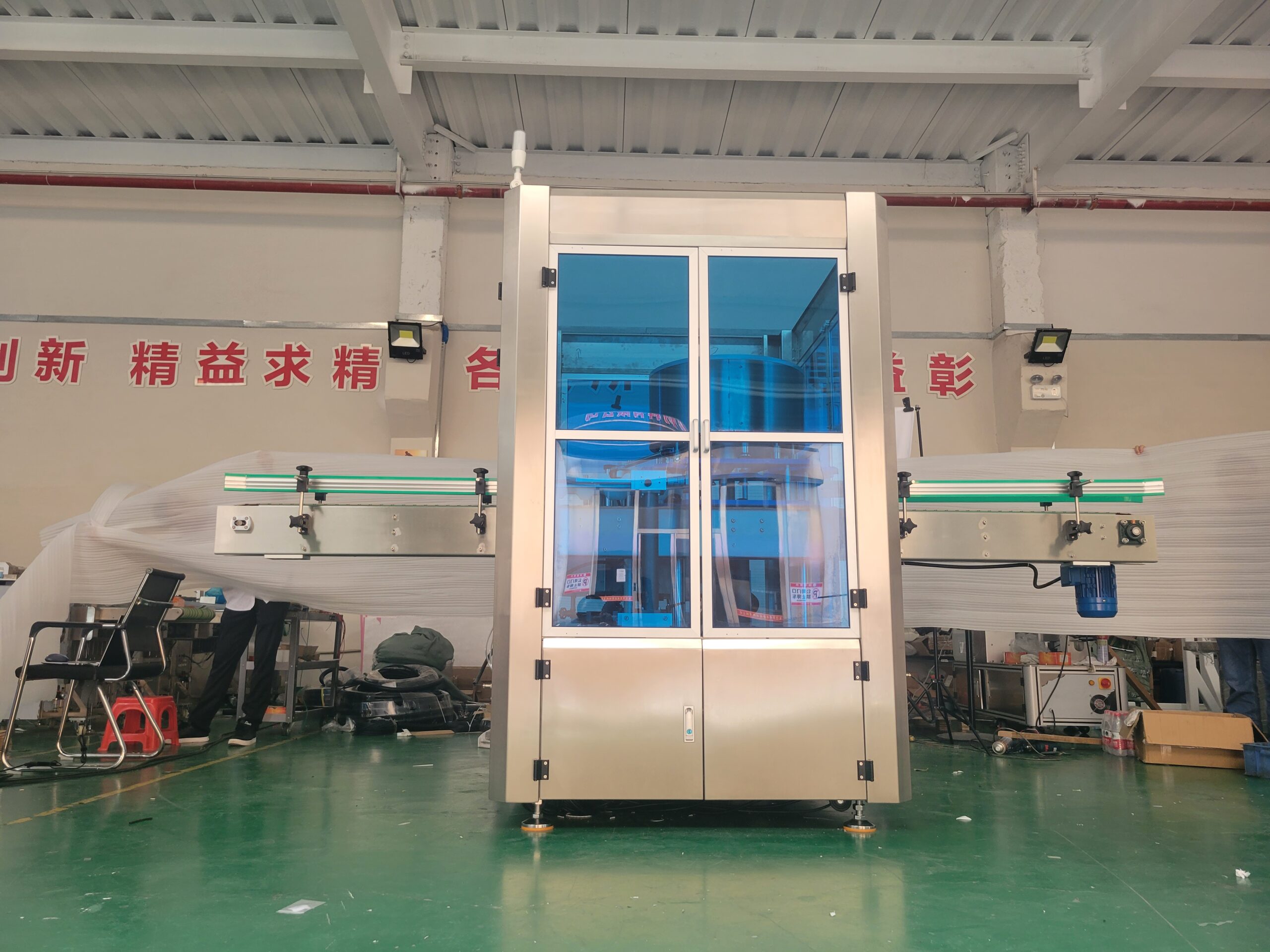
The hot melt rotary labeler is HiPaks’ flagship high-speed platform. Bottles travel star-wheel to star-wheel through 12 or 16 labeling stations while hot melt adhesive is applied and the label is wrapped on the move: no stop-and-go, continuous output of 10,000–15,000 bottles per hour.
  • 12 or 16 rotary stations on one platform, matched to your line speed without over-investing
  • OPP / BOPP roll-fed film labels, cut and glued automatically at speed; paper roll labels on request
  • Built for beer, carbonated drinks and mineral water: the glue bonds in seconds and resists condensation and ice-water baths
  • Why hot melt: film labels cost less per label than self-adhesive stock, and unlike wet glue there is no wash-off requirement, the right balance for non-returnable bottles at high volume
Rotary hot melt labeling stations on the HiPaks 12/16-station platform
Multi-station rotary platform: glue application and label wrap happen on the move

Certifications & Component Traceability

All HiPaks machines are built to CE standards. On a machine cycling 15,000 bottles an hour, component traceability matters just as much: every critical sensor and drive is a verifiable brand part.

Standard

CE Marking

Certification in progress, documents on request

System

ISO 9001

Certification in progress

Product

Machine Certificates

Confirmed per project in writing

Regional

US / EU / ME

Confirmed at inquiry

High-Speed Machines, Built and Tested Before They Ship

High-speed rotary footage from our workshop is the strongest evidence we can show. Ask for the video of your configuration running, or book a live video factory tour while your machine is in build.

50+ Countries, 500+ Factories Served

HiPaks equipment runs in 500+ factories across 50+ countries; the rotary hot melt platform is built and trial-run in the same workshops.

Engineer-Founded, 15 Years

Founded by an engineer with 15 years of labeling-machine industry experience. Rotary projects are scoped and drawn by engineers, not traders.

SICK & Panasonic Core Parts

SICK photoelectric sensors for bottle and label detection, Panasonic servo drives on the critical axes, essential at 15,000 bph.

Trial-Run on Your Bottles

Every machine is tested on your real bottles and labels before packing. You approve the test video and a physical sample before the balance is due.

Manufacturer Questions

What is a hot melt labeling machine?
A hot melt labeling machine applies thermoplastic adhesive (heated until liquid) onto roll-fed labels, usually OPP or BOPP film, and wraps them around containers at high speed. The glue sets within seconds as it cools, which makes hot melt the standard technology for high-output beer, beverage and mineral water lines.
What speed does the HiPaks 12/16-station rotary labeler reach?
The 12-station configuration runs 12,000–15,000 bottles per hour and the 16-station runs 10,000–12,000, depending on bottle format and label size. Both configurations share the same rotary platform, so you can match the machine to your line speed without paying for capacity you do not need.
Hot melt vs wet glue labeling: which is better for beer bottles?
Both work on glass beer bottles. Hot melt wins on speed and moisture resistance: OPP/BOPP film labels survive ice buckets and condensation, and the glue bonds in seconds. Wet glue paper labels are cheaper per label and wash off easily in returnable-bottle washing. For non-returnable bottles and high-speed lines, breweries usually choose hot melt with OPP/BOPP labels. See our wet glue labeling guide for the comparison.
Which label materials work with hot melt glue: OPP or BOPP?
Both. Our rotary labeler runs OPP and BOPP roll-fed film labels, the standard for beer, carbonated drinks and mineral water. Paper roll labels can also be processed on request. Send us your label specification and we will confirm the tooling.
Do you provide overseas installation and commissioning support?
Every rotary system is fully assembled and tested in our plant on your bottles before shipping, and we provide commissioning guidance by video after arrival. On-site installation support is available on request. You can also book a live video factory tour to see your machine running before it ships.
What utilities and floor space does a rotary line need?
A 380V supply, compressed air and roughly 31 m of line length for the rotary block. We issue a site requirement drawing with the quotation and confirm the footprint against your layout, so the civil and electrical work can start before the machine ships.
How does label cost per bottle compare with pressure-sensitive?
Hot melt wins on consumable cost at volume because roll-fed OPP film and glue are cheaper per label than a die-cut pressure-sensitive label. The crossover depends on your annual volume, label size and changeover frequency, and we run that comparison against your numbers rather than a generic claim.
What are the payment, warranty and lead time terms?
Standard terms are 30% deposit and 70% before shipment, with a 50/50 split available on certain models and written into your quotation. Semi-automatic machines ship in 7–10 days, automatic lines in 7–25 days, custom builds 25 days. Every machine carries a one-year warranty plus lifetime technical support and an English manual with operation videos.
Back to top