
The switch from paper to BOPP film is usually presented as a label price comparison, and that framing is why so many projects are approved on the wrong numbers. Paper and film are not interchangeable consumables on the same machine. A wet glue line cannot apply film, so the switch brings a different labeling technology, a different label supply format, a different bottle handling assumption and, on returnable glass, the end of the wash-off cycle. The real cost math has four blocks: the label invoice, the machine delta, the operating delta and the packaging-system delta. Only the first one appears in the quote that starts the discussion. This page sets out the formula for all four, the ranges that typically apply, and the break-even test that decides whether the switch is worth doing at all.
Why the label invoice is the wrong starting point
A label price per thousand is a unit price, not a cost. On a paper line the label is printed paper and nothing else: no liner, no release coating, no adhesive layer, no film. On a BOPP line the label carries its own adhesive system, either as a pressure-sensitive laminate with a liner or as a roll-fed film that is cut and glued at the ends with hot melt. Both formats cost more per square meter to make, and both are sold in rolls with a minimum run per SKU.
The mistake is to compare the two unit prices and conclude that the difference is the cost of switching. The difference in unit price is one input into a cost per thousand labeled bottles, and the other inputs can be larger. A plant that switches to film to save on breakage or to gain shelf appeal may still be better off. A plant that switches to save money on labels alone often is not.
The four blocks that move
| Block | What changes | Direction |
|---|---|---|
| Label supply | Printed paper stack becomes a film roll with adhesive or a hot melt film roll | Up per label, sometimes 2x to 4x at low volume, narrowing at high volume |
| Machine | Wet glue labeler replaced by a hot melt rotary or a pressure-sensitive applicator | Up, and the size of the step depends on speed and station count |
| Operation | Glue kitchen and cleaning out; adhesive handling, heat and roll changes in | Usually down on labor, up on energy and spare parts |
| Packaging system | Returnable pool and bottle washer no longer strip the label | Up if bottles are reused; neutral if they are single-trip |
Each block has to be estimated with your own numbers. The rest of this page gives the structure and the ranges, not a price list, because a price list from another plant is the most expensive input you can use.
The formula to run
Compare the two options on cost per thousand labeled bottles, over the volume you will actually run in three years, not the volume on the brochure.
Cost per 1,000 labeled bottles = label cost per 1,000 + adhesive cost per 1,000 + direct labor per 1,000 + energy per 1,000 + wear parts per 1,000 + (machine delta divided by three-year volume in thousands).
Five notes on using it. Label cost per 1,000 is the invoice price plus freight plus the waste from roll changes or stack mispicks. Adhesive cost per 1,000 is hot melt grams per label times the melt price, or PSL liner and adhesive already inside the label price. Direct labor per 1,000 is operator hours per shift divided by bottles per shift, and it is the line where a wet glue plant usually under-counts because cleaning is spread across the shift. Energy per 1,000 covers the glue pot or the compressor, both of which are real and both of which are ignored in most comparisons. The machine delta is the installed cost difference, including rigging, utilities and any line modification, divided across the same volume.
Block one: what changes on the label invoice
Four line items move when paper becomes BOPP.
Material. Film costs more per square meter than paper, and the gap widens at small volumes because film is made and printed in longer runs. At high volume the gap narrows, and on some specifications it nearly closes, which is why label suppliers ask for an annual volume before quoting.
Liner or no liner. Pressure-sensitive BOPP ships with a silicone liner that is thrown away at the applicator. Hot melt BOPP ships without a liner and is cut at the station. The liner is a cost you pay for and discard, and it is also a waste stream that has to be handled. On a per-label basis the liner can be a meaningful share of the price, which is why hot melt film is usually cheaper per label than pressure-sensitive film at the same size.
Print method. Film takes flexo, gravure and digital well, and it holds fine detail and metallized effects that paper cannot. If the brand is switching for shelf impact, part of the label price increase is buying print quality, not just material.
Minimum run per SKU. Film is quoted in rolls with a minimum order per design. A plant with many SKUs and short runs will hold more inventory and scrap more at changeover. That cost belongs in the label block, because it is caused by the format, not by the machine.
A fifth item sits outside the invoice: obsolescence. Film rolls have a shelf life and a shelf-life-sensitive adhesive. Paper stacks are more forgiving. A plant that changes artwork often should price the write-offs.
Block two: the machine delta
This is the block that decides most projects, and it is the one buyers most often estimate from a brochure. A wet glue labeler applies paper with a roller and a wipe-on pad. Film needs either a hot melt system that cuts the label from a roll, holds it on a vacuum drum and glues the leading and trailing ends, or a pressure-sensitive applicator that peels the label from a liner and presses it on.
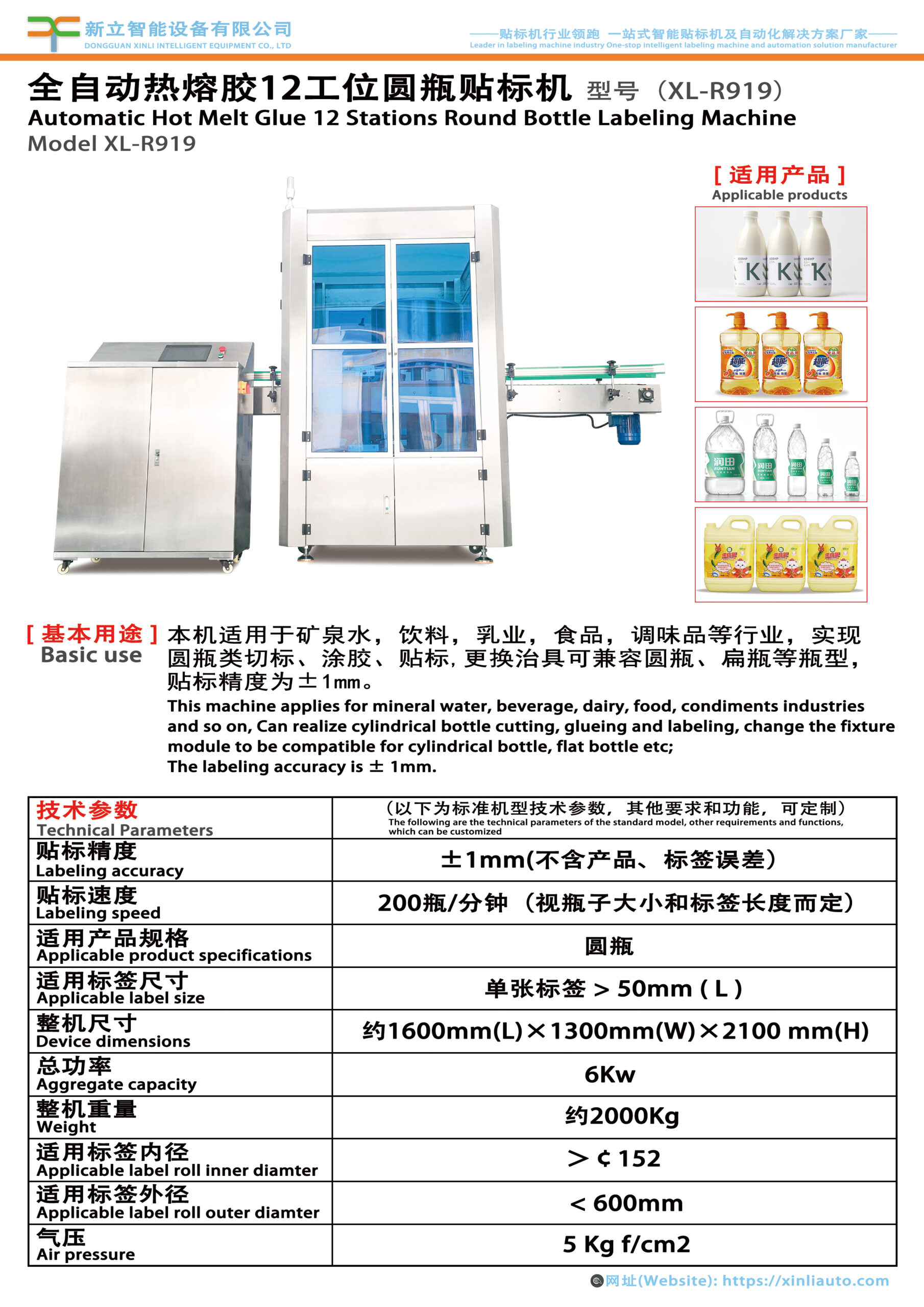
Hot melt is the technology that matches the speed and the bottle handling of a wet glue line, which is why beverage plants usually move there. The rotary hot melt machines on this site run a 12-station carousel at 10,000 to 15,000 bottles per hour, with a 16-station version at 10,000 to 12,000. That is the class of machine a wet glue beer line is replaced with, and it is a different order of capital from a linear wet glue frame.
Pressure-sensitive is the cheaper machine and the more flexible one. It handles short runs, many SKUs and odd shapes better, and it needs no glue pot, no heat-up and no cleaning cycle. It is also slower per station and it consumes a liner. For a plant running 3,000 bottles an hour across many labels, pressure-sensitive is usually the right answer and the switch is smaller. For a plant running 20,000 bottles an hour on one label, hot melt is the only technology that keeps up.
The machine delta is not just the machine. It includes the infeed and discharge conveyors that have to be re-pitched, the accumulation that has to be resized, the compressed air and power that may need upgrading, the rigging, and the production time lost during changeover. On a running line, the lost production during installation is often the largest single line in the project budget, and it never appears in a machine quotation.
Block three: the operating delta
Wet glue has a glue kitchen, a viscosity check, a cleaning routine at every shift change and wear parts that are mostly rollers and pads. Hot melt has a glue pot that must be brought to temperature, adhesive that must be stored dry, nozzles and rollers that carbonize if left hot, and a heat-up time before the first bottle. Pressure-sensitive has neither, but it has liner waste and a web path that must be threaded at every roll change.
The labor comparison usually favors film, but not by as much as the sales sheet claims. A wet glue line needs more operator attention per shift, and a hot melt line needs a different kind of attention: temperature discipline, adhesive quality control and nozzle maintenance. A plant that does not have that discipline will lose the labor saving to downtime.
Energy moves the other way. A hot melt pot is a continuous heat load, and a pressure-sensitive line with a large compressor is not free either. Neither is large enough to change a decision on its own, but both belong in the per-thousand number, because over three years they add up to a real figure.
Block four: the packaging system
On single-trip glass, this block is zero and the comparison is simple. On returnable glass it can be decisive, and it usually points the other way.
A paper label with a starch glue washes off in the caustic bath of a bottle washer. A BOPP film label does not. Film has to be removed by a different process, often a hotter, longer wash with a release additive, or mechanically, and some plants simply accept a film residue that shows as a dull patch on the refilled bottle. For a brewery running a returnable pool, the switch to film is a change to the washing process, not just to the labeler.
Recycling pressure adds a second consideration. European packaging rules are moving toward mandatory recyclability and design requirements, and the Commission’s packaging and packaging waste framework sets the direction that national schemes are already implementing. A glass bottle with a paper label and a water-based glue is straightforward to describe in a deposit-return or recycling scheme. A glass bottle with a plastic film label needs a separation step, and the label has to be compatible with the glass stream. That does not make film wrong, but it is a compliance cost that belongs in the model.
A worked structure, with variables instead of prices
Put your own numbers into these five lines. The structure is what matters; the multipliers below are only there to show how the answer moves.
- Label cost per 1,000. Paper invoice plus freight, against film invoice plus freight plus liner disposal or roll waste.
- Adhesive per 1,000. Paper: glue grams per label times glue price. Hot melt: melt grams per label times melt price. PSL: already in the label price.
- Labor per 1,000. Operator hours per shift, including cleaning, divided by bottles per shift.
- Energy and wear per 1,000. Heat load, compressed air, rollers, pads, nozzles, belts.
- Machine delta per 1,000. Installed cost difference divided by three-year volume in thousands, plus the value of lost production during the changeover.
Then test the answer against the ranges that usually appear. Film labels commonly land between two and four times the paper label price at low to medium volume, narrowing toward parity at very high volume and simple print. Hot melt melt consumption per label is small but not zero, and it scales with label area. The machine delta for a rotary hot melt replacement is large enough that it needs volume in the millions of bottles to amortize, which is why the switch is usually a decision about a line, not about a SKU.
If the per-thousand number comes out close between the two options, do not switch for cost. Switch for the reason that actually motivated the review, whether that is shelf impact, line speed, SKU flexibility or the end of a glue kitchen, and treat the cost result as confirmation that the reason is affordable.
The break-even test
The break-even volume is the annual output at which the per-thousand saving on labels and labor equals the annualized machine delta.
Break-even bottles per year = annualized machine delta divided by the per-bottle saving from the switch. If the per-bottle saving is zero or negative, there is no break-even volume and the switch is a strategic purchase, not a cost saving.
Run the test three times: at your current volume, at the volume you expect in year three, and at 70 percent of current volume. A switch that only works at the optimistic volume is a switch that will be re-litigated in the first slow year. The break-even calculator runs the labor and machine side of this arithmetic for labeling investments generally, and the labeling machine price guide explains why project machines such as wet glue and rotary hot melt are quoted rather than listed.
When the switch does not pay back
Four situations where the math rarely closes, even when the label looks better.
A returnable pool without a film-capable washer. The packaging-system cost swamps the label saving, and the plant ends up with dull bottles.
Very high SKU count with short runs. Roll minimums, changeover waste and liner handling eat the labor saving, and the pressure-sensitive alternative is usually a better fit than hot melt.
A line that is already near the end of its life. Spending the machine delta on a line that will be replaced in three years is a decision to fund a depreciation curve, not a saving.
Volume below the break-even point with no growth plan. Film at 200,000 bottles a year is a premium purchase, and it should be justified as one.
Where the switch does pay, it usually pays for one of two reasons: the line was already running at a speed where wet glue was the bottleneck, or the brand needed a film label to compete on shelf. Both are legitimate. Neither needs a label price comparison to justify it.
What to collect before you decide
Five documents make the model real: current label invoice with freight and annual volume, glue consumption and price for the last twelve months, operator hours per shift including cleaning, a quotation for the candidate machine with installation scope, and the bottle washer specification if bottles are reused. With those five, the per-thousand number takes an afternoon. Without them, the decision is a preference.
If the candidate is a hot melt rotary, the hot melt glue labeling machine series page lists the station counts and the output bands, and the hot melt labeling machine manufacturer page explains how the line is scoped around a bottle and a label roll. If the candidate is pressure-sensitive, the hot melt versus pressure-sensitive comparison runs the same four blocks for that route.
Send the five documents and we will build the comparison with your numbers, including the case where staying on paper is the cheaper answer.
Frequently asked questions
Is BOPP film cheaper than paper per label?
Rarely at low volume and sometimes close to parity at very high volume with simple print. Film carries material, adhesive and often a liner that paper does not, so the label invoice usually rises. The switch is justified by line speed, shelf impact or SKU flexibility more often than by label price.
Can I run BOPP labels on my existing wet glue machine?
No. Wet glue relies on the label absorbing water and shrinking onto the glass. BOPP does not absorb water, so the mechanism does not work. Film needs hot melt application at the label ends or a pressure-sensitive applicator.
Do I need a new bottle washer if I switch to film?
If the bottles are returnable, the washing process has to be reviewed. Paper and starch glue strip in a standard caustic bath; film does not. Some plants add a release additive or extend the wash, and some accept a residue. That cost belongs in the comparison.
How long does the switch take on a running line?
The machine itself is the short part. Conveyor re-pitching, accumulation changes, utilities and the first production runs take longer, and the lost output during that window is usually the largest hidden line in the budget. Plan the installation around a shutdown, not around the delivery date.
