
An installation window is a clock, not a range, and the clock is useful only when every block of hours carries a name.
A labeler fitted to a running line costs one to five production days.
Four items cannot leave the calendar: the mechanical tie-in, the first article, the ramp to nominal speed, and the conformity step a modified line inherits.
Everything else, from the skid build to the reject logic, can be finished and signed before the window opens.
The sections below turn that range into a clock with signed hours.
How Many Production Days Does a Labeler Cost on a Running Line?
An installation window is the period between the last good bottle before the tie-in and the first shift at nominal rate.
Delivery and handover are different dates, and neither closes the window.
Integration guides put the window between one day and three weeks.
A machine landing on a ready conveyor takes one shift.
A line touched at the conveyor, the guarding and the controls takes three to seven production days.
A full line integration takes up to three weeks.
Those figures are ranges without owners, so a range cannot be scheduled.
According to HiPaks quotations, a semi-automatic machine holds 7 to 10 days and an automatic machine 7 to 25 days by configuration.
The mechanical sequence behind the window sits in the labeling line retrofit guide.
What Does the Downtime Ledger Record?
A downtime ledger records each item against three facts: built off line or not, on-line hours, and the signature that closes the item.
Hours below are planning allowances, confirmed against the site survey before the crate ships.
Off-line work is not zero effort, only zero line time.
| Installation item | Built off line | On-line hours | Signed by |
|---|---|---|---|
| Skid build: head, unwind, peel plate, guides | Yes, at the factory | 0 | Workshop quality check |
| Conveyor section, side rails, transfer | Yes, to the drawing | 0 | Workshop, site fitter |
| Panel, drives, HMI, reject logic, recipes | Yes, as a tested module | 0 | Controls engineer |
| Site survey: height, pitch, utility stubs | Yes, before shipment | 0 | Buyer plant engineer |
| Mechanical tie-in and guard join | No | 6 to 10 | Fitter, supplier technician |
| First article on production bottles | No | 2 to 4 | Buyer quality, supplier |
| Ramp to nominal speed | No | 4 to 8 | Production manager |
| Conformity step after modification | No | 2 to 6 | Authorised signatory |
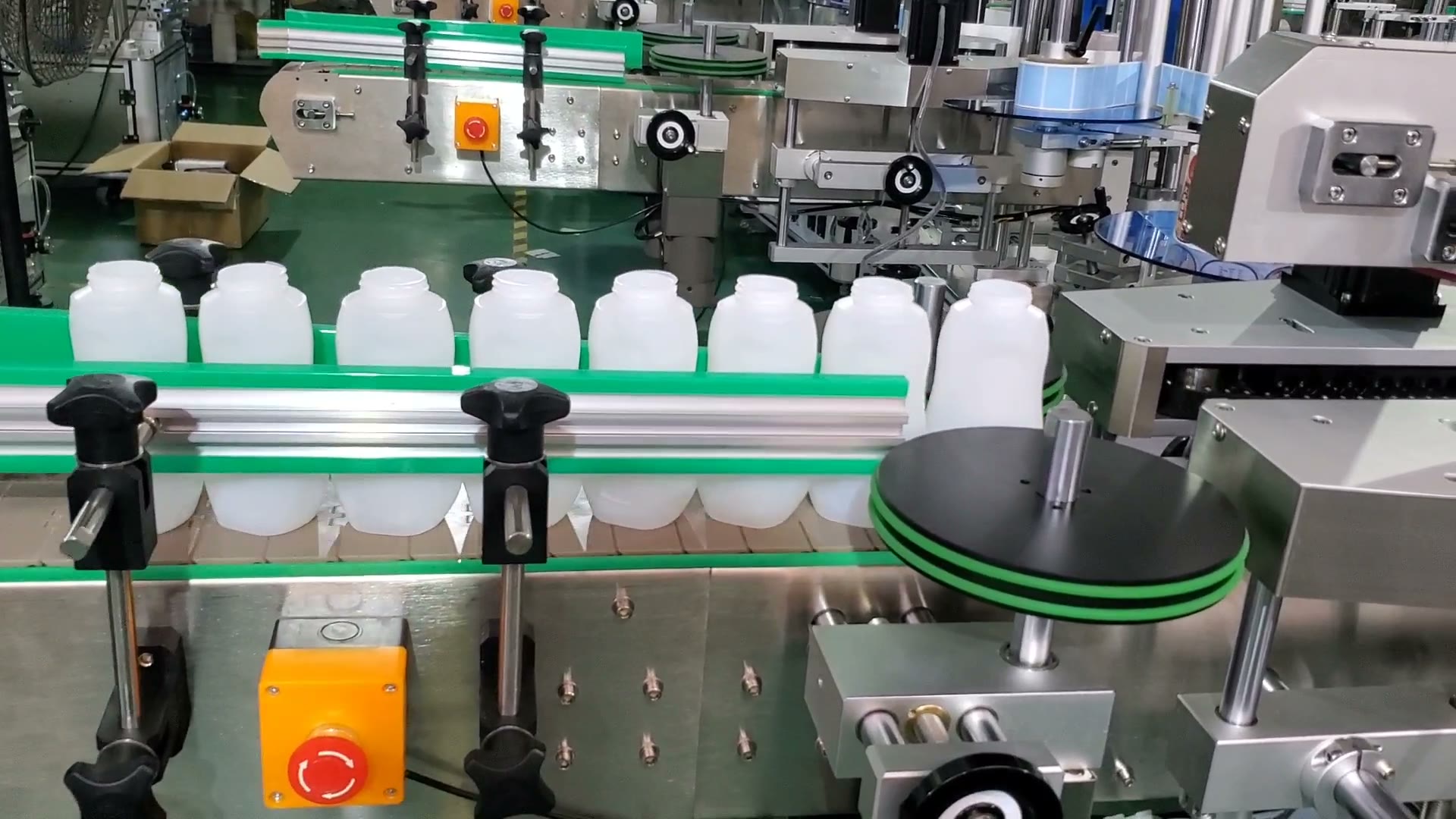
Why Is a Range Not a Plan?
A range is a forecast, and a plan needs a start condition, an end condition and a signature.
Three tests separate the two.
First, every row needs a named signature, because a missing signature stops the next row.
Second, every row needs an order, because the first article cannot start before the tie-in is measured.
Third, every row needs a start condition, for example 220 V at the isolator and 6 bar air at the drop.
A quoted range fails all three, which is why two buyers with the same model report different windows.
In practice a plant booking the electrician and the quality engineer into one shift runs two rows in parallel.
Which Four Items Cannot Leave the Calendar?
The calendar-critical set is the four items that depend on the assembled state of the line.
Each item ends with a signature, and the next item cannot start before that signature exists.
HiPaks plans 14 to 28 on-line hours across the four, or two to four shifts on one crew.
Who Signs the Mechanical Tie-In?
A mechanical tie-in is the point where the labeler frame, the conveyor datum and the transfer guard become one assembly.
The plant fitter who sets the height signs the sheet, and the supplier technician who checks the pitch countersigns.
First, the bracket is drilled to the survey drawing rather than to a photograph.
Second, centre height and product pitch are measured with a tape and a level, and both numbers are written down.
Third, the guard is closed and the interlock is tested, because ISO 14119 covers interlocking devices and the record names the switch.
The planning allowance is 6 to 10 hours with two crews.
HiPaks attends the tie-in under a one year whole-machine warranty with lifetime technical support, and wear parts are excluded from the cover.
For example, a chipped conveyor rail found after the bracket is bolted adds a day.
Why Must the First Article Run on Production Bottles?
A first article is the record of the first bottles labeled after the tie-in, measured against the quoted placement band and signed before production starts.
HiPaks quotes plus or minus 0.5 mm on semi-automatic machines, plus or minus 1 mm on automatic machines and up to plus or minus 0.2 mm on the MT-807, with product and label variation excluded.
The record carries the bottle, the label lot, the serial plate and the measured spread, and two to four hours is the planning allowance.
In practice the sample bottle in the office swings less than a production bottle, so a run on samples hides a problem that appears on the second pallet.
The quality engineer signs and the supplier technician countersigns.
Why Is the Ramp to Nominal Speed a Calendar Item?
A speed ramp is the staged increase from first-article speed to the rated line rate, and the production manager who releases the line back to plan signs the stage.
First, the accumulation buffer must hold the variation of the upstream filler, so the labeler is never asked to absorb a filler stop.
Second, the reject lane must be clear and tested at 100% of nominal rate, because a reject fired at 50% proves nothing.
Third, the operator must run the HMI recipe unaided, and the second shift needs the same training.
The planning allowance is 4 to 8 hours.
In practice a ramp starting in the last hour of a shift finishes on the next shift, so the cost is a shift rather than an hour.
Why Does the Conformity Step Follow the Modification?
A conformity step is the assessment a manufacturer repeats when a change makes the assembly a different machine, and the step cannot be completed before the line stands assembled.
According to the European Commission machinery page, Directive 2006/42/EC applies to products placed on the EU market for the first time and to machinery modified to the extent of becoming de facto new machinery.
Regulation (EU) 2023/1230 was adopted on 14 June 2023 and applies from 20 January 2027.
The declaration of conformity must identify the product, the legislation, the manufacturer and the harmonised standards referenced, and guide edition 2.3 was published in April 2024.
Two to six hours covers the paperwork on a small retrofit.
For example, a new reject gate changes the assembly, so the technical file follows the as-built state.
What Can Be Built and Signed Off Before the Window Opens?
An off-line build is work finished, tested and signed away from the line.
Internal work happens inside the window, external work before, and the supply boundary between the two crews is a separate argument covered in who supplies conveyor, reject and controls.
The skid carries the head, unwind, peel plate, guides and guard, and the conveyor section and transfer are built to the measured drawing.
The panel, drives, HMI and reject logic arrive as a tested module, wired with SICK sensors, Panasonic drives, Mean Well power supplies and Leadshine steppers.
HiPaks runs the buyer’s bottles before shipment and sends the video back.
Which Four Records Make Off-Line Work Usable as Evidence?
Four records turn an off-line build into evidence the on-line window can rely on.
First, the first-article placement record, measured on the buyer’s bottle and label with the serial plate in the same frame.
Second, the parameter and recipe backup, exported after the run and filed against the machine serial number.
Third, the as-built tooling list, naming every change part, part number and the SKU served, because a list from memory in week three is a guess.
Fourth, the deviation list, naming what failed and what needs a new guide.
Without the four records the window is a first run rather than a verification.
What Does a Measured Site Survey Buy Down?
A measured site survey is a drawing of the line as it stands, taken before the machine ships, and the cheapest hour in the project.
Five measurements close most day-one discoveries: conveyor top height at the tie-in, product pitch, the position of the air drop and the isolator, the guard line already installed, and the space left for the reject lane.
HiPaks has commissioned machines in more than 50 countries.
Book a Factory Acceptance Test and the four records become the agenda.
What Gets Discovered on the Day, and What Does It Cost in Output?
Five discoveries account for most of the overrun, and every one has a cause the survey can record.
Hour counts are only half of the bill, because the climb back to nominal rate decides the other half.
Which Five Items Are Found on the Day?
A day-one discovery is a site condition the drawing did not record, and five appear most often.
First, conveyor height at the tie-in differs from the survey, so the frame needs shimming.
Second, product pitch changes on the accumulation section, so the guides are set twice.
Third, the air drop sits on the wrong side of the frame, so a filter regulator is fetched from stores.
Fourth, panel inrush trips the plant breaker at start-up, so the contractor returns.
Fifth, the guarding does not match the installed perimeter, so the interlock is re-engineered.
Each item costs one shift of the wrong crew, and a signed survey closes four of the five.
How Do You Convert Down Hours Into Production Equivalents?
A production equivalent is the output of one nominal hour at line rate, and the conversion puts stopped hours and slow hours on one scale.
One stopped hour on an automatic line rated 40 to 300 pcs/min costs 2,400 to 18,000 bottles.
An hour at 50% of nominal rate loses half of that figure.
On a semi-automatic machine rated 15 to 30 pcs/min, one stopped hour costs 900 to 1,800 bottles, so a twelve-hour ramp at half rate equals six stopped hours.
A line at half rate for 24 production hours loses 12 hours of output, more than the 6 to 10 hours a tie-in stops.
Get a Factory Quote and the conversion is run on your line rate, with 30% TT deposit and 70% before shipment.
Frequently Asked Questions
How Many Production Days Should Be Budgeted for a Labeler Installation?
An installation budget is four signed blocks, and two to five production days is the honest range.
The blocks are the tie-in at 6 to 10 hours, the first article at 2 to 4 hours, the ramp at 4 to 8 hours, and the conformity paperwork at 2 to 6 hours.
Two crews halve the calendar time when the survey is signed before shipment.
Can Off-Line Work Really Shorten the On-Line Window?
An off-line build is a pre-build that leaves the factory with four signed records, and the records are what shorten the on-line window.
The skid build, panel wiring and conveyor section remove hours from the site.
The first-article record, parameter backup, tooling list and deviation list remove the arguments that reopen the window.
A pre-build without those four records replaces site hours with site discovery.
Does a Modified Line Always Need a New Conformity Assessment?
A new assessment is needed when the change makes the assembly de facto new machinery under Directive 2006/42/EC, and a like-for-like replacement of a worn part usually does not.
A new reject gate, a changed guard, or a labeler joined to a line that had none is a different assembly.
The declaration of conformity has to match the as-built state.
What Does a Slow Ramp Cost Compared with a Stopped Line?
A slow ramp is billed in production equivalents, and the bill can exceed the stop.
An automatic machine rated 300 pcs/min loses 9,000 bottles for every hour at half rate, so 24 production hours at half rate lose 216,000 bottles, more than a 6 to 10 hour tie-in stops.
