
Label edge lift on bottles coming out of a cold room is almost never one component’s fault. It is a match problem between three parties: the adhesive and face stock your label converter selected, the resin and molded surface your bottle supplier delivered, and the pressure, wrap and dwell the applicator actually applied. Condensation is the trigger that exposes a weak match, not the root cause. For an rPET bottle, demand an adhesive qualified against recycled flake, because kerbside content shifts surface energy and can carry residues. For HDPE, demand written answers on slip agents and mold release. For PP, insist on a low surface energy grade. For glass, most permanent acrylics bond well, yet application temperature still decides the outcome. Then make both suppliers prove the pairing on your real bottles before shipment, filmed at production speed. The table below turns that into a sheet you can attach to a purchase order.
The Bottle to Adhesive Decision Table
Buyers lose weeks when adhesive talk stays abstract. Put the four common bottle materials side by side and the decisions become concrete. Each row names what attacks the bond on that resin, which adhesive family to demand, and what the machine builder must confirm on your specific container.
| Bottle material | What attacks the bond | Adhesive and face stock to demand | Machine side confirmation |
|---|---|---|---|
| rPET (recycled content) | Variable surface energy between lots, kerbside residues, stress cracking under label tension | Permanent acrylic qualified on rPET flake lots, conformable film face stock | Test on bottles from your production mold, not virgin lab samples |
| HDPE | Slip agents and mold release migrating to the surface after molding | Adhesive rated for plasticized HDPE with migration data, film face stock for squeeze | Age the labeled bottle days, then re-check edge grip before approval |
| PP | Low surface energy, stiff grades resist wet out at the edges | Low surface energy permanent adhesive, thin conformable face stock | Verify wrap pressure and wipe force on the stiffest diameter you run |
| Glass | Condensation film at application, thermal shock into cold rooms | Permanent acrylic or cold temperature grade, wet strength if paper | Confirm label timing relative to the cold room, dry surface at contact |
Shampoo and personal care lines usually run the first three rows. Distillery and juice lines add glass. Keep the table with your label specifications so a converter change does not silently reset the adhesive choice.
Why Each Resin Fails Differently
The four materials do not fail in the same way, which is why a generic pressure sensitive label so often disappoints on a new bottle. Treat each resin as its own bonding case.
rPET: recycled content changes the surface
Recycled PET carries whatever the previous life of the flake left behind: adhesives from old labels, trace PVC, dyes, and washing chemicals. Two lots of rPET from different suppliers can behave differently on the same adhesive roll. The failure shows up as small edge lift patches that move from lot to lot, which drives quality teams toward blaming the machine when the material changed instead. The defense is documentary: ask the converter which rPET lots the adhesive was qualified on, and ask for a repeat test whenever the bottle supplier changes flake sources. When a machine builder tests with your production bottles before shipment, as we do with every outgoing unit, this variable is captured before it becomes a line problem.
HDPE: additives migrate after molding
HDPE bottles are often labeled within hours of molding, and slip agents keep rising to the surface for days. A label that grips firmly at the packing station can lift at the label edge a week later in a humid warehouse. This delayed failure mode is the reason a same day peel test lies. Ask the bottle supplier for the additive package in writing, and ask the label converter for adhesive data on that exact package. On the machine side, initial wet out matters more than peak force: a wipe roller set for full contact at moderate pressure beats a hard press that bridges the label edge. Confirm the timing between molding, filling, labeling and cold storage as one line on your process sheet.
PP and glass: two opposite problems
Polypropylene is smooth, chemically resistant and slippery by nature, so standard general purpose adhesives struggle to wet the surface, and the failure concentrates at the leading and trailing edges where contact time is shortest. Glass, in contrast, is an easy surface for most permanent acrylics, but it punishes sloppy application: label a warm, damp bottle and push it straight into a cold room, and the condensation film that forms during the transition blocks bond build at the edges. The fixes are opposite in kind. On PP, change the adhesive grade and thin the face stock. On glass, fix the sequence, keep the surface dry at contact, and give the adhesive dwell before the thermal drop.
Condensation Is the Trigger, Not the Root Cause
When chilled bottles meet room air, a water film forms in seconds. If the label is applied onto that film, the adhesive bonds to water and the edges release first, because edge zones get the least pressure and the least dwell. This is why the same label roll can run perfectly at a trade show and fail in your plant. The condensation story has four machine side variables you can actually control:
- Position in the process. Label before the cold room whenever the line layout allows, so the adhesive builds its bond on a dry, room temperature surface.
- Surface state at contact. If bottles must be labeled cold, add dry air, a wipe or a heated tunnel upstream of the label head, so the adhesive meets bottle, not water.
- Wrap length and wipe pressure. A longer wrap with progressive wipe pressure pushes water out from the center and seats the edges. Too little wrap leaves the edges resting on the film.
- Dispense speed versus line speed. When the applicator races to catch a fast bottle, wet out suffers. Match the two, or slow the label.
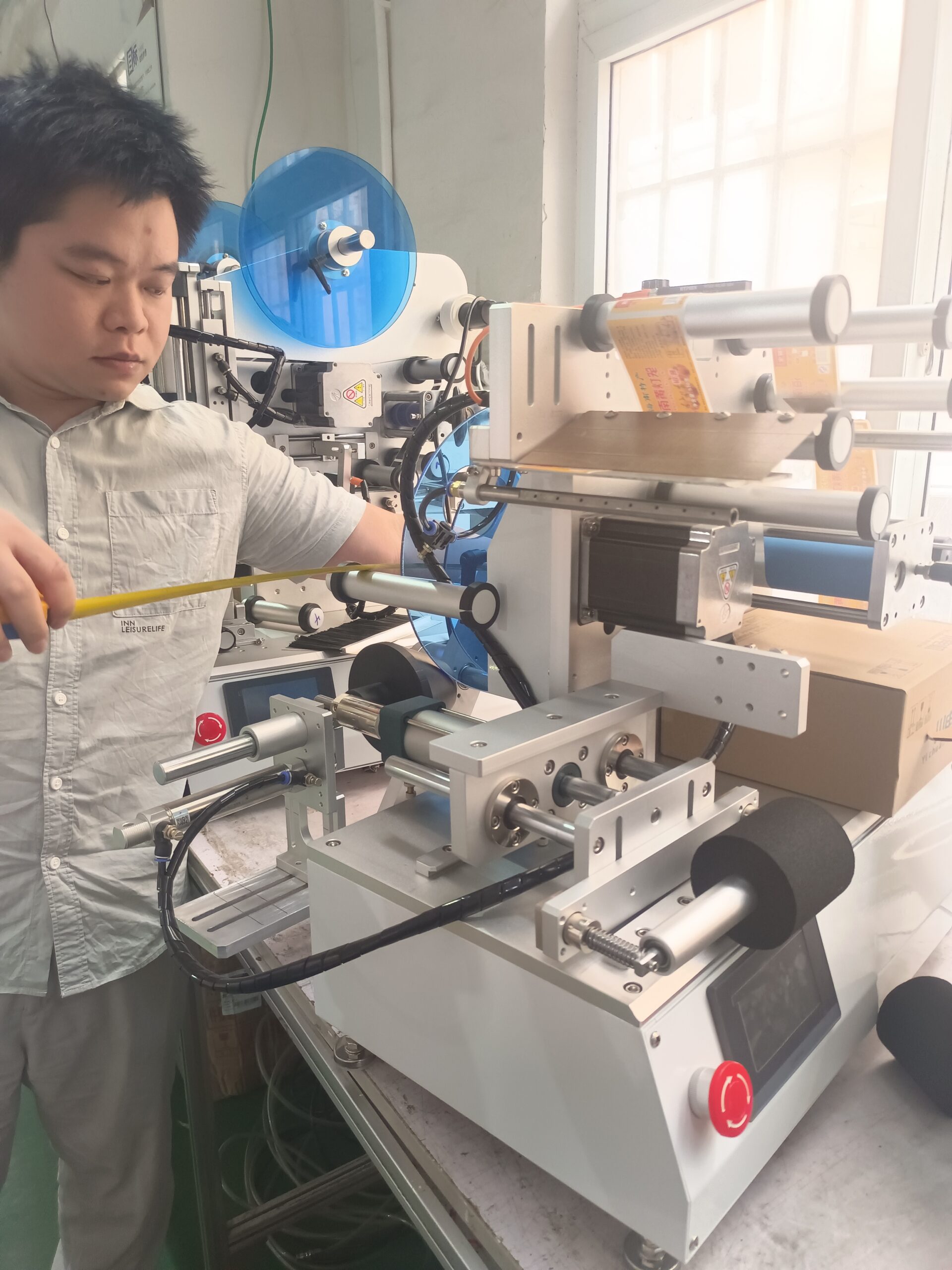
Note what is absent from that list: buying a stronger adhesive alone. A heavier adhesive masks the symptom for a month and then fails the same way when the film returns. The durable answer pairs the right grade with the right application physics.
The Confirmation Sequence Before You Sign
Adhesive decisions go wrong in the gap between two suppliers, because each one tests a fraction of the system. Close the gap with a written sequence. This is the sequence we run with buyers before any machine ships, and it converts neatly into a purchase order annex:
- Send the machine builder your actual bottle samples from the production mold and rolls of the actual label stock, including the face stock and adhesive you intend to buy.
- Ask for the adhesive qualification documents against your resin, including recycled content for rPET lines and the additive package for HDPE lines. If your bottles carry food, the adhesive components fall under the indirect food additive rules collected in 21 CFR 175 on eCFR, so also request the converter’s statement of compliance naming the relevant section.
- Define the worst case: smallest diameter, coldest bottle surface, fastest line speed, and the tightest cold room transition in your schedule.
- Require a test run on that worst case at the factory, filmed, so your team can review wrap, wipe, and edge seating frame by frame. Our standard practice is to run the customer’s real bottles and labels before shipment and send the video back for approval.
- Freeze the settings that passed into the commissioning sheet: wrap length, wipe pressure, dispense speed, and the label timing relative to temperature transitions.
- Agree on a retest trigger: any change of bottle supplier, flake source, label converter, or cold room schedule reopens the test, not just the price talk.
For a semi automatic line running 15 to 30 pieces per minute, this sequence takes days. For a full automatic line at 40 to 300 pieces per minute, it is still days, and it costs nothing compared with a repack run caused by lifted labels in a retail cage. Precision also plays its part: repeatable placement within half a millimetre keeps the label in the qualified zone, and our MT-807 bench unit reaches up to plus or minus 0.2 mm on flat surfaces where registration matters most. Uncertain about a specific adhesive rating? Treat it as unconfirmed until it is tested against your bottle and label at quotation, and put the test in the delivery terms rather than in an email promise.
Since 2015 we have shipped labelers to buyers in more than 50 countries, over 500 factories, and the same rule has held in all of them: the video of your own bottles passing is worth more than any datasheet in the carton. You can see how these tests are recorded on our labeling test videos page, and if you want to see how pressure sensitive lines differ from glue systems before you fix a specification, read our comparison of hot melt versus pressure sensitive labeling.
Questions Buyers Ask About Adhesives and Resins
Should I switch to film labels if my paper labels lift in the cold room?
Usually yes when condensation is involved, because paper fibers absorb moisture, swell and lose stiffness at the edges, while film face stocks such as BOPP or PE shed water and conform better to the bottle radius. But film alone does not fix a wet application surface. Pair the switch with the application sequence fixes above, and repeat the cold room transition test on the new construction before you commit the whole label order.
Do I need a different adhesive for recycled PET than for virgin PET?
Treat it as a different surface until testing says otherwise. Recycled flake varies lot to lot and can carry residues that shift surface energy, so an adhesive qualified on virgin PET may underperform on rPET. Ask your converter which grade is qualified for recycled content and require the qualification to name the flake source. If the answer is vague, schedule a test with your actual bottles; that test takes a day at our works and closes the question with evidence.
Who is responsible when labels lift, the converter or the machine builder?
The honest answer is that responsibility follows evidence. If the label is applied onto a dry bottle within the qualified process window and still lifts, the construction is suspect. If it is applied onto condensation, outside the agreed sequence, the process owns the failure. That is exactly why the confirmation sequence above exists: it fixes the process window in writing and on video before shipment, so a field failure points at the right party instead of starting a blame loop.
A cold room should not decide your label quality. Decide the match on paper, prove it on your own bottles before the machine leaves the factory, and the condensation window becomes just another condition your line was built to pass. When you are ready to put that proof in your purchase order, send us your bottle and label drawings and we will quote the test together with the machine.
