
Choose pressure-sensitive when the container cannot take a glue station: short runs, film labels, small diameters, frequent SKU changeovers, or a bottle shape that would need a custom glue roller. Choose glue when one glass bottle shape runs at high volume for years, when the label has to survive a pasteurizer or a returnable-bottle wash, or when label cost per thousand outweighs changeover time. Pressure-sensitive is a contact process, so the machine presses an adhesive that is already tacky. Glue is a fluid process, so the machine applies an adhesive that has to be melted or wetted, then dried or set. Almost every practical difference between the two systems follows from that one sentence, including how they fail, what they cost to run, and which one a buyer should specify for a given bottle.
The decision in one table
Read the table by row, not by column. A single row that points hard in one direction usually decides the purchase, even if every other row is neutral.
| Question | Pressure-sensitive | Glue |
|---|---|---|
| Container material | Glass, PET, PP, HDPE, metal, cartons, almost anything with enough surface energy | Best on glass; needs a compatible surface on plastic and often a primer |
| Typical volume | Low to very high, with fast changeover | High volume, long runs, one or two SKUs |
| Label material | Paper, BOPP, PET, metallised film, clear film | Mostly paper, some film with the right glue |
| Wet or damp containers | Poor; adhesive will not wet out | Tolerated, because the glue is applied as a fluid |
| Returnable and washed bottles | Label must be designed to wash off | Standard practice with the right adhesive |
| Floor space | Compact; no drying tunnel | Longer line because of the tunnel or the glue station |
| Changeover | Minutes, with a setup sheet and repeatable stops | Longer; glue viscosity, roller gap and label magazine all move |
Where glue still wins, and why buyers keep buying it
Glass beverage work is the clearest case. A hot melt rotary labeler with 12 stations runs 10,000 to 15,000 bottles per hour, and a 16-station machine runs 10,000 to 12,000 bottles per hour depending on the label pattern and the bottle. At that rate the cost of the label and the cost of the adhesive are the two numbers that decide the plant’s margin, and both are lower on a glue line than on a pressure-sensitive line using an equivalent paper label.
Glue also tolerates conditions that stop a pressure-sensitive applicator. A bottle that has just come out of a rinse, a bottle that is cold from a winter truck, a bottle with dust from a mould: a glue line can be adjusted around all three, because the adhesive is delivered as a fluid and wets the surface by force rather than by chemistry. Pressure-sensitive adhesion depends on the adhesive flowing into the surface under light pressure, and a water film or a layer of dust blocks that contact.
The third reason is the wash. Returnable glass in beer and soft drinks is cleaned in caustic baths, and a hot melt label with the correct adhesive releases cleanly in that bath. A pressure-sensitive label on the same bottle can leave adhesive residue that fouls the washer and the bottle inspectors, which turns a labelling decision into a maintenance cost that shows up months later.
Where pressure-sensitive wins, and why the share keeps moving
Pressure-sensitive wins wherever the container is the difficult part. A 12 mm vial, a 30 ml dropper, a tapered cosmetic jar, a carton with a curved edge, a cable, a folded box: none of these need a glue roller built for them. The label arrives die-cut to the shape, and the applicator only has to present it at the right height and press it on. That is why the same applicator can run a shampoo bottle in the morning and a serum bottle after lunch.
Film labels are the second reason. A clear PET label on a clear bottle, a white BOPP label on a shower gel, a metallised label on a spirit bottle: these are pressure-sensitive constructions, and the visual result is part of the product. Glue lines can run film, but the adhesive has to be matched to the film and the result is less forgiving. On a food or beverage container, the adhesive and the liner are also covered by indirect food additive rules, which is why a label datasheet should cite a regulation such as 21 CFR 175.105 instead of only naming a polymer family.
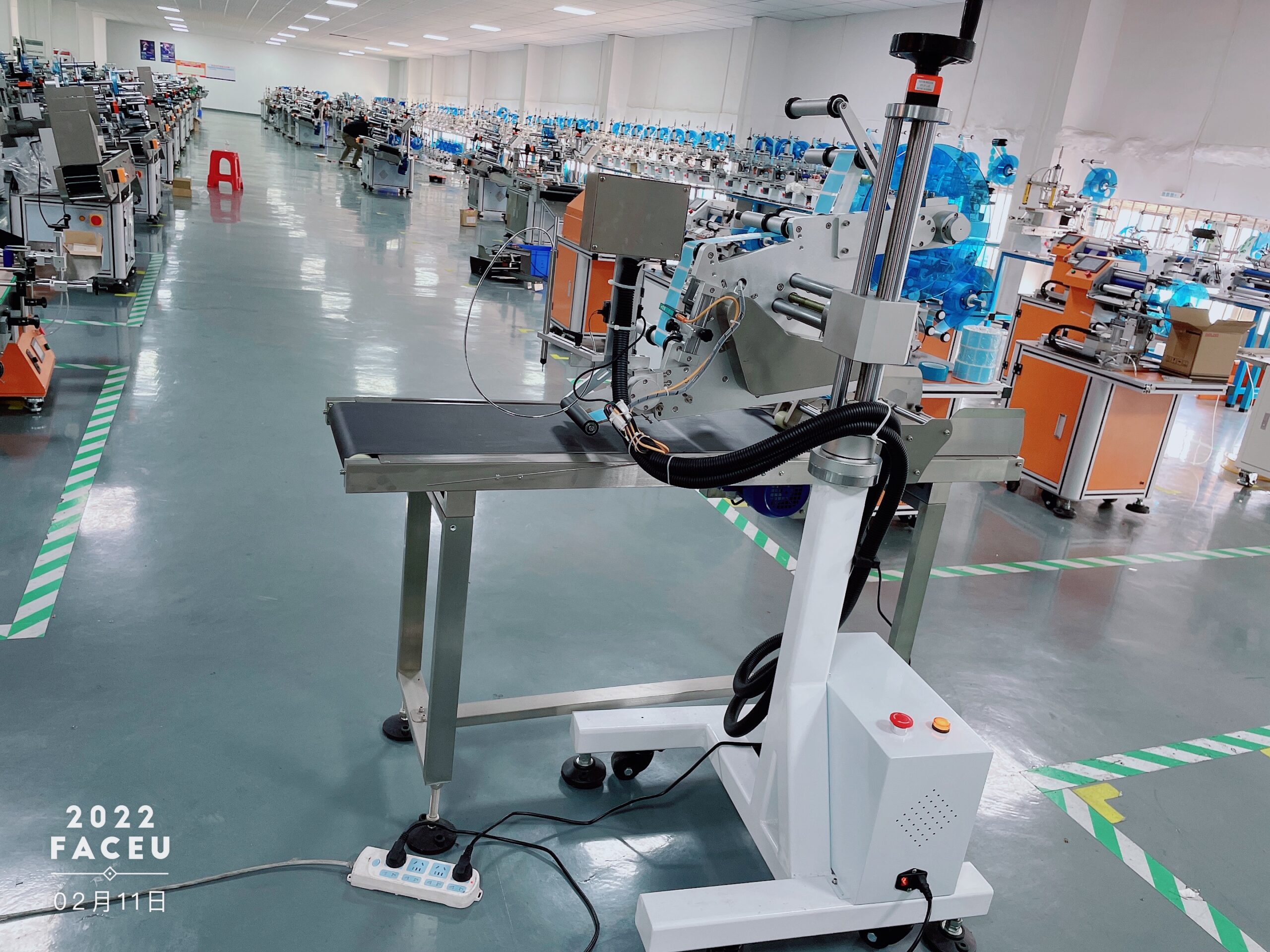
Speed is no longer the argument it once was. A full automatic pressure-sensitive line runs 40 to 300 pcs/min depending on the platform, which covers most cosmetic, pharmaceutical and food work below beverage scale. A semi automatic machine at 15 to 30 pcs/min is enough for a startup or a second line, and the entry cost and floor space are small enough that a buyer can justify it before the volume exists.
Five costs that never appear on the quotation
Label cost is not the same as cost per labelled bottle
A pressure-sensitive label carries a liner, and the liner is bought, shipped and thrown away. On a small label that liner can be a meaningful share of the material cost. A glue line buys paper labels in a stack or a reel with no liner at all. The comparison only becomes fair when both numbers are expressed per 1,000 labelled containers including waste, and pressure-sensitive waste is usually lower because there is no glue smear to reject.
Changeover labour
On a glue line, a format change moves the label magazine, the glue roller gap, the pallet or the gripper pads, and then the operator runs samples until the glue pattern is right. On a pressure-sensitive line, the change is a setup sheet: peel plate, sensor position, applicator height, and a first-article check. A plant that runs 40 SKUs a month feels this difference every week.
Utilities and floor space
A hot melt system holds adhesive at temperature all shift, and a cold glue system needs a drying tunnel or a long conveyor. Both consume space and energy. A pressure-sensitive applicator needs compressed air on some builds and almost nothing else. In a rented building, the floor space saved is often worth more than the machine.
Rejects
Glue rejects are visible: a smear on the bottle shoulder, a label that slides two millimetres, a dry patch at the trailing edge. Pressure-sensitive rejects are usually an edge lift or a bubble, and they tend to appear after the bottle has left the machine, which makes them harder to catch but cheaper to prevent with a first-article check.
Maintenance and training
Glue pots need cleaning, nozzles wear, and a cold start wastes product. Pressure-sensitive machines need peeling plates, rollers and sensors checked, and the skill is in setup rather than in fluid control. Neither is free, but the maintenance profile is different enough that the person who will run the machine should be part of the decision.
A twenty-minute container test that settles most of it
Before a purchase order, run both candidate labels on the actual container. The test needs about 50 containers, a roll of each label, and a dyne pen. Measure surface energy on three bottles from different cavities. Label ten bottles at production speed, ten at half speed, and ten after the bottles have spent an hour in the cold room. Wait 24 hours, then look at the edges with a light at a low angle.
A pressure-sensitive label that has lifted at the edge after 24 hours will not improve on your line. A glue label that has wrinkled at the seam will not improve either. This is the test HiPaks runs before shipment on every order, using the customer’s own containers and labels, and the result comes back as a video so the buyer sees the actual bottles rather than a specification sheet. That single step removes most of the risk from a decision that is otherwise made on catalogues.
The two systems fail in opposite directions
Pressure-sensitive failures are adhesion failures. The label lifts at the edge, flags on a curve, traps a bubble, or slides because the container was contaminated. They get worse with cold, with dust, with low surface energy and with speed, because all four reduce the time and the contact available for wet-out.
Glue failures are transfer failures. The glue is missing in a patch, too heavy at one end, too cold to tack, or the label shifts after it lands. They get worse with viscosity drift, worn rollers, a cold pot and a warped label stack. A plant that has run glue for twenty years can diagnose these by sound and smell. A plant moving to pressure-sensitive has to learn a different diagnostic vocabulary, which is a training cost rather than a machine cost.
If the line may need both
Plenty of factories end up with a glue line for the flagship bottle and a pressure-sensitive cell for everything else. That is a reasonable architecture. Keep the two label inventories separate, because a pressure-sensitive label cannot be run through a glue applicator and a glue label has no liner to peel. Keep the compressed air, the power and the container flow separate as well, so that a fault on one does not stop the other.
Where both systems serve the same bottle, run the glue line as the volume base and the pressure-sensitive machine as the changeover machine. That is also the moment to confirm accuracy expectations: a semi automatic pressure-sensitive machine holds ±0.5 mm, a full automatic machine holds ±1 mm excluding product and label tolerance, and the MT-807 flat applicator is specified up to ±0.2 mm for small parts. Those numbers are machine capability, not a promise about a bottle that varies cavity to cavity.
If the choice is still open, send the container, the label artwork and the target rate. A short test run on both systems answers the question faster than another comparison table, and it produces a video the whole buying team can watch.
Watch the two processes side by side in the test-run video library, compare glue machine builds on the hot melt versus pressure-sensitive guide, or start from the sticker labeling category if the label itself is the open question. The machines are listed under the sticker labeling machine manufacturer page and the label applicator machine page.
Frequently asked questions
Is pressure-sensitive labeling cheaper than glue?
For short runs and frequent changeovers, usually yes, because there is no glue pot to clean, no drying tunnel and no long setup. For a single glass bottle running millions of units a year, glue is usually cheaper per labelled bottle because the label has no liner and the adhesive is bought in bulk. The crossover depends on your volume, label size and changeover count, so compare cost per 1,000 labelled bottles rather than the price of the machine.
Can a pressure-sensitive machine label a wet bottle?
Not reliably. Water on the surface blocks the adhesive from making contact, so the label may stick briefly and then lift. If bottles arrive wet from a rinse or a cooler, either dry them before the applicator or use a glue system, which tolerates moisture because the adhesive is applied as a fluid.
Do I need a different label for each system?
Yes. A pressure-sensitive label is a laminate with a silicone-coated liner and a die-cut shape. A glue label is typically a paper label supplied in a stack or a reel with no liner, and it has to accept the adhesive on its reverse. The artwork can be identical, but the construction and the supplier are not interchangeable.
Which system is better for a small factory starting out?
A semi automatic pressure-sensitive machine is usually the lower-risk entry. It runs 15 to 30 pcs/min, needs little floor space, and the same machine can handle several bottle sizes with a setup change. Minimum order is one unit, lead time is 7 to 10 days for a semi automatic build, and the 30 percent deposit with 70 percent before shipment keeps the cash commitment predictable.
