
A hot-melt labeler produces three glue quantities from one word, and only one is an acceptance figure.
The adhesive still sitting on a removed label is a deposit measurement.
The adhesive that stayed on the bottle is a transfer measurement, and the transfer is what quality signs.
The wet-film reading from the applicator roller is a machine setting, useful for process control and useless as proof of what a bottle received.
According to IMDA’s applied-coating-weight method, the tolerance, the frequency and the retained samples belong in the customer’s own written specification.
Most buyers release a balance without ever writing one.
Three Glue Numbers, One Word: Which One Does Quality Sign?
What Does Each Glue Quantity Actually Measure?
A glue quantity is a number with an instrument behind the number, and the instrument decides what can be proved.
The table sorts five quantities by what each one measures, where the reading is taken, and what the reading cannot support in an audit.
| Quantity | What it measures | Instrument | What it cannot prove |
|---|---|---|---|
| Deposit on the label | adhesive left on a removed label | solvent weigh-back on a balance | what the bottle received |
| Transfer on the bottle | adhesive the bottle kept | peel, then weigh the bottle | applicator condition |
| Roller wet film | film left by the applicator | wet-film comb gauge | the quantity on one bottle |
| Pattern geometry | where the adhesive sits | controlled template and scaled photo | how much adhesive is present |
| Consumption per run | total adhesive drawn from the melter | lot reconciliation | any single bottle |
Why Is the Roller Reading Not the Bottle Figure?
A wet-film reading is a film measurement taken at the applicator with a comb gauge or a calibrated film gauge, and the number belongs to the machine rather than to the bottle.
Read properly, the film is the fastest process-control signal on a hot-melt line, because doctor-blade condition, roller wear and nozzle behaviour show in the film before any bottle reaches a balance.
According to Xintao, an adhesive maker, coat weight, adhesive per unit, flow rate and total consumption describe different aspects of one process and should not be used interchangeably.
Three rules follow: 1) film constrains the machine, 2) transfer constrains the bottle, 3) arithmetic cannot convert one into the other, because the ratio moves with label stock, pattern and wipe force.
For example, a 2026 trial sheet that records only the roller reading cannot answer a customer asking what a bottle received.
Is the Glue Pattern a Drawing Revision or an Adjective?
Why Do Descriptions of One Pattern Disagree?
A glue pattern is the geometry of adhesive on one label, and a named applicator produces the geometry.
A roller applicator leaves stripes at the label edges, a nozzle lays a bead along the leading and trailing edge, a swirl head leaves a spiral inside the label boundary, and a dot head prints a row of dots.
A buyer who collects four descriptions of one hot-melt pattern gets four different geometries, because each description belongs to a different head, and none of the four names the head.
According to IMDA, the weighing procedure is written for a flat coated substrate, so pattern geometry sits outside the method entirely.
For example, full-height stripes at both edges and a centred swirl both survive a glance at a finished bottle, which is why a hot-melt machine selection starts with the head.
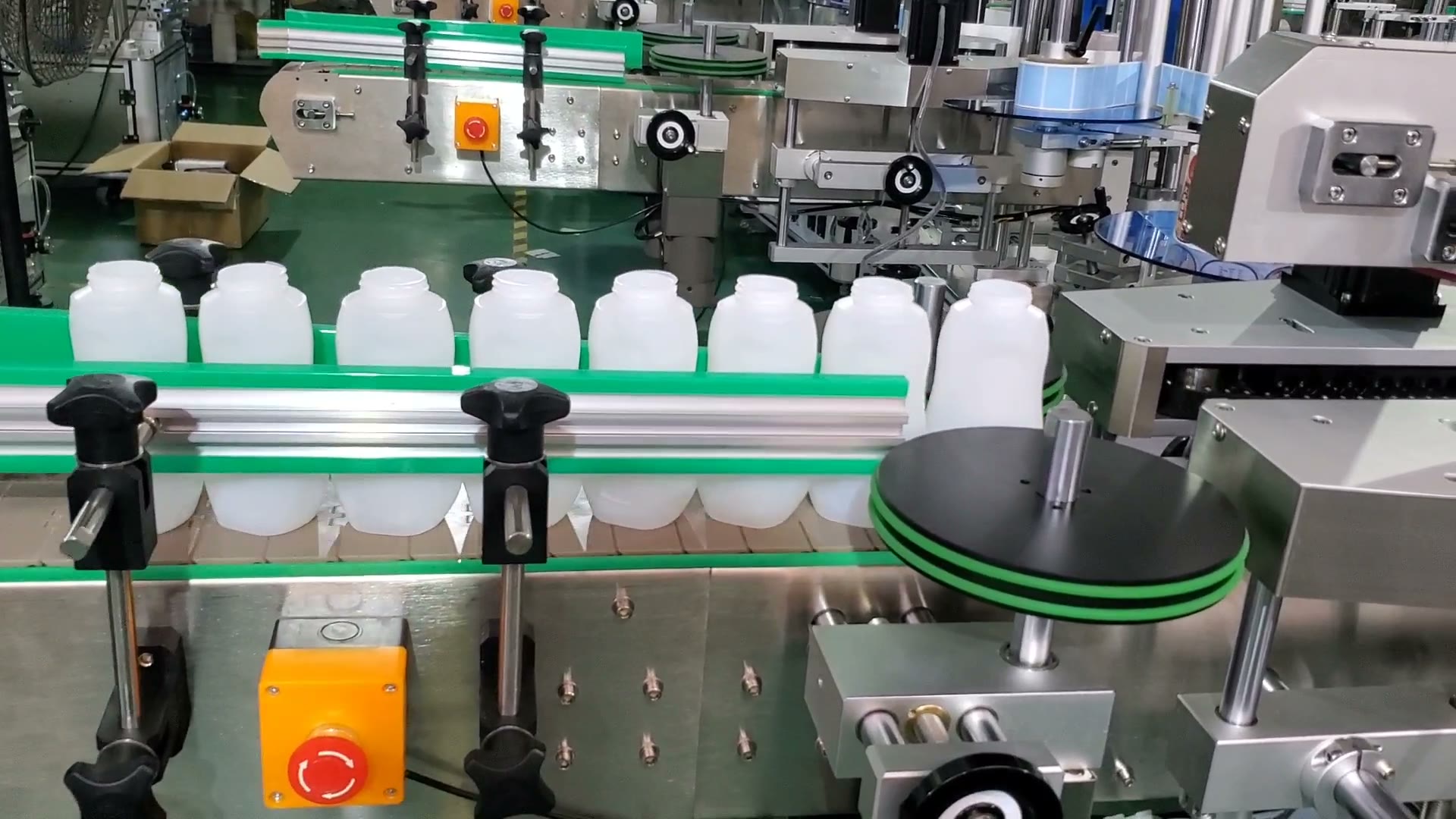
What Must the Purchase Order Name?
The order has to name four things, and the first bottle is checked against all four.
First, the applicator type and a pattern drawing number with a revision letter, which is the point where the choice of head changes the specification.
Second, the controlled inspection template cut to the approved drawing, carrying its own ID and issue date.
Third, the revision the first bottle is signed against, written on the record rather than assumed.
Fourth, the person who owns the drawing, because a pattern changed on the floor without a revision is an unapproved design change.
In practice a 2026 order that names all four can be inspected at the first bottle, and a trial labeling run on the buyer’s own bottles, with video returned before the balance is due, is the only way to compare a pattern from outside the factory.
An adjective cannot be inspected; a drawing revision can.
Weighing It: What Does a Solvent Weigh-Back Prove?
How Does the Published Method Work?
The In-Mold Decorating Association applied-coating-weight method is a published procedure for this measurement, and the steps are short.
1) Cut a sample of known area with a metal template.
2) Weigh the sample on an analytical balance.
3) Strip the adhesive with heptane or a comparable solvent on tissue.
4) Air dry the sample.
5) Re-weigh, subtract, and convert to mass per unit area.
According to IMDA, the method should not be construed as a product or process specification of any kind, which is the disclaimer a buyer has to read before treating any figure as a target.
The procedure describes a flat coated substrate: no bottle, no pattern and no transfer appear in the text.
Applied to a removed label, the result is the deposit figure and not the bottle figure.
Where Does the Method Stop and Who Owns the Tolerance?
Two sentences carry the whole acceptance question.
According to IMDA, the allowable tolerance agreed by the customer belongs in written specifications provided by the customer, and the frequency of the test must also be agreed by the customer.
The same clause adds that many customers keep representative samples in inventory for a later defect claim.
Read plainly, the published method supplies the how and hands the how much back to the buyer.
A plant without a written adhesive specification in 2026 has no tolerance to pass or fail, and the first bottle is signed against a number somebody remembers.
The one-page acceptance specification is the missing document, and in practice four lines carry the whole release: tolerance, frequency, sample population and retention rule, all signed before the machine lands.
Which Conditions Make the Reading Valid?
Which Fields Are Conditions and Which Are Notes?
A condition is a field without which two readings cannot be compared, and most record sheets list conditions beside notes with no distinction.
Six fields are conditions, in this order: first, the adhesive lot at the melter; second, the label lot and part revision; third, the adhesive temperature logged at the head; fourth, the line speed class as configured; fifth, the applicator setting; sixth, the stabilisation period before the sample is drawn.
Two more are notes: ambient conditions on the day and the operator name.
According to NDC, a coating-equipment maker, operators should verify adhesive temperature near the coating head and not only at the melting tank, because film weight can drift as filters load and as the roll warms.
No setpoint is printed here; the plant’s validated setting fills the field, and the glue handling file covers the rest.
Why Does a Reading Taken Before Stability Mean Nothing?
A reading taken before the head, the melter and the product stream have settled describes a machine in transition, and the number is not comparable with the next one.
The parallel is documented in web coating: according to NDC, a single reading may look acceptable while the edges remain under-coated, which is why samples are taken across the web and not only at the centre.
A bottle line has the same spread in a different geometry, across lanes and around the label.
Three rules follow: first, stabilise; second, draw a sample across the run rather than the first label off the head; third, log the conditions beside the number.
A record built in that order survives a customer audit six months later, and in 2026 the labeled bottle batch record is the document an auditor asks for first.
What Fails the Release and What Do You Keep?
Which Defects Stop the Signature?
Five observations stop a release, and a plant sees all five without a laboratory.
A starved leading edge means the pick-up band never bonded.
Adhesive outside the label boundary means the pattern is off register.
Stringing between labels means the film is breaking badly at the head.
Squeeze-out at the seam means the overlap zone carries too much adhesive.
Transfer measured below the approved drawing means the bottle received less than the specification allows.
According to IMDA, the measurement is taken on a cut sample and never on a finished pack, because the label hides the adhesive side.
Two rules follow: 1) stop the line on the first observation, 2) photograph the label before adjusting anything, and treat a wrinkle or a flag as a separate fault rather than a glue fault.
What Stays in the File Six Months Later?
A usable record holds four physical items and one signature.
The removed label is kept, because the adhesive side is the only evidence of pattern.
A scaled photograph of the same label is filed under the sample ID.
The retained bottle from the sample is labelled and stored, which is the retention rule IMDA expects a customer to write.
The record sheet carries the balance identity and the calibration status, so the figure is traceable to a named instrument.
Last, the signer writes the drawing revision beside the result.
According to IMDA, retained representative samples are what a customer references when a defect is claimed later, and in practice the retention rule belongs in the written specification rather than in a technician’s habit.
Frequently Asked Questions
Which Glue Number Goes on the Acceptance Record?
The transfer figure goes on the record, because the bottle is what ships.
Deposit on a removed label and the roller wet-film reading are supporting evidence, not the signed value.
A record names all three numbers, separates them by instrument, and states which one is released.
A balance signed on a roller reading cannot answer a customer who asks what the bottle received.
In 2026 the rule that holds is one signed number, three supporting figures, and an instrument named behind each one.
Is One Bottle Enough for a Pattern Check?
One bottle is enough to describe the machine at that moment, and not enough to describe the run.
A sample drawn across the run, across lanes and after each stop costs minutes and catches drift a single bottle hides.
According to IMDA, the population and the frequency belong to the customer’s written specification, so a plant decides the count before the machine lands.
Why Does the Pattern Need a Drawing Number?
A drawing number makes the pattern inspectable, because a revision can be compared and an adjective cannot.
The order names the applicator, the drawing and the revision, and the first bottle is signed against the same sheet.
A pattern changed on the floor without a revision is an unapproved design change in any audit.
Two documents make the pattern enforceable: the approved drawing and the controlled template.
Does More Adhesive Mean a Stronger Bond?
No.
According to Xintao, an adhesive maker, applying more adhesive does not automatically produce a stronger bond, because the target depends on substrate, adhesive formulation, application pattern and production conditions.
Extra adhesive also moves the pattern, adds squeeze-out at the seam and alters the transfer ratio, so a heavier reading is a process change and not an improvement.
