
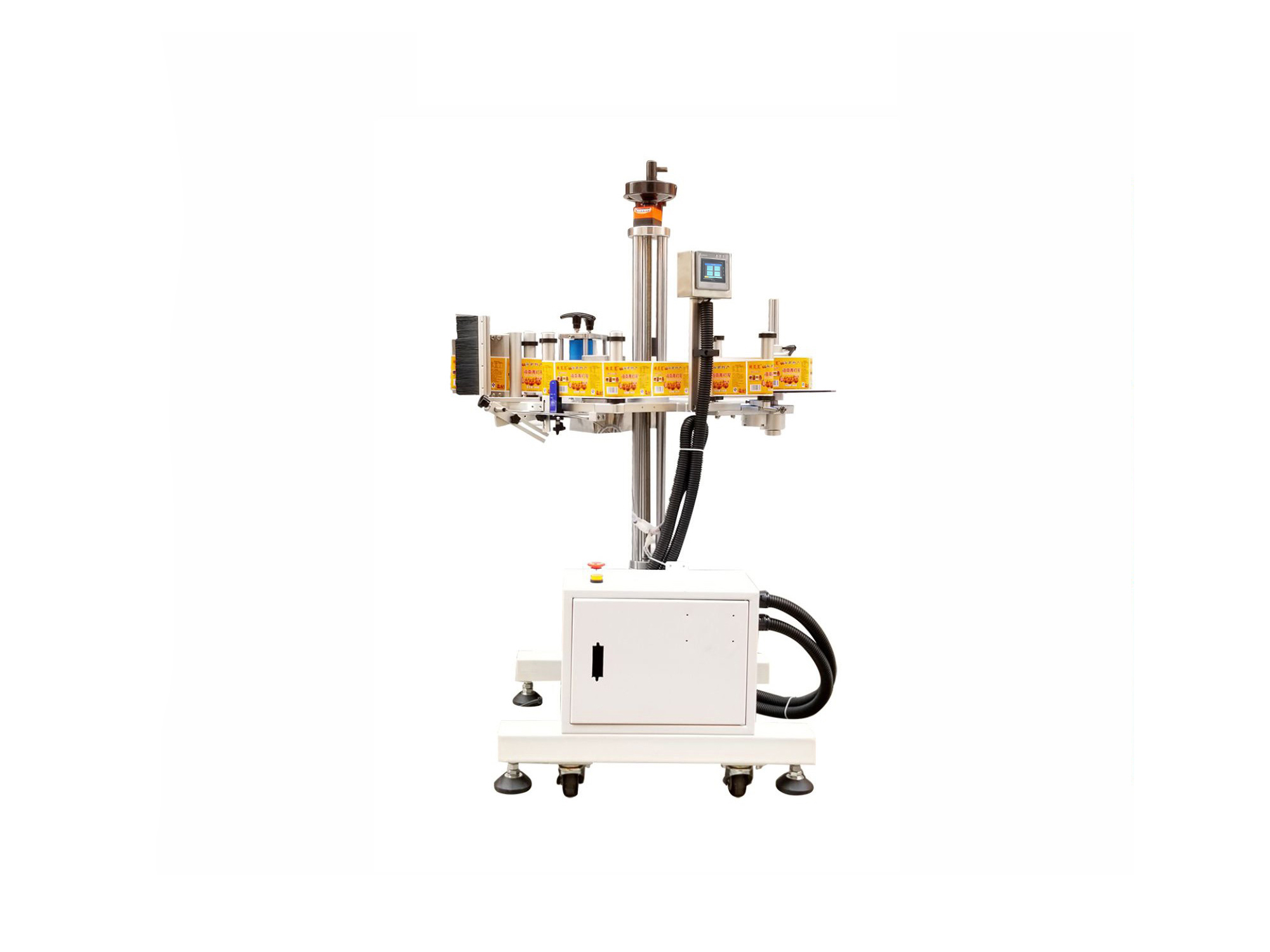
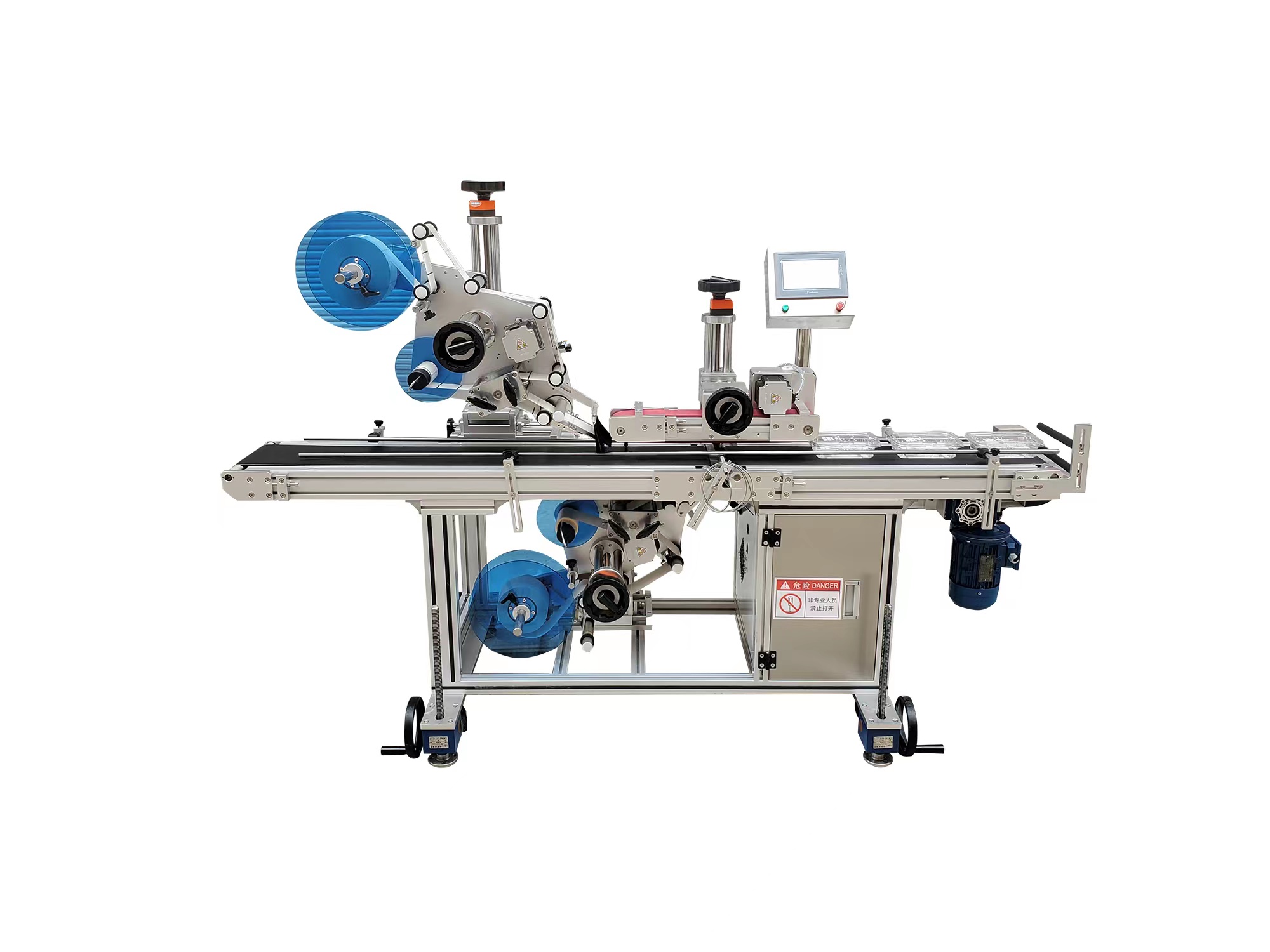
T951 · Flat-Surface Line Head
Top or side labeling for any flat face on a moving line: product size unlimited, labels from 6mm long.
Apply pressure-sensitive labels on bottles, boxes and pouches moving on any conveyor: standalone units or bolt-on heads.
Suppliers use these words loosely; the difference is what the hardware does after the label leaves the roll.
A peel-and-apply module (sensor, peel edge, drive) that presents labels to products passing on your conveyor.
The head plus frame, conveyor and controls: a complete machine that feeds, applies and discharges on its own.
Presents one label at a time for hand application, the cheapest automation, removing only the peeling.
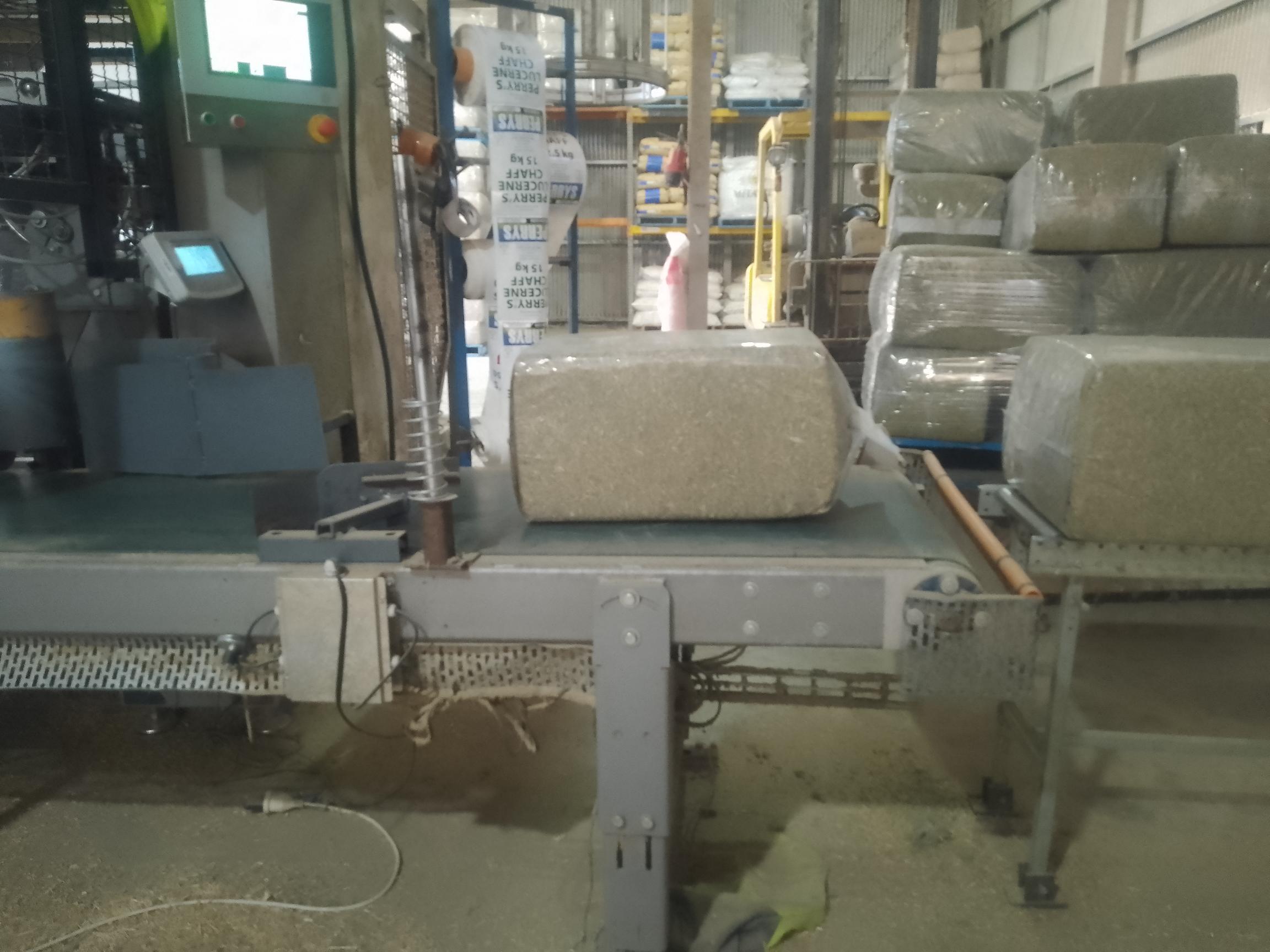
How the label travels from peel edge to product decides what you can label, and how gently.
| Method | How it works | Best for | Speed fit | Accuracy note |
|---|---|---|---|---|
| Wipe-on | Label is peeled and brushed onto the product as it passes a padded roller or brush | Steady conveyor flows: bottles, cartons, flat surfaces | Continuous, line-speed | Best registration on consistent product spacing |
| Tamp | Label is peeled onto a pad that presses it onto the stationary product | Boxes, pouches, flat items at moderate rates | Discrete cycles | Firm contact; needs a stable product stop |
| Tamp-blow | Pad extends to the product and a puff of air transfers the label without touching it | Delicate surfaces and slightly irregular targets | Discrete cycles | Non-contact transfer; precise on flat targets |
| Air-blow | Air current carries the label from the peel edge straight onto the product | Very fragile or recessed targets; uneven surfaces | Discrete cycles | Most forgiving contact, least registration control |
| Corner-wrap | Label is applied over an edge or corner of the box | Tamper-evident box sealing, front-to-side panels | Discrete cycles | Requires a corner blade or wrap fixture |
Method choice is confirmed during engineering evaluation. Send a photo of the target surface and we pre-select before quoting. Video evidence of each method: test-run library.
Top or side labeling for any flat face on a moving line: product size unlimited, labels from 6mm long.
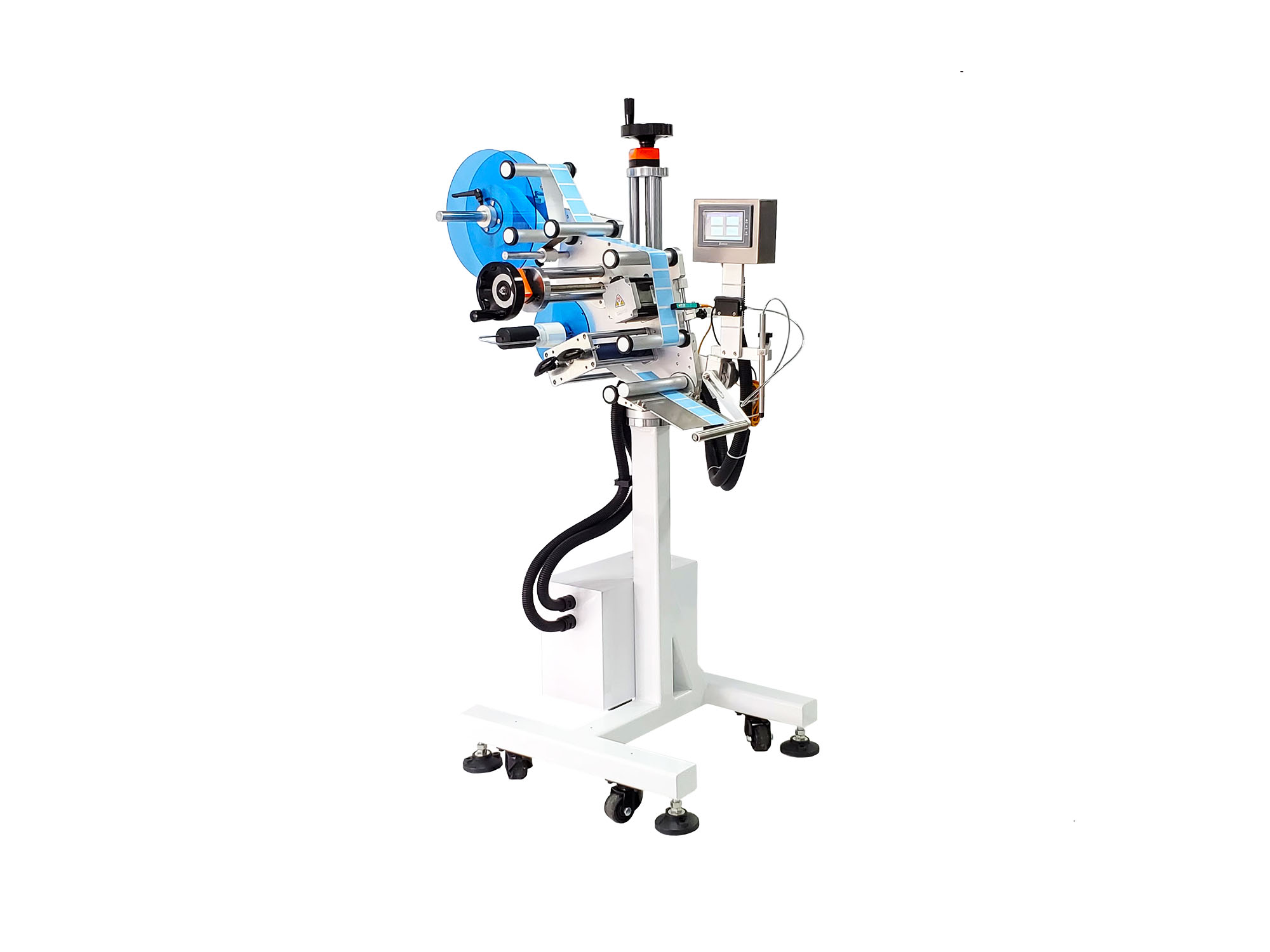
Side-face application for cartons and rectangular containers, height- and angle-adjustable to your conveyor.
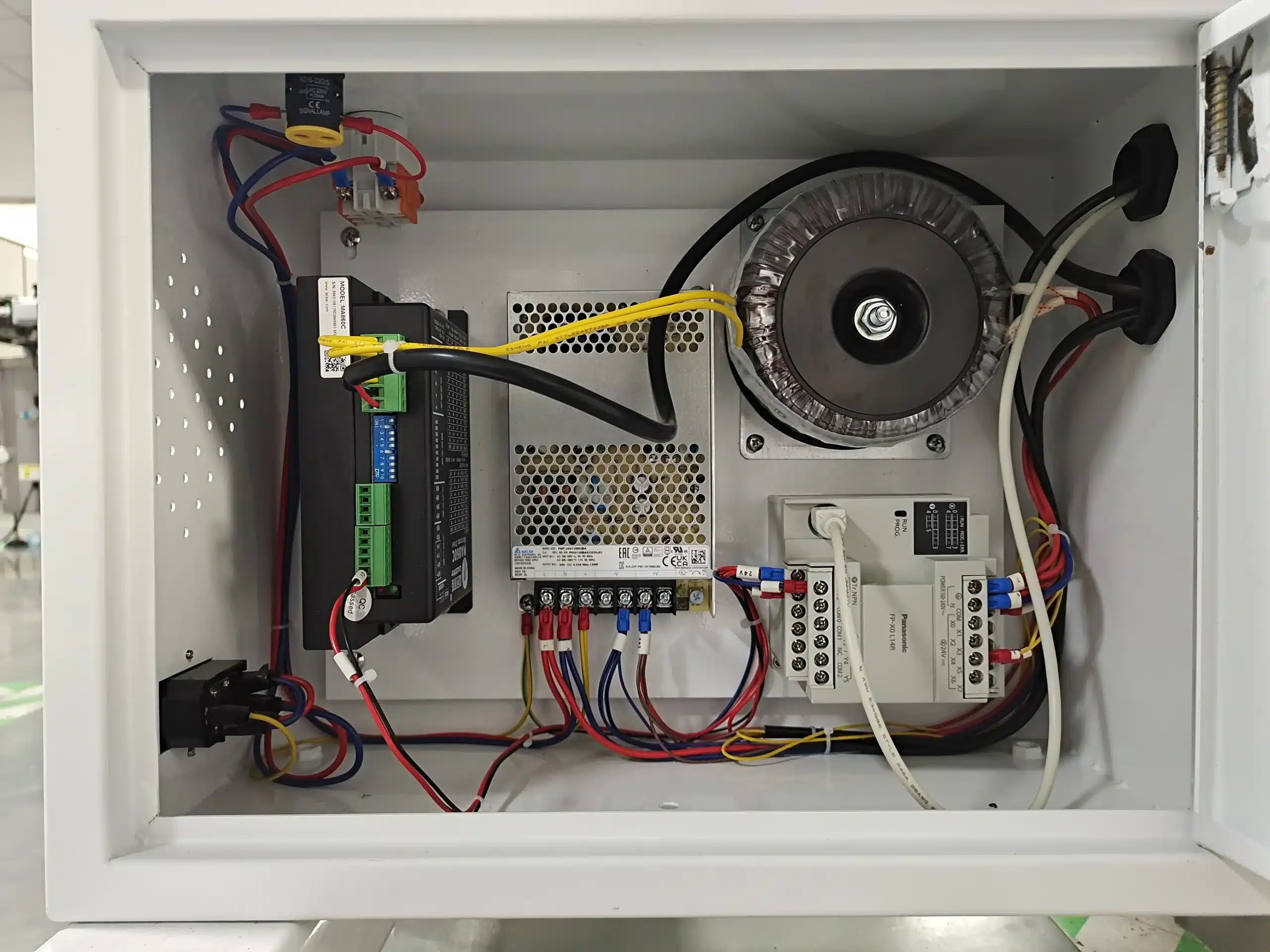
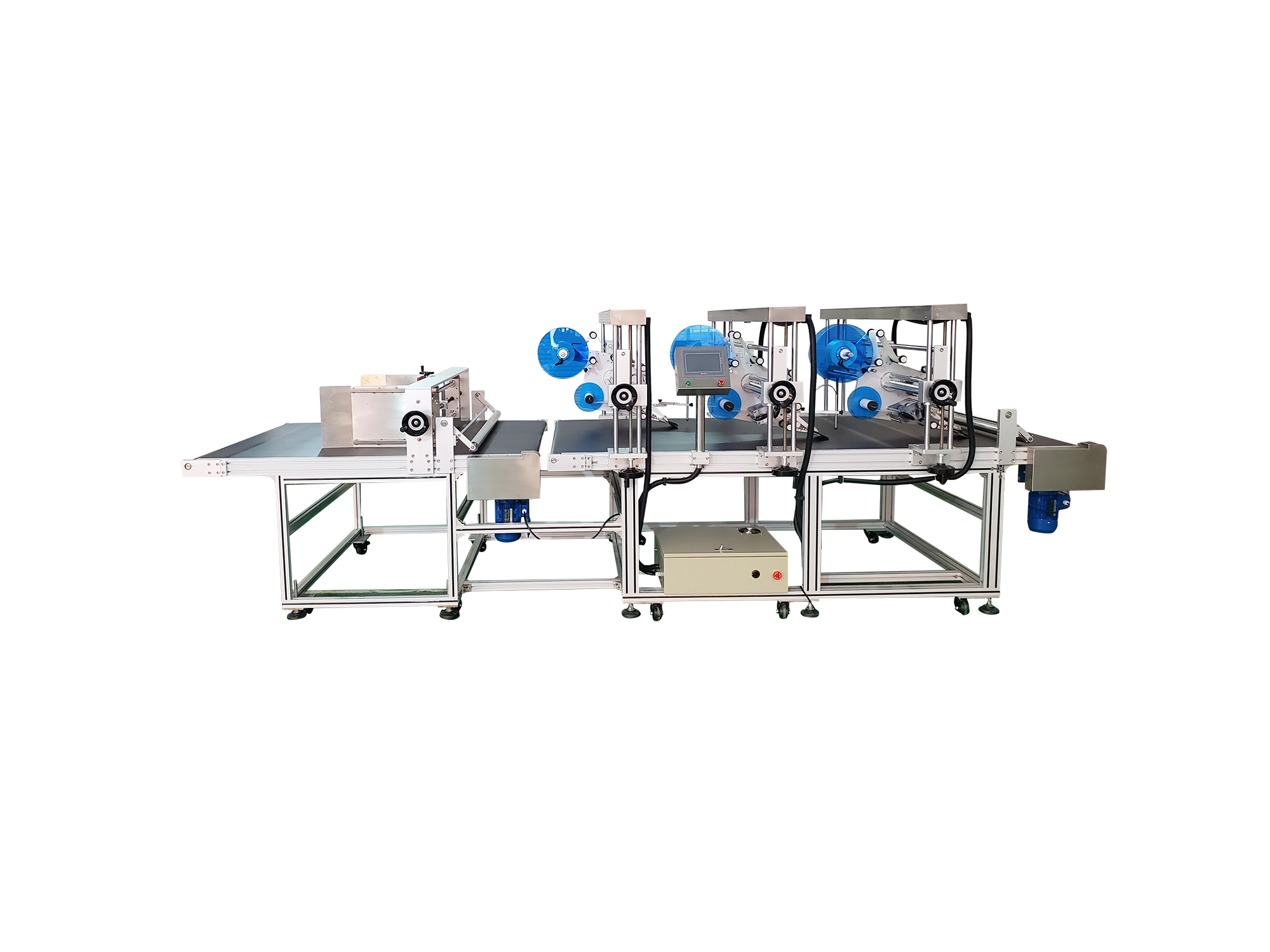
Gantry-mounted head that spans the line, the answer when the conveyor frame itself must stay untouched.
Head + print engine: variable data printed and applied in one pass.
T802 suction, T803 roller and the MT desktop family: standalone applicators for lower volumes and startup budgets.
Brackets, gantries and product-specific fixtures engineered for awkward targets.
Retrofitting a labeling head is a five-input conversation, not a construction project:
T951/T952/T953 heads adjust for height and angle, so small deviations from the drawing are absorbed at install. The full walkthrough (including pitfalls from real retrofits) is in the retrofit your line guide.
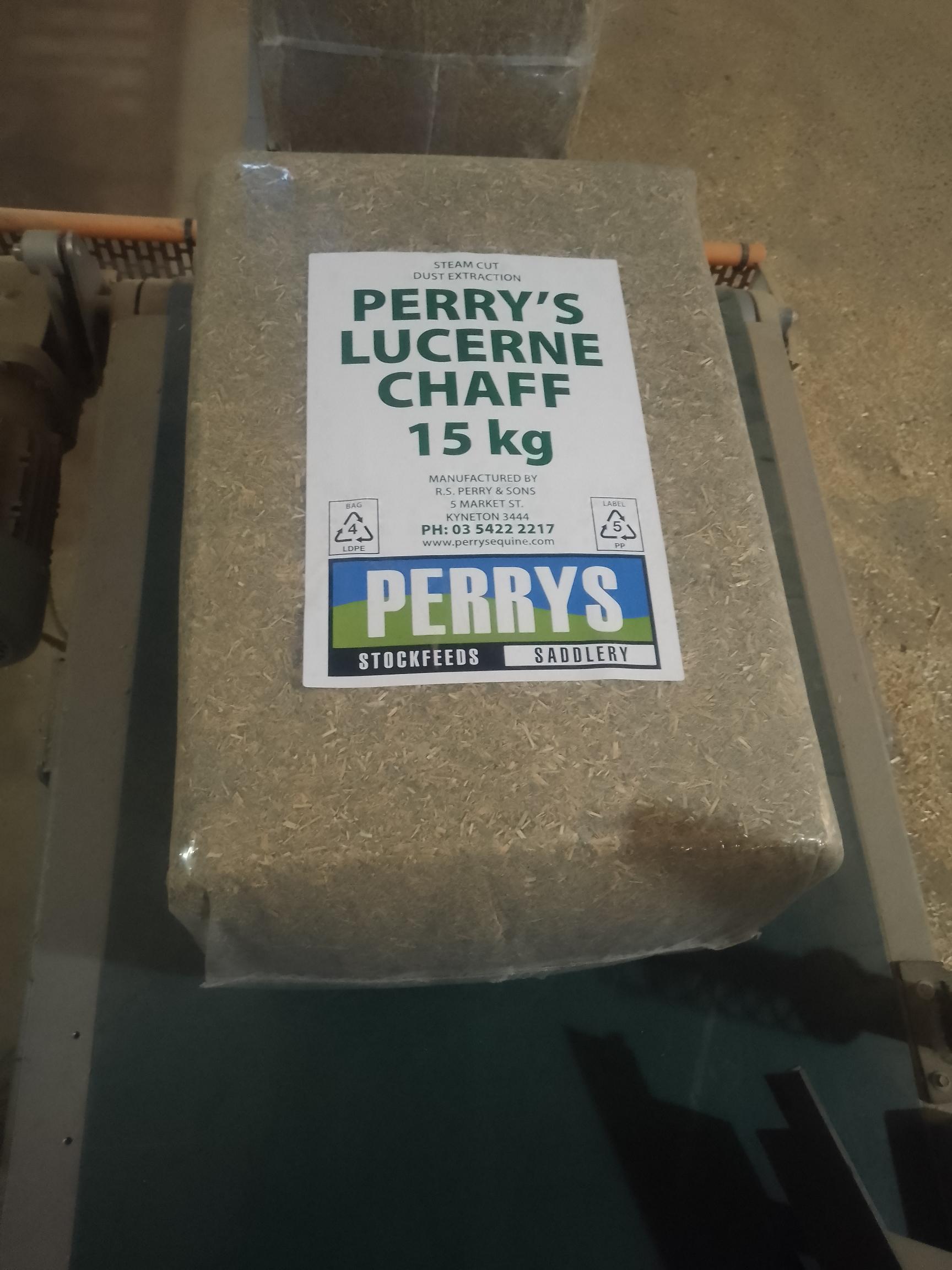
Heads mount to the conveyor you already run; the five inputs above are all we need to pre-build the frame.
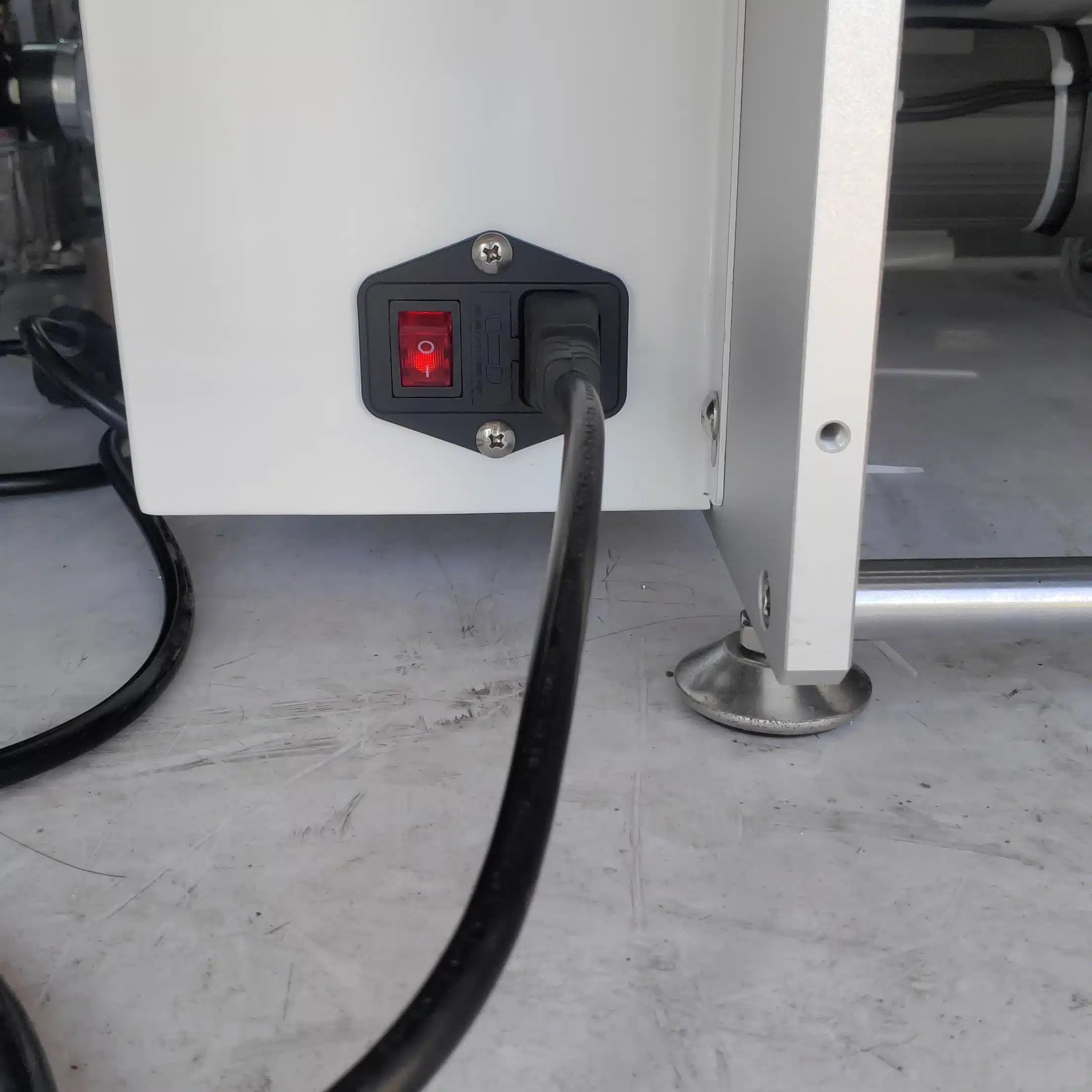
Every applicator ships with validated, internationally branded core components your local electrician can source.
Proprietary black boxes turn a failed photoswitch into a six-week ocean freight. Global brands turn it into a same-day counter purchase, and our parts diagram & spares guide shows exactly which part numbers live where on the machine.
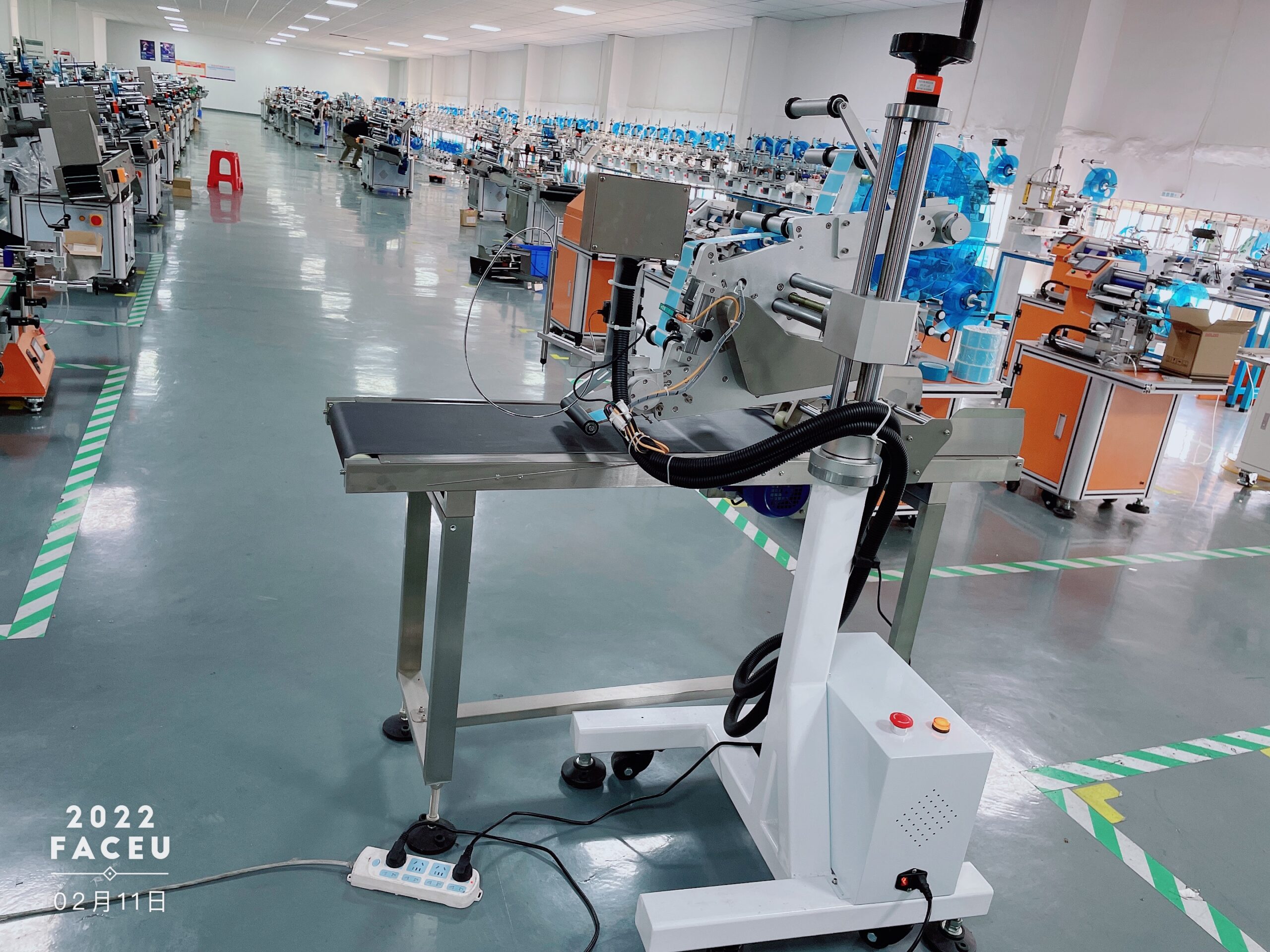
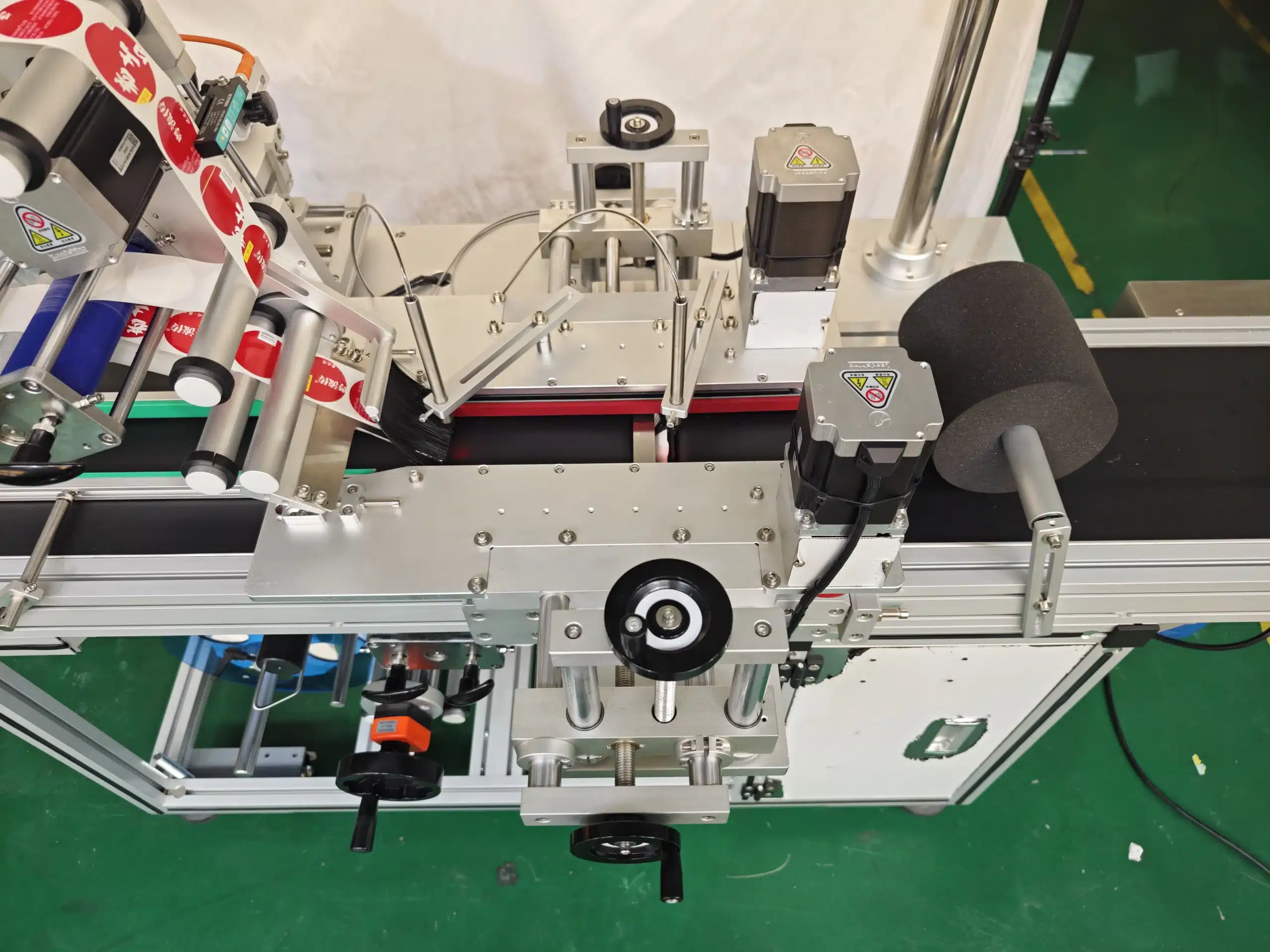
Boxes, pouches and bags: top or side faces via T951 wipe-on or T802-style suction placement.
Bottles, jars and cans on conveyors: wrap application handled by the automatic round-bottle platforms.
Shipping and barcode panels on case flanks, the T952 side head’s daily job.
Corner-wrap application across box edges for tamper evidence and closure seals.
Two-sided placement: the dedicated platform for simultaneous top and bottom labeling is the T936.
Any of the above with printed barcodes, dates and serialization: the print & apply line.
We build applicators and heads for other people’s brands: OEM and private-label bodies, unbranded or your livery, with spec sheets, imagery and test videos you can put in front of your own customers. Standard platforms keep your delivery promises honest: semi-autos in 7–10 days, and spare-part packages sized to your installed base.
Integrators: our heads ship as components: sensor, drive and controls documented, so your controls team integrates without reverse engineering.
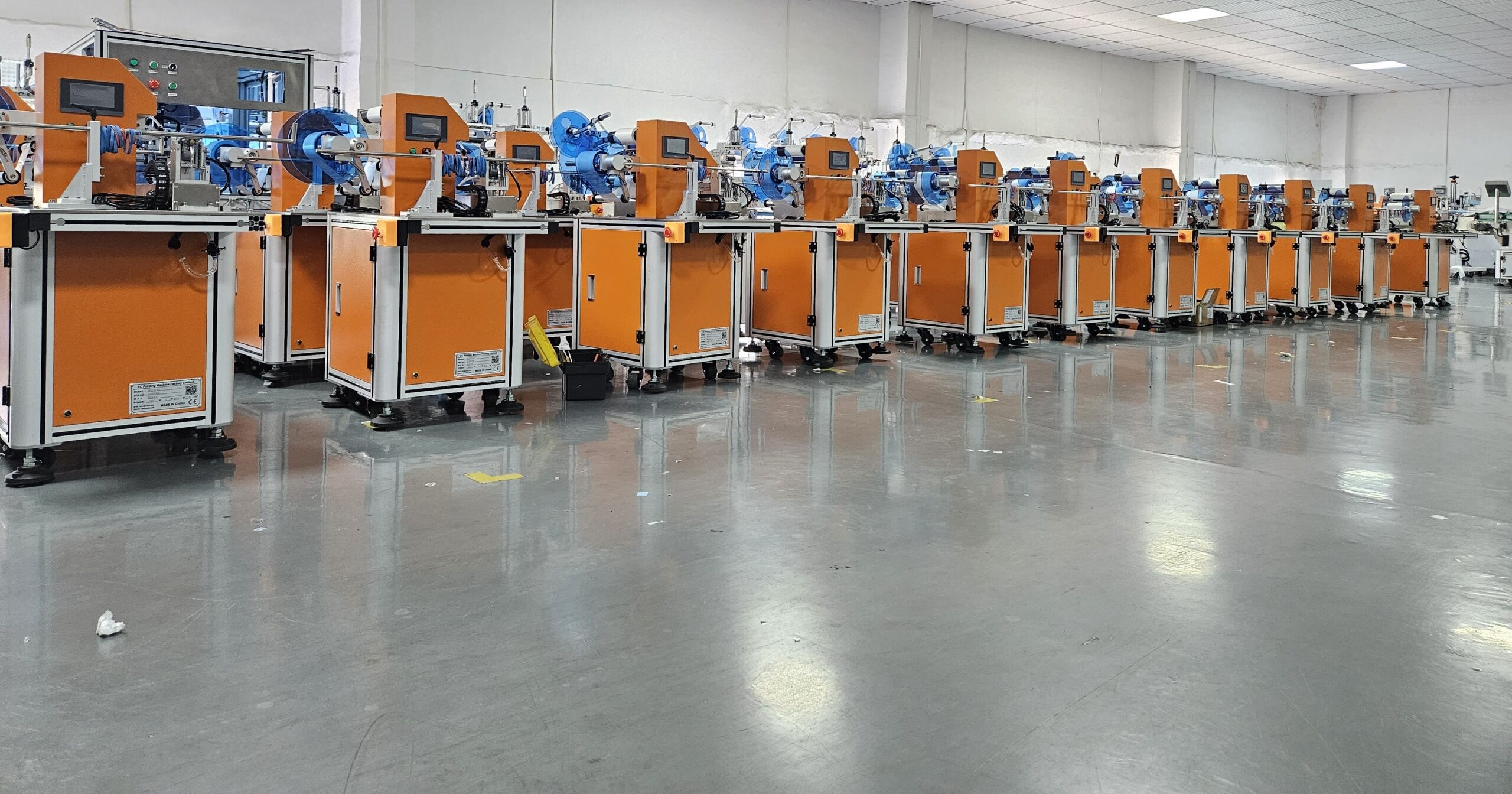
Marketing materials, spec documents and demo footage for your sales conversations. Join the network via contact.
Heads from $3,000 (typical $3,000–10,000); semi-automatic applicators from $600; print & apply from $6,000.
A labeling head is the peel-and-apply module that mounts onto a conveyor you already own. An applicator machine is the complete unit (head plus frame, conveyor and controls) that feeds and labels products by itself. If your products already move on a line, you want a head; if not, you want a machine.
Wipe-on for steady conveyor flows of bottles and cartons; tamp for discrete cycles on boxes and pouches; tamp-blow when the surface is delicate or slightly irregular; air-blow for fragile or recessed targets; corner-wrap for tamper-evident edge sealing. Send a photo of the target and we pre-select the method before quoting.
Yes, that is its purpose. We need five inputs: conveyor surface height, direction of travel, product spacing, sensor position and supply voltage. T951/T952/T953 heads adjust for height and angle at install. The full checklist is in the retrofit guide.
The T951 accepts labels from L 6–300 × W 15–130mm. Roll stock runs on 76mm cores with outer roll diameters up to 300mm (some configurations 260/240mm). Confirm your liner width against the machine’s range during engineering evaluation. It is the single most common spec mismatch.
Yes. OEM and private-label bodies are a standing part of our business, with marketing materials, spec sheets and test footage for your sales channel, plus spare-part packages sized to your installed base. Start via the manufacturer portal.
The T951 head is rated 40–120 pcs/min at ±1mm; semi-automatic applicators run 15–30 pcs/min with an operator; automatic machines reach 100–300 pcs/min depending on platform. Rated speed assumes adequate product spacing. We confirm the real number against your line in the test video.
With special SICK sensors that detect the boundary between clear film and liner. Standard sensors see straight through transparent stock. Declare clear-on-clear labels at inquiry so the correct sensor is fitted and proven on your material before shipment.