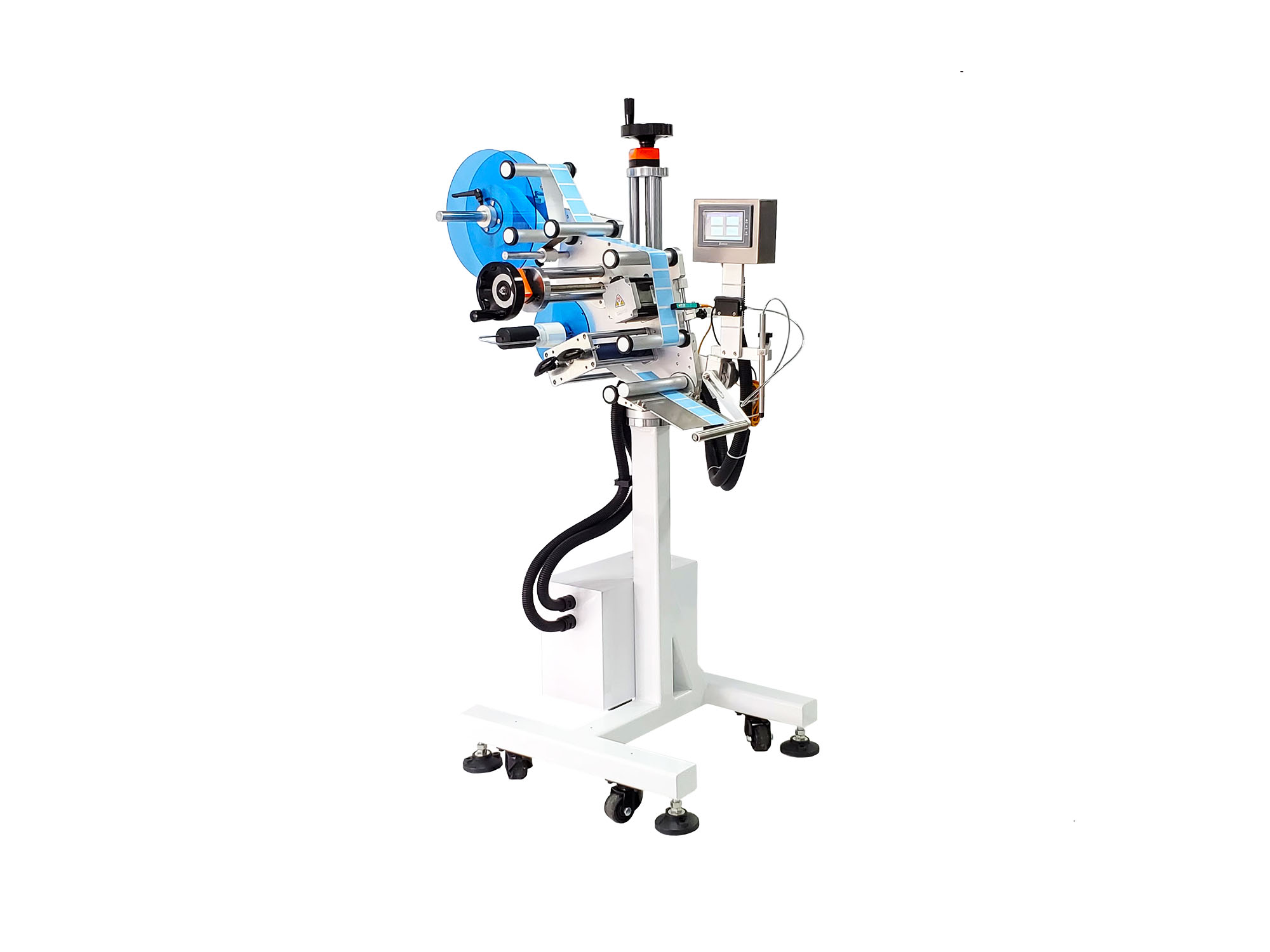
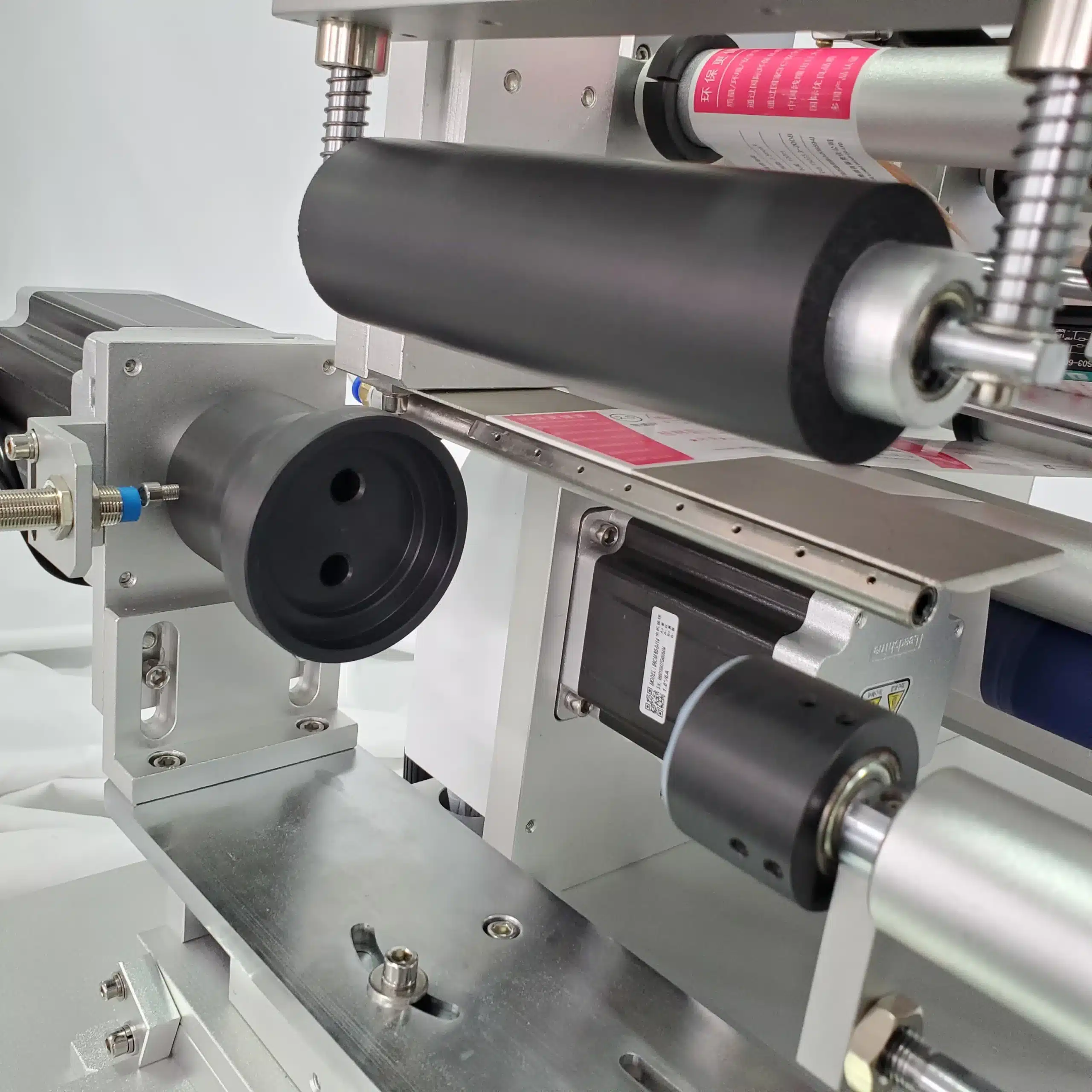
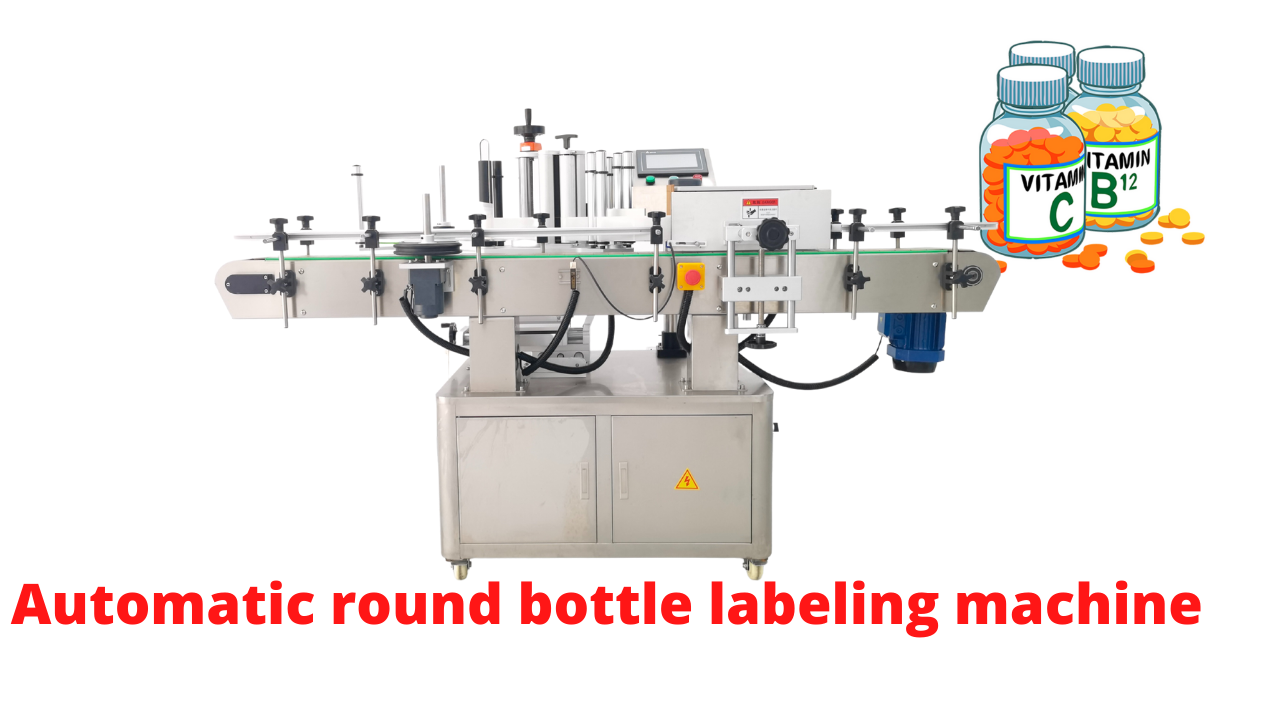
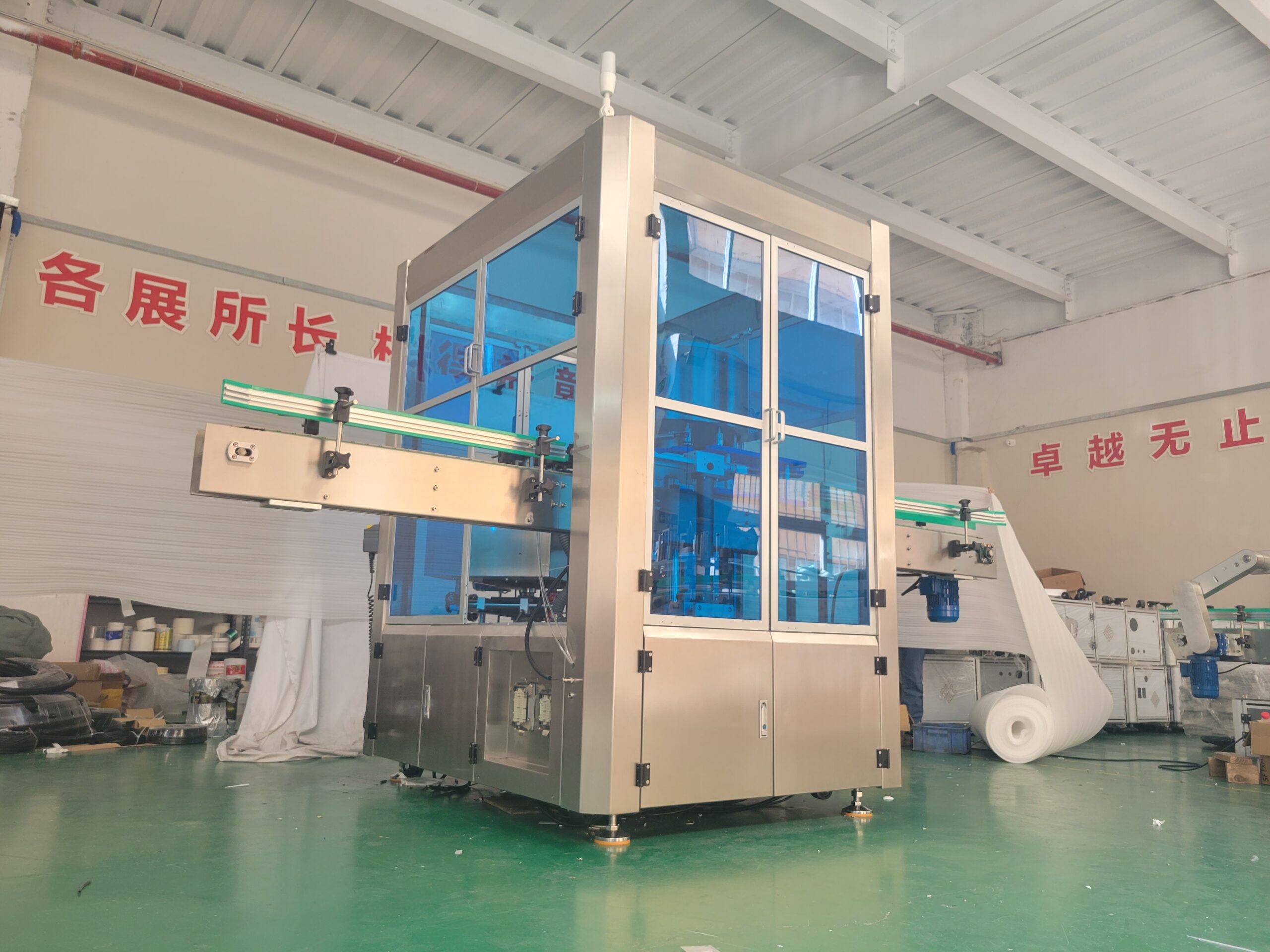
Match the machine class to your daily volume, then filter by container shape and accuracy at speed. Below roughly 100–200 bottles per batch, hand labeling is still rational. From there, a semi-automatic machine (15–30 pcs/min, from about $600) covers most small brands; a fully automatic inline machine (40–300 pcs/min, typically $6,000–15,000) takes over when labeling must keep pace with a filler. Square, flat and tapered containers need fixtures or dedicated double-side machines; transparent labels need special sensors. Finally, judge total cost (machine, tooling, labels, freight, duty) and demand a test run with your own bottles before you pay a balance.
Find your daily output and container type, then read the matching row.
If you label
Container
Right class of machine
Speed to expect
Price band
Up to 200 per batch, a few times a week
Any
Hand labeling (no machine yet)
30–60/hr per person
$0 + labor
500–2,000 per day
Round bottles
Desktop or floor semi-automatic wrap labeler
20–30 pcs/min
From $600–1,200
2,000–8,000 per day
Round / flat / square
Floor-standing semi-automatic (jigs for shapes)
15–30 pcs/min
$1,500–4,500
8,000–60,000 per day
Round, square, flat-sided
Fully automatic inline
40–300 pcs/min
$6,000–15,000
Cartons, pouches, parcels with variable data
Boxes / bags
Print & apply
Line-synced
From $6,000
100,000+ per day, one SKU family
Round PET/glass
Rotary hot melt (OPP film)
12,000–15,000 bottles/hr
From $25,000
What a Labeling Machine Actually Does (in 5 Steps)
From a $600 benchtop unit to a 300 pcs/min inline system, every pressure-sensitive machine performs the same five moves.
1Feed and separate. Products enter single-file. On automatic machines a dividing (feed) screw meters the gap between containers; on semi-automatic machines you place each bottle against a fixture by hand.
2Unwind the label web. Labels pay off a roll: the industry-standard core is 76mm inside diameter, with outside diameters typically capped at 300mm (some platforms 240–260mm). A brake keeps tension constant so the web never slaps or drifts.
3Detect and dispense. A photoelectric sensor sees the gap between labels and triggers the dispenser to peel the next label off the liner. Transparent film needs an ultrasonic or special contrast sensor. A photo eye sees straight through it.
4Apply. The peeled label meets the product by wrap belt (round bottles), press pad (flat surfaces), tamp head (boxes) or side applicator (cartons). Geometry, not horsepower, is what decides whether this step goes well on shaped containers.
5Press and verify. A roller station or second press smooths the label down; on production lines a second sensor verifies presence and can trigger rejection of unlabeled product.
Every component in that chain has a name, a failure mode and a spare. See the labeling machine parts diagram before you talk to any supplier.
The 8 Types of Labeling Machines
“Labeling machine” covers at least eight distinct classes: here they are plainly, with who each is for.
1. Manual & handheld labelers
Hand-applied labels or simple hand dispensers, $0–800 including the cheap Amazon/Alibaba tiers. Right for prototypes, gifting runs and batches under a couple hundred units. Quality depends entirely on the operator; bubbles and skew are normal. If you are here, read the upgrade & break-even calculator. You are closer to the exit than you think.
One operator loads and triggers; the machine applies at 15–30 pcs/min with ±0.5mm placement (±0.2mm on high-precision flat models). From about $600 for desktop entry units to $4,500 for precision floor models. This is the workhorse class for growing brands: round-bottle wrap (T801), flat suction (T802), front-and-back roller (T803), full-wrap for square and flat bottles (T805). The full range lives on the semi-automatic labeling machine page.
3. Desktop automatic machines
Benchtop units that feed small products themselves (cards, pouches, small boxes, small round bottles) at roughly 30–120 pcs/min depending on model, typically $1,700–2,400. They bridge the gap between “one operator per machine” and a full inline line, and they are the quiet favorite of e-commerce sellers batching shipments.
4. Fully automatic inline machines
Conveyor-fed systems rated 40–300 pcs/min at ±1mm, typically $6,000–15,000 factory-direct. Wrap-around round bottle (T921), horizontal vial machines running 100–300 pcs/min for φ10–30mm containers (T923), page-fed machines for cards and bags (T932), and single/double-side machines for square and flat bottles (T961/T962/T963). The class details are on the automatic labeling machine page.
5. Labeling heads & applicators
Just the dispensing head, mounted on your existing conveyor: flat-surface heads (T951), side heads (T952), gantry frames (T953), from about $3,500. This is the retrofit class: you already own the line, you add the labeling function. The playbook is in the retrofit guide.
6. Print & apply machines
A thermal print engine prints date, barcode or variable data onto a blank label immediately before application (flat or side configurations). From about $6,000 plus print engine. The core value is “print-once, apply-once”: no pre-printed label inventory, no mismatches between batch code and label stock. See the print & apply labeling machine page.
7. Hot melt & wet glue machines
Roll-fed OPP film labels bonded with hot melt adhesive instead of pressure-sensitive liner, dramatically cheaper per label at volume. Rotary machines run 12,000–15,000 bottles/hour at ±1mm, from about $25,000 plus glue system. The economics are a volume question, not an opinion, worked through in the hot melt vs pressure-sensitive TCO guide. Wet-glue (paste) machines cover cans and classic glass lines.
8. Shrink sleeve machines
Printed film sleeves dropped over the container and shrunk in a steam or infrared tunnel: 360-degree decoration for complex shapes. Higher tooling cost and energy than the other classes; the dedicated page is planned alongside our sleeve range.
Manual vs Semi-Automatic vs Automatic: Where’s the Line?
The honest boundaries, in units:
Hand labeling ceiling: 100–200 bottles per batch. Beyond that, quality sags (bubbles, skew), and the hours start deciding what orders you accept.
Semi-automatic band: 15–30 pcs/min rated. One operator sustains roughly 900–1,800 bottles per hour of trigger time; a realistic full day with loading and roll changes is 5,000–10,000 bottles.
Fully automatic band: 40–300 pcs/min rated, unattended. The trigger is not volume alone: it is when labeling must match a filler’s pace, or when a second labeling operator would otherwise be hired.
Between semi and automatic sits money, not mystery: run your monthly volume and labor rate through the break-even calculator and the answer is a number of months, not a feeling.
Matching the Machine to Your Container
Container geometry is the single best predictor of whether a machine will work on day one. Quick map:
Curved cosmetic bottle, front & back in one passFactory test · T962 double-sideTEST RUNIrregular tapered bottle, full wrapFactory test · MT-805 with fixtureTEST RUN
Specs That Matter: Accuracy at Speed, Label Range, Changeover
Three spec-sheet lines decide most projects:
Accuracy at speed. ±1mm is the sensible standard for food, beverage and industrial work; ±0.2mm-class accuracy belongs in pharma, cannabis and premium cosmetics. The question that matters is not “what is the accuracy” but “what is the accuracy at my line speed, with my bottle.” A machine that holds ±0.5mm at 20 pcs/min may not hold ±1mm at 100. Insist on a test video with your product at your target rate.
Label range and roll spec. Check the machine’s label length × width window against your whole SKU family (not just your hero product), including the liner width. Rolls are 76mm core as standard; outside diameter up to 300mm on most platforms. A roll that is 5mm too wide for the machine turns every changeover into a fight.
Changeover time. The difference between a 2-minute and a 20-minute changeover is enormous across a week of multi-SKU runs. Ask to see a changeover demonstrated live or timed on video. Never accept the number on the quote sheet alone.
Power is the quiet fourth: standard machines run 220V 50/60Hz single-phase (semi-autos draw 200–660W; automatics 600–2,400W), while rotary hot melt machines need three-phase 380V at 8kW. Hot melt OPP labels cost a fraction of pressure-sensitive per bottle at high volume. The crossover math is in the TCO guide.
The machine price is rarely the whole price. Build your budget from all six lines:
Cost line
What it covers
Typical shape
Machine
The base model matched to container and speed
$600–4,500 semi-auto · $6,000–15,000 automatic · from $25,000 rotary hot melt
Tooling
Jigs/fixtures for shaped containers, guide rails, dividing screws per SKU family
Quoted per project: fixed fee, reusable on repeat orders when drawings are archived
Labels
Pressure-sensitive roll stock vs OPP film + glue
Biggest lifetime line item, see TCO guide
Freight
Sea freight China→US West Coast 14–22 days port-to-port; door-to-door 20–55 days
Depends on Incoterm: EXW / FOB / CIF / DDP
Duty
Labeling machines classify under HS 8422.30; Section 301 measures can add a meaningful percentage, model it [TBC]
% of CIF value, varies by measure
Support
Warranty (1 year standard), spare parts kit, lifetime remote support, parts dispatch
Included standard with factory-direct order
The 10 Questions to Ask Any Supplier (Including Us)
What accuracy do you guarantee at my line speed, with my bottle and label, and can you show it on video?
Can you run a free test with my actual bottles and labels before I commit?
How long does a full changeover between my two main SKUs take, and can I watch it timed?
Which component brands are inside (sensor, PLC, drive, power supply) and are they globally purchasable?
What exactly ships in the crate: manual language, operation videos, spare parts kit, test video?
What is the FAT (factory acceptance test) procedure, and can my balance payment be conditioned on it?
What are the warranty terms verbatim: duration, what voids it, how claims are handled across time zones?
How fast do spare parts ship internationally after an order?
Which certification does my market need (CE, UL 508A, CSA) and what do you ship with by default?
What is the lead time, the quote validity, and the Incoterm (EXW/FOB/CIF/DDP) behind the price?
A supplier who answers all ten with documents and video is keepable. One who answers with adjectives is not. (We answer them in writing on request. Start at the manufacturer portal.)
Red Flags: How to Spot a Supplier You’ll Regret
No factory acceptance test (FAT) with your own product, or a balance payment due before any test run.
Refuses third-party pre-shipment inspection (SGS, QIMA or your inspector).
Cannot list component brands for sensor, PLC and drive, or changes them after the deposit.
No English manual, no operation videos, no serial-numbered parts documentation.
A quote with no validity date, no Incoterm, and no company name that matches a verifiable business registration.
A price far below every market anchor in this guide: the discount is paid for later in missing support and parts.
Choosing a Labeling Machine: Frequently Asked Questions
What type of labeling machine do I need for my production volume?
Under 100–200 bottles per batch, keep hand labeling. From 500–2,000 units a day, a semi-automatic machine (15–30 pcs/min, from about $600) covers most container shapes with the right fixture. Above roughly 8,000 units a day (or whenever labeling must keep pace with an automatic filler), move to a fully automatic inline machine (40–300 pcs/min, $6,000–15,000). The break-even calculator turns your volume and labor rate into a payback figure.
How much should I budget for a labeling machine in 2026?
Budget the machine plus tooling, labels, freight, duty and support. Machine bands this year: desktop semi-automatic from about $600, floor-standing precision semi-automatic $1,500–4,500, fully automatic $6,000–15,000, rotary hot melt from $25,000. All figures on this page are market references (confirm before publish), and your exact quote depends on container, label size and options. The price center keeps the current bands.
Is a cheap labeling machine from Amazon or Alibaba worth it?
The $300–800 tier is a lottery: industry buyers report that “some work fine, many don’t”, and support is usually the missing part. The failure pattern is consistent: accuracy that was never verified, no spare parts source, and no one to call when the sensor drifts. If the budget is tight, a purpose-built semi-automatic from $600 with a test video, English manual and lifetime support is the safer floor. The upgrade guide covers the trade-offs.
What accuracy should I expect at my line speed?
Ask for accuracy at speed, not on the datasheet. ±1mm at rated speed is a reasonable standard for food, beverage and industrial lines; ±0.2mm-class machines exist for pharma and premium cosmetics but usually at lower speeds and higher price. Always condition the claim on a test run: accuracy is verified with your bottle, your label and your target rate, which is exactly what our free test-run video does within 48 hours.
Which certifications should a labeling machine have for the US and Canada?
CE marking is the export baseline and ships as standard with a Declaration of Conformity. Canada is different: provincial electrical codes and insurers generally expect CSA certification or an equivalent mark. CE alone does not satisfy it. In the US, plants commonly ask for control panels built to UL 508A. Certification for your market is confirmed at quotation; the CE vs UL vs CSA guide explains who needs what.
Can I test a machine with my own bottles before buying?
You should insist on it. It is the single best predictor of project success. Send your bottles and label stock; the factory runs them on the candidate machine and films the result. We do this as standard: a free test-run video with your product within 48 hours, before any money moves. Start at contact & quote or browse the test-run video library to see what the footage looks like.